If it feels like every tech headline right now has the words “AI” and “glasses” mashed together, you’re not wrong. Between Meta’s Ray-Ban smart glasses quietly getting actually useful, rumors of Apple’s lighter follow-up to Vision Pro, and a wave of AI “companions” like Rabbit R1 and Humane’s AI Pin face-planting in public… we’re in a weird in‑between era.
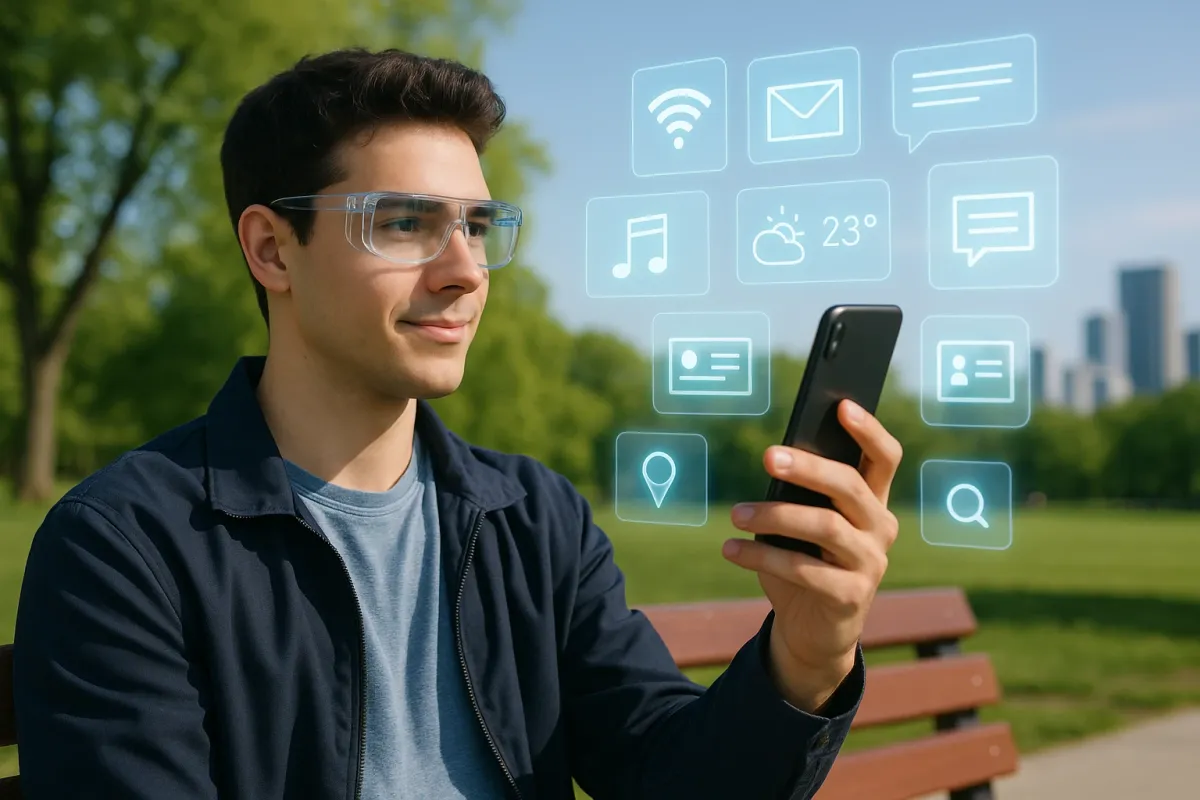
The big shift in the last few weeks: major phone makers and AI companies are openly talking about your next wearable being less “sci‑fi helmet” and more “normal-looking glasses that talk to your phone’s AI brain.” Think of it as AirPods for your eyes, but hopefully less cursed than that sounds.
Let’s break down what’s happening right now—and why your next major gadget might not be a new phone, but something sitting on your face.
1. Meta’s Ray-Ban Glasses Quietly Became The Blueprint
While everyone was busy clowning on the Humane AI Pin overheating and dying mid-demo, Meta and Ray-Ban have been… shipping. Their latest Ray-Ban Meta smart glasses just got a wave of AI features in recent updates: you can ask them what you’re looking at, get live translations, and even do hands-free livestreaming straight to Instagram.
Are they perfect? Absolutely not. The camera still isn’t “main phone” quality, and Meta’s AI has the usual “confidently wrong” moments. But these glasses did something important: they made AI wearable not look like tech. They look like normal sunglasses from a distance. No giant forehead brick, no weird temple antennas. And that combination—normal look, always-on camera, voice AI—is exactly what other companies are now racing toward.
Phones will still be the main computer, but glasses like these are starting to feel like the “remote control” for your AI: look at something, talk, get answers. No typing, no pulling your phone out in the middle of a street crossing like a gremlin.
2. Apple Is Playing The Long Game (And Your iPhone Is The Real Star)
Apple Vision Pro launched earlier this year like a $3,500 tech flex—amazing display, wild eye-tracking, terrible for your neck. But behind the awkward “spatial computing” marketing is Apple’s usual move: start big and weird, then slowly shrink it until it looks boring and everyone wants one.
The rumor mill right now (from the usual suspects like Bloomberg’s Mark Gurman and supply chain leaks) is that Apple’s next steps are:
- Cheaper Vision hardware in the works, with fewer sensors and maybe a lower-end display
- A long-term path toward lightweight glasses that lean heavily on your iPhone for processing
- Deeper AI features baked into iOS, so your phone becomes the “brains” for any future glasses
The key thing: Apple doesn’t want you wearing a full computer on your face forever. They want your iPhone to stay the main computer, and your glasses to be a display and sensor layer—kind of like an Apple Watch for your eyes. That’s very similar to what we’re seeing in current AI gadget pitches: small wearable, big brain in your pocket.
So if you’re wondering whether you should buy Vision Pro right now “for the future,” consider this: the actual future device Apple cares about probably looks closer to lightweight glasses that need your phone, not a full-blown headset.
3. AI Pins, Bad Rabbits, And Why Phones Still Win
The last few months have been a live‑streamed masterclass in “cool AI idea, terrible real-world execution.”
- Humane AI Pin shipped, reviewers found it hot (literally), slow, and very confused about basic tasks
- Rabbit R1 promised to replace your apps with one AI layer, then quietly turned into… basically a weird Android phone that does less
- Other startups are teasing AI pendants, brooches, and mystery clips that all sound like they want to replace your phone
The problem: your phone is already really, really good at being a fast computer with a big screen, great camera, and massive app ecosystem. These AI gadgets tried to kill the phone, and instead ended up begging it for help (tethering, hotspots, companion apps—you know the drill).
The big companies are paying attention. The current wave of AI gadget designs is shifting from “we’re the phone now” to “we piggyback off the phone.” That means:
- Glasses that use your phone’s data, camera sync, and AI
- Wearables that act like input/output devices, not full computers
- AI features that live in your phone’s OS, not some random cloud account you’ll forget in two years
If you’re a gadget person, the takeaway is simple: don’t expect your phone to disappear. Expect it to become the invisible hub while other gear (glasses, earbuds, maybe AI jewelry if we’re unlucky) plugs into its brain.
4. Your Camera Is Becoming An AI Sensor, Not Just A Memory Maker
Another big trend hiding inside all these announcements: cameras are slowly shifting from “take a pretty photo” to “feed data to your AI.”
You can already see it:
- Google’s Circle to Search and AI summaries turn screenshots and camera input into search queries
- Samsung is leaning hard into AI modes that clean up photos, erase objects, and summarize notes from whiteboard snaps
- Meta’s glasses can look at menus, signs, or objects and let the AI describe or translate them
In the current wave of demos, companies keep showing the same thing: you look at something through your camera—phone or glasses—and say, “What is that?” or “Translate this,” or “Remember this for later.” The AI doesn’t care if you’re actually taking a photo; it just wants the pixels.
For gadgets, this means:
- More “viewfinder” devices like glasses and pins that constantly sample your surroundings
- AI features that treat photos and video as raw input instead of just memories
- A new privacy war, because “always-on camera for AI” is a very different vibe than “I took 3 pics of my dog”
If your next pair of glasses is basically a wearable camera for your AI assistant, the real gadget question isn’t just “what can this do?” but “what is it silently sending, and to whom?”
5. The Real Battle Isn’t Hardware—It’s Which AI You Talk To All Day
Behind all the shiny gadgets, a quieter war is happening: who gets to be your default AI? The thing you talk to when you’re half-awake and just say, “Hey, remind me to email my boss later… and also what’s that song?”
Right now:
- OpenAI is trying to get ChatGPT everywhere—browsers, desktops, soon more hardware
- Google is fusing Gemini into Android, search, Gmail, Maps, everything
- Apple is rumored to be working on its own on-device AI and maybe even partnering with others for more advanced models
- Meta is trying to stick Meta AI into Instagram, WhatsApp, and now your glasses
All these companies know the same thing: once you get used to talking to one AI all day, you become locked into its ecosystem. And the best way to make you talk to it all day is… don’t make you dig a phone out of your pocket every time.
That’s where gadgets come in:
- Glasses so you can ask questions while walking, cooking, or traveling
- Earbuds that translate in real time or whisper answers without blasting a speaker
- Small wearables that let you tap, squeeze, or glance for quick interactions
Phones aren’t going away. They’re becoming the hub. But the fight now is for all the tiny moments in between—when your hands are full, your eyes are busy, and you still want info, context, or help.
Conclusion
We’re in the awkward early days of the “post-just-a-phone” era. Some ideas (AI pins, weird orange bricks) are clearly not it. Others—like Ray-Ban’s AI glasses, Vision Pro’s early experiments, and phone-powered AI features—are starting to hint at what a more natural, less screen-grabby future could feel like.
If you’re a gadget nerd, now’s the time to watch, not panic-buy:
- Expect more AI-powered glasses and weird wearables over the next year
- Assume your phone will stay the main character, just less visible
- Pay attention to which AI assistant you’re slowly letting into your daily routine—that choice might matter more than which camera bump looks the coolest
For now, your pockets are safe. But your face? That’s definitely the next big gadget battleground.
Key Takeaway
The most important thing to remember from this article is that this information can change how you think about Gadgets.