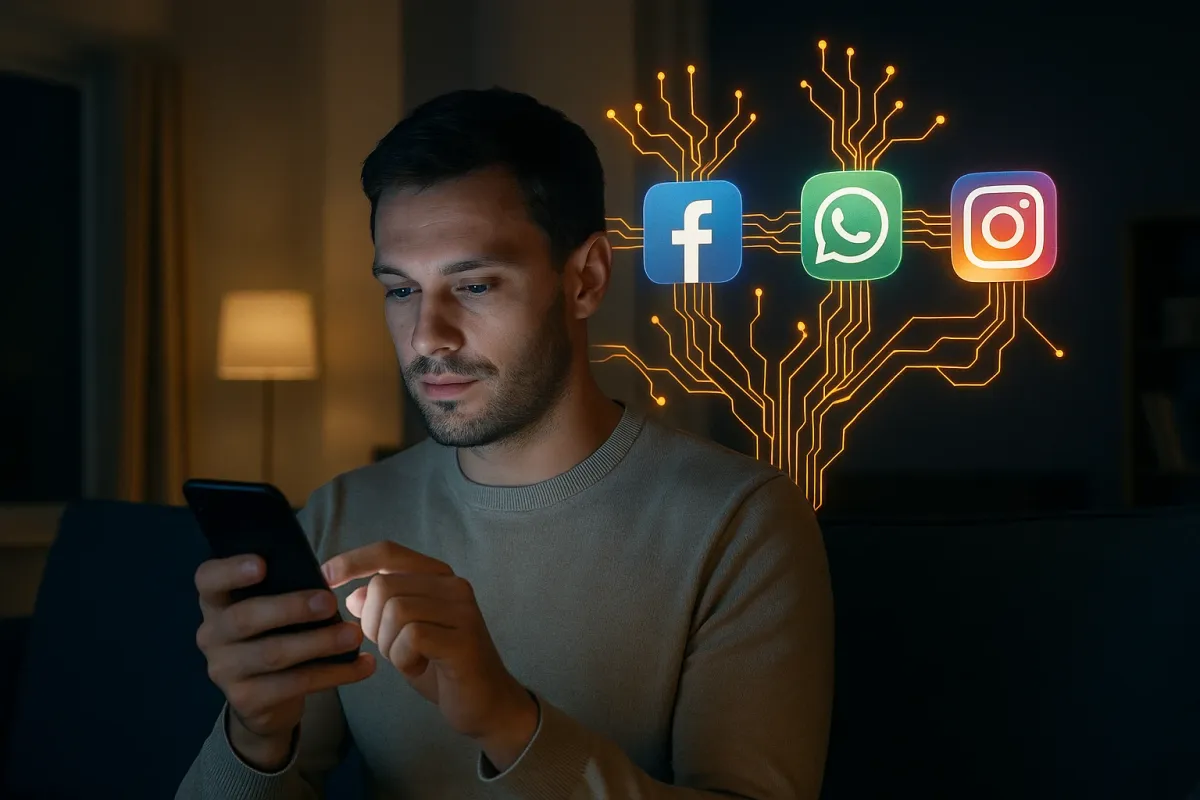
If your phone’s been feeling a little too smart lately, it’s not your imagination. Over the last few days, AI news has been less about shiny chatbots and more about something sneakier: big-name apps and platforms silently wiring powerful AI into the stuff you already use.
From Google quietly rolling more Gemini into Search and Workspace, to OpenAI pushing its latest models into third‑party apps, to Microsoft stuffing Copilot into everything from Windows to your browser, the vibe is clear: we’re moving from “go to this AI website” to “AI is just…everywhere.”
Let’s break down what’s actually happening right now, why your daily apps suddenly want to “assist” you, and what tech nerds should keep an eye on as AI stops being a separate thing and becomes the water we all swim in.
AI Is Moving From “Destination” To “Default Setting”
For the past year, AI mostly felt like an extra tab: you opened ChatGPT, Gemini, or Claude when you needed it, then went back to your life. That era is ending fast.
Over the last week:
- Google has been rolling more Gemini-powered summaries and answers into Search and Chrome, not just in the US but in more regions.
- Microsoft is quietly nudging Windows users toward Copilot for everything from summarizing PDFs to tweaking settings.
- OpenAI has been pushing its newest models into plugins and partner apps so you’re technically “using OpenAI” without ever loading chatgpt.com.
The big shift: AI is no longer a “tool you open”; it’s becoming the default layer behind search, email, documents, and even system settings. That means you’ll interact with AI even when you didn’t mean to — autocomplete that feels psychic, doc suggestions that write half the email for you, and search results that look less like “10 blue links” and more like a human-ish summary.
For power users, this is insanely convenient. For everyone else, it raises questions: who actually “said” what you’re reading — a website, or an AI remix of five websites? And when your OS, browser, and favorite app all have their own AI, which one do you trust?
Your Data Is Becoming AI Fuel (Even If You Never Upload A Single File)
Another thing happening in real time: companies are rewriting the fine print around what they can do with your stuff.
In the last few months, we’ve seen:
- Platforms like Meta and Google updating terms to explicitly say user data may be used to improve AI systems (with various flavors of opt-out).
- Smaller apps and developers rushing to add “AI features,” often by piping your data to cloud models from OpenAI, Anthropic, or Google — sometimes without explaining that clearly.
- Governments in the EU and UK grilling companies about how training data is collected, especially from social media and user uploads.
Practically speaking, this means the documents you write, the photos you store, and even the way you interact with apps can become training material or at least feedback signals for AI models.
For tech enthusiasts, this is the tension point to watch:
- Better models usually mean more data.
- Users are increasingly touchy (understandably) about how that data is collected and used.
- Regulators are catching up fast — and they’re not in the mood to be gentle.
If you’re experimenting with AI apps, now’s the time to:
- Read the data section in settings (boring, yes, but important).
- Check if there’s a “don’t use my data for training” toggle.
- Remember that “local AI” and “cloud AI” are different worlds — one runs on your device, the other sends your data elsewhere.
Local AI Is About To Make Your Old Hardware Weirdly Useful Again
While the big headlines keep going to giant cloud models, a quieter revolution is happening on your actual devices.
In the last few weeks:
- Apple started rolling out more of its Apple Intelligence features to recent iPhones, iPads, and Macs, leaning heavily on on‑device processing.
- Qualcomm, Intel, and AMD have been bragging about “NPU” performance — basically saying, “Hey, your next laptop is built to run AI locally.”
- Open‑source models like Llama and smaller distilled models keep getting lighter and more capable, making it possible to run surprisingly useful AI on consumer hardware.
Why this matters:
- On-device AI is faster: no round trip to the cloud.
- It can be more private: your data doesn’t have to leave your device.
- It changes the app game: suddenly, a note‑taking app, a photo editor, or a file manager can have a “mini AI brain” without sending your life story to a server.
We’re right at the start of a split ecosystem:
- Cloud AI: giant models, more power, but data leaves your device.
- Local AI: smaller models, more limited, but snappy and private.
Expect more apps in 2025 to brag about “runs fully on your device” the way they used to brag about “no ads” or “end‑to‑end encryption.”
AI Is About To Break How We Trust Screenshots, Emails, And Even Voice Notes
With every model upgrade, we’re getting closer to a world where:
- Emails are written by AI.
- Customer support chats are often AI with a thin human wrapper.
- Images and videos can be AI-generated and still pass a quick glance test.
Over the last couple of weeks:
- Companies have been rolling out or testing watermarking and “AI content labels” — especially on social platforms and creative tools.
- News outlets and researchers keep finding AI-generated spam, reviews, and even fake news sites creeping into search results.
- Tools like Microsoft’s Recall (and the immediate backlash to it) showed just how weird people feel about perfect digital memory and searchable everything.
The real problem isn’t that AI can generate fake stuff — it’s that AI can generate endless, highly customized fake stuff:
- Fake HR emails that look exactly like your company tone.
- Fake invoices or docs that match templates you actually use.
- Fake videos or voice clips that sound like someone you know.
For now, the defenses mostly boil down to:
- Common sense (ugh).
- Two-factor authentication.
- Companies slowly adding AI-detection, verification, or warning labels.
For tech folks, this is a fascinating — and slightly terrifying — arms race to watch. Every time models get better at sounding human, detection tools need to level up…and they’re not always winning.
The Coolest Stuff Won’t Come From Big Tech — It’ll Come From Weird Little Experiments
Here’s the fun part.
While Google, Microsoft, OpenAI and friends fight over billion‑user platforms, something else is happening: a wave of small, weird, extremely specific AI tools is popping up everywhere.
Right now you can already find:
- Solo‑dev projects where AI acts like a personal “OS-level search” across your own notes, emails, bookmarks, and local files.
- Niche creative tools that use small models to turn rough sketches into polished UI mockups, storyboards, or game levels.
- Browser extensions that quietly add “AI superpowers” to boring things: better search filters, auto‑summaries for 50‑page PDFs, or chat-style interfaces on top of old-school software.
Add in:
- Open‑source models getting easier to run.
- GPUs and NPUs sneaking into more consumer hardware.
- Dev tools that let a single indie hacker build something that felt “enterprise‑only” two years ago.
…and we’re heading into an era where the most interesting AI isn’t a general chatbot, but a bunch of tiny, opinionated tools that do one thing extremely well:
- “Help me refactor this messy codebase.”
- “Clean up this podcast audio and auto‑cut filler.”
- “Turn my archives + bookmarks into a personal research assistant.”
Big tech will build the highways; hobbyists and startups will build the weird, delightful side roads.
Conclusion
We’ve officially left the “wow, AI can write a poem” phase and entered the “wait, when did this app get smart?” era.
Right now, as in this week:
- AI is creeping into search, docs, OSes, and messaging.
- Your data is more interesting to AI companies than ever.
- Local models are starting to make your devices feel like they have a built‑in assistant.
- Trust on the internet is getting messier — screenshots, emails, and even voice are now “maybe real, maybe not.”
- And the most fun stuff is bubbling up from small tools and indie devs, not just trillion‑dollar companies.
If you’re into tech, this is the moment to start paying attention not just to what AI can do, but where it’s quietly being wired into your daily life.
Because the future of AI isn’t going to show up as a new website.
It’s already showing up in the apps you opened today without thinking.
Key Takeaway
The most important thing to remember from this article is that this information can change how you think about AI.