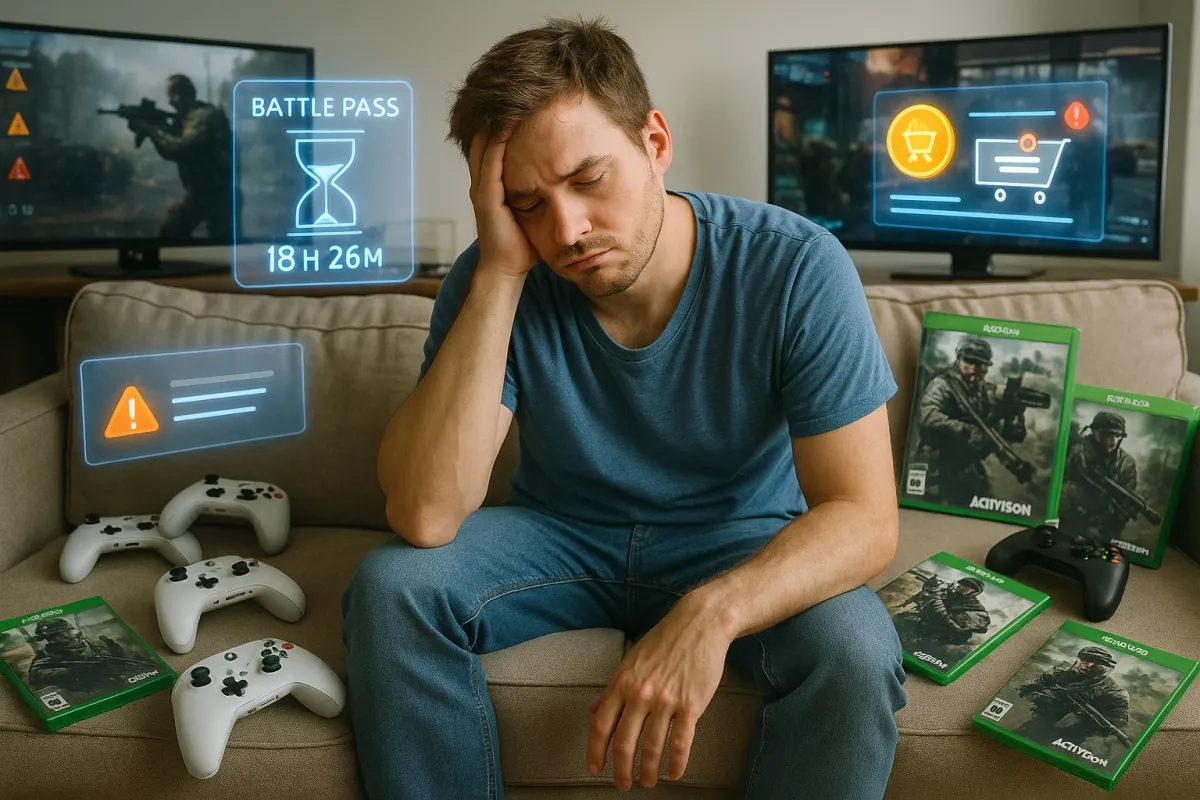
Gamers are tired, and not just “I stayed up until 3 a.m. in ranked” tired. With Xbox boss Phil Spencer openly admitting that live-service games might be hitting a saturation point and Activision quietly dialing back on always-online experiments, it feels like the industry is finally saying the quiet part out loud: we’ve got too many games fighting for the same tiny slice of your attention.
If you’ve ever opened your backlog, stared into the digital void, and then just gone back to the same comfort game, this moment is basically about you. Between Game Pass, $70 blockbuster releases, seasonal battle passes, and a new “must-play” shooter every quarter, the live-service bubble is starting to creak—and 2025 might be the year it really gets tested.
Let’s unpack what’s happening right now, and why every big publisher—from Microsoft to Activision Blizzard to Sony—is suddenly rethinking how often they can ask you to log in “daily for rewards.”
1. Microsoft Just Admitted: We Can’t All Be Fortnite
On recent earnings calls and interviews, Xbox leadership has been surprisingly blunt: not every game can be a forever game. After dropping almost $69 billion to acquire Activision Blizzard, Microsoft now owns some of the biggest live-service machines on the planet—Call of Duty, World of Warcraft, Overwatch 2, Diablo IV, Candy Crush. That’s a lot of log-in streaks to maintain.
The problem? Players don’t multiply just because the number of live-service titles does. Daily active users are a finite resource, and attention is getting sliced thinner than ever. For every Fortnite or Genshin Impact pulling insane engagement, there’s a trail of live-service games that launched, begged for your time, and quietly faded into maintenance mode. Microsoft seems to get this now: instead of turning everything into a grindy treadmill, they’re starting to talk more about “player choice” and “sustainable engagement” rather than just hours played at any cost.
For gamers, this might mean fewer “please log in daily” pop-ups, and more attempts at games that respect the fact you have work, school, friends, and—wild concept—other hobbies.
2. Call of Duty Is The Canary In The Live-Service Coal Mine
Call of Duty has been the yearly metronome of gaming for over a decade—but the rhythm’s getting weird. The last couple of years have seen a noticeable shift: players dipping in hard at launch, then bouncing faster, criticism of recycled content, and more grumbling about battle passes and aggressive monetization. Even with Modern Warfare III and new Warzone seasons, you can feel the fatigue creeping in.
Activision’s response has been… telling. There’s been more nostalgia farming (classic maps, old weapons, legacy characters) and a bigger focus on crossovers and cosmetics to juice engagement without reinventing the whole game every year. That’s fun in doses, but it also hints at a bigger issue: when your live-service model leans too hard on FOMO and skins, players eventually ask, “Okay, but what’s actually new?”
If Call of Duty starts to feel “optional” instead of “mandatory” for the shooter crowd, that’s huge. It means even the genre’s juggernaut isn’t immune to burnout—and other shooters trying to live in that same space are really in trouble.
3. Game Pass Is Quietly Changing What “Success” Looks Like
While some live-service games are chasing whales and battle-pass addicts, Game Pass is out here doing something different: rewarding games that are just… good for 10–20 hours. No seasons. No endless grinds. Just “play it, finish it, move on.” Games like Hi-Fi Rush, Pentiment, and Jusant found big audiences not by being forever, but by being memorable.
This is where it gets interesting. Microsoft doesn’t need every game on Game Pass to be your main game. In fact, it benefits when you hop around and stay subscribed. That’s the opposite of a live-service title that desperately wants you to commit full-time, every week, forever. It creates a quiet tug-of-war inside the same ecosystem: do devs build one “live forever” game, or a mix of smaller, tighter experiences that feel good to finish?
As more players discover they actually like completing games instead of being farmed by them, publishers may pivot—the “medium-length, extremely good” game could become the new sweet spot again. Especially when word-of-mouth on social media favors games you can recommend without a spreadsheet of weekly chores.
4. Live-Service Graveyards Are Scaring Players (And Devs)
2023–2025 has been brutal for always-online experiments. You’ve probably seen some of these stories: multiplayer games shutting down less than a year after launch, PvP titles going offline with whole chunks of paid content just… gone. When a game like Rumbleverse, Knockout City, or Babylon’s Fall disappears, it leaves a bad taste—why invest time (and cash) into a new live-service game if it might vanish before your next birthday?
Developers are feeling that fear too. It’s harder to convince players to jump into a new online-only world when there’s no guarantee it’ll still exist in two years. That’s pushing some studios to add offline modes, full campaign content, or at least some “you own this forever” elements, even if the core is live-service. There’s also more talk about “sunset plans”: what happens to your purchases and progress if the plug ever gets pulled.
For tech and game nerds, this is a fascinating shift: we’re moving from “games as infinite platforms” back toward “games as products you can actually keep,” or at least hybrid models where you’re not renting 100% of your fun from a server that can disappear.
5. Players Are Fighting Back With Their Time, Wallets, And Memes
The loudest message isn’t coming from boardrooms—it’s coming from players who just… don’t show up anymore. We’ve seen it over and over: a new shooter or hero brawler launches with big marketing, a flashy roadmap, and “we’re here for the long term” speeches—only for concurrency numbers to crater after a month. On Reddit, TikTok, and X, you’ll see the same vibe: “Looks cool, but I already have my main game” or “I refuse to start another battle pass.”
At the same time, older, more “chill” games keep popping off. Cozy farming games, single-player RPGs, city builders, and weird little indies are constantly going viral because they feel like an escape from the grind, not a second job. Even when live-service works—Fortnite, GTA Online, Destiny 2, Final Fantasy XIV—it’s usually because they found their lane, not because they try to be everything to everyone.
The takeaway: attention is now the real currency. The more companies try to monetize every second of it, the more players push back by doing the one thing that actually hurts—closing the launcher and uninstalling.
Conclusion
The live-service era isn’t ending, but it is evolving—fast. With Microsoft sitting on a mountain of online franchises, Activision juggling Call of Duty fatigue, and players clearly signaling “I don’t have time for another forever game,” the next couple of years are going to reshape what big-budget gaming looks like.
For you, the player, this might actually be good news. We’re likely to see fewer rushed “me too” live-service launches and more focus on games that respect your time—whether that’s a tight single-player story, a co-op game you can dip in and out of, or a live-service title that doesn’t punish you for having a life.
In the meantime, your backlog is probably staring at you right now. Maybe the most rebellious thing you can do this week isn’t jumping into another seasonal grind—it’s finally finishing that one game you abandoned three bosses ago.
Key Takeaway
The most important thing to remember from this article is that this information can change how you think about Gaming.