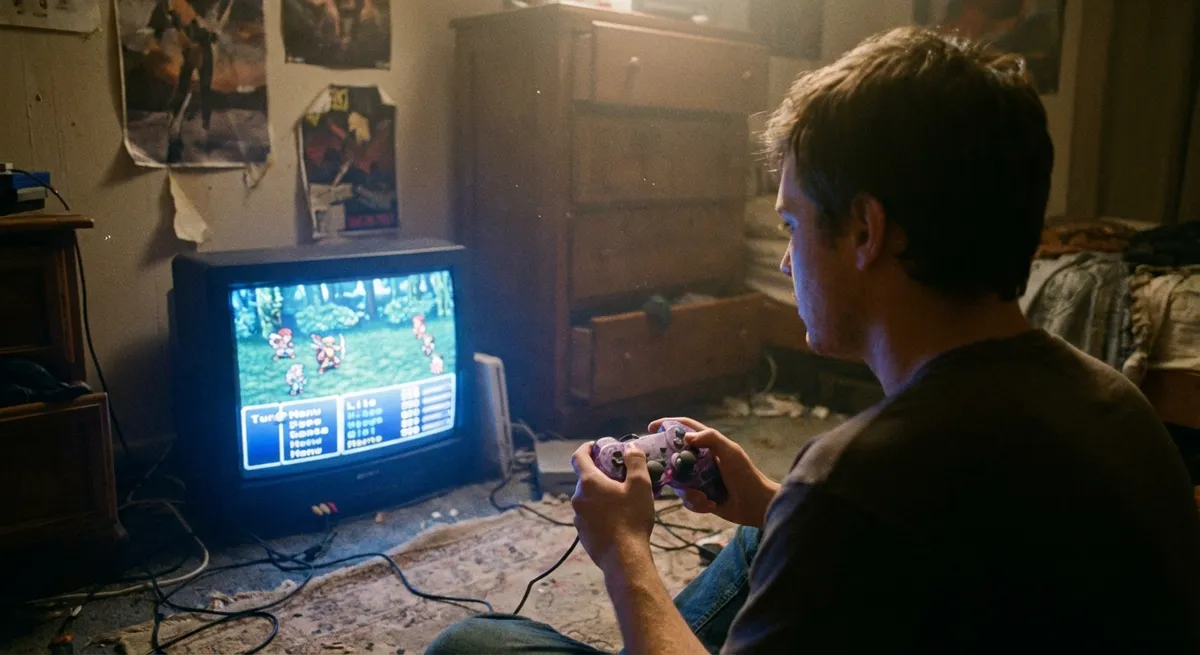
There’s this weird thing happening in gaming right now: everything looks better, runs faster, has a bigger map, more quests, more loot… and yet half of us keep sneaking back to the same three games we’ve owned for years. You know the ones: the comfort picks. The “I’ll just play for 20 minutes” sessions that turn into 3 a.m. somehow.
It’s not just nostalgia. There are real, surprisingly tech-y reasons older or “simpler” games still feel so good, even when your PC or console could absolutely melt your eyeballs with modern graphics. And understanding why they still slap actually says a lot about where games—and gamers—are headed next.
Let’s unpack what makes those older or stripped‑back games so sticky, and why your brain keeps voting “replay” instead of “new game.”
1. Your Brain Loves Predictable Systems More Than Pretty Graphics
New games are obsessed with detail: realistic lighting, complex physics, 500 skill trees, 40 currencies. It’s impressive, but it also makes your brain work overtime just to understand what’s going on. Older games, or games built around simple systems, usually have a cleaner loop: do thing → get reward → get better → repeat. Your brain loves that.
Those “outdated” systems are actually extremely readable. You can glance at your screen and instantly know what matters: your health, your ammo, your resources, your objective. No 12-layer UI, no 50 pinging notifications. That clarity is why it’s so easy to drop back into an old save after months away. It’s not that the game is dumbed down; it’s that the rules are stable and easy to remember.
This kind of design is quietly influencing modern indie games too. You’ll see devs deliberately strip away clutter to give you a focused feedback loop: attack, dodge, upgrade, repeat. Tech-wise, that means less processing spent on “wow” and more on responsiveness and timing. Your brain notices that—even if you don’t consciously think about frame timings and input latency.
2. Old-School Audio Tricks Still Make Modern Soundtracks Feel Flat
One of the sneakiest reasons classic games stick with you: their sound design is engineered to live in your head rent-free. Older games had limited storage and weaker hardware, so composers had to rely on strong, simple hooks and loops that could play for hours without driving you insane. That constraint accidentally turned into a superpower.
Chiptunes and MIDI-style soundtracks are built around clear melodies and repetitive patterns. That repetition burns into your memory. It’s why you can probably hum a theme from a game you played 15 years ago, but can’t remember the soundtrack from the huge open-world you finished last month. Modern orchestral scores sound incredible, but often act more like movie background noise than a “character” in the game.
Tech-wise, it’s wild: we’ve gone from compression hacks and 8-bit bleeps to fully orchestrated live recordings, but the most iconic tracks are still the ones born from those limitations. Now a lot of devs are remixing that retro DNA—hybrid soundtracks that use modern tools to recreate that instant earworm effect. Your old favorites basically laid down the blueprint.
3. Input Lag Is the Silent Killer of “Next-Gen Fun”
You know when a game technically looks amazing but just feels… mushy? That’s often input lag and frame pacing doing you dirty in the background. Older games—especially from the era before heavy post-processing and 4K everything—tended to feel snappier because there were fewer layers between your button press and what happened on screen.
Fast-paced genres like fighting games, platformers, and rhythm games are extra sensitive to this. If the game is even a little sluggish, your brain notices the disconnect immediately. That’s part of why those older titles can still feel “tighter” than their modern remakes, even if the new one is running at 120 FPS. Adding heavier visuals, motion blur, particle effects, and fancy UI can all quietly add delay.
What’s cool is that tech‑savvy gamers are starting to care more about this again. Settings like “performance mode,” reduced motion blur, and low-latency options aren’t just for esports sweats—they’re basically giving your modern games that old-school responsiveness. Strip out the “cinematic” fluff and suddenly the game feels more like those older, sharper experiences your hands are used to.
4. Save Systems Changed How We Emotionally Attach to Games
Remember when saving your game used to feel like a decision instead of an auto-save every 12 seconds? Old save systems were often harsh—limited save slots, save points, password screens, no rolling back choices. It was annoying at the time, but it also made your progress feel serious. If you committed to something, you lived with it.
That “friction” did something interesting psychologically: it made your playthrough feel like a story that belonged to you. If you messed up a choice, lost a character, or burned resources, you either restarted the whole thing or you adapted. That sense of consequence made older games feel deeper, even when the actual stories were pretty simple.
Modern games tend to be way more forgiving, which is great for accessibility and experimentation. But when a game still leans into limited saves, ironman modes, or meaningful checkpoints, it taps into that old feeling: tension, ownership, and relief when you finally nail a hard section. Tech progression made saving seamless, but sometimes re‑adding a bit of friction makes a game way more memorable.
5. Smaller Worlds Sometimes Feel Bigger Than Giant Open Worlds
Massive open worlds are a flex. Huge maps, endless icons, multiple biomes—it’s a technical showcase. But a lot of older games (or newer games with a smaller scope) end up feeling bigger in your memory, simply because they made every space matter. Instead of “here’s a million square miles,” it was “here’s a tight map where everything is intentional.”
With limited storage and processing power, older games leaned on tricks: clever camera angles, fog, invisible walls, looping backgrounds—you’d only ever see what the hardware could handle. But your brain filled in the gaps. A locked door, an unreachable cliff, a tiny bit of lore about a place you never visit—that all made the world feel larger than what you could directly play in.
Modern tech lets devs render almost everything you can imagine, but when a game still uses mystery and suggestion—hidden areas, off-limits zones, environmental storytelling—it hooks into that same feeling. It’s not just about how much land you can cross; it’s about how much your imagination gets to do. Old favorites were basically masters of “less, but smarter,” and that design still hits hard today.
Conclusion
If you keep bouncing off shiny new releases and crawling back to your old standbys, you’re not stuck in the past—you’re reacting to specific design and tech choices that modern games don’t always prioritize.
Readable systems, unforgettable audio, low input lag, meaningful saves, and focused worlds all came partly from hardware limits. Those constraints accidentally created a ton of what makes games feel satisfying on a brain level, not just a graphics card level.
The fun part? Devs are starting to consciously mix both worlds: modern tech power + old-school design smarts. So the next time you boot up that decade-old game “just for a bit,” don’t feel guilty about it. You’re not just chasing nostalgia—you’re chasing design that still understands you.
Key Takeaway
The most important thing to remember from this article is that this information can change how you think about Gaming.