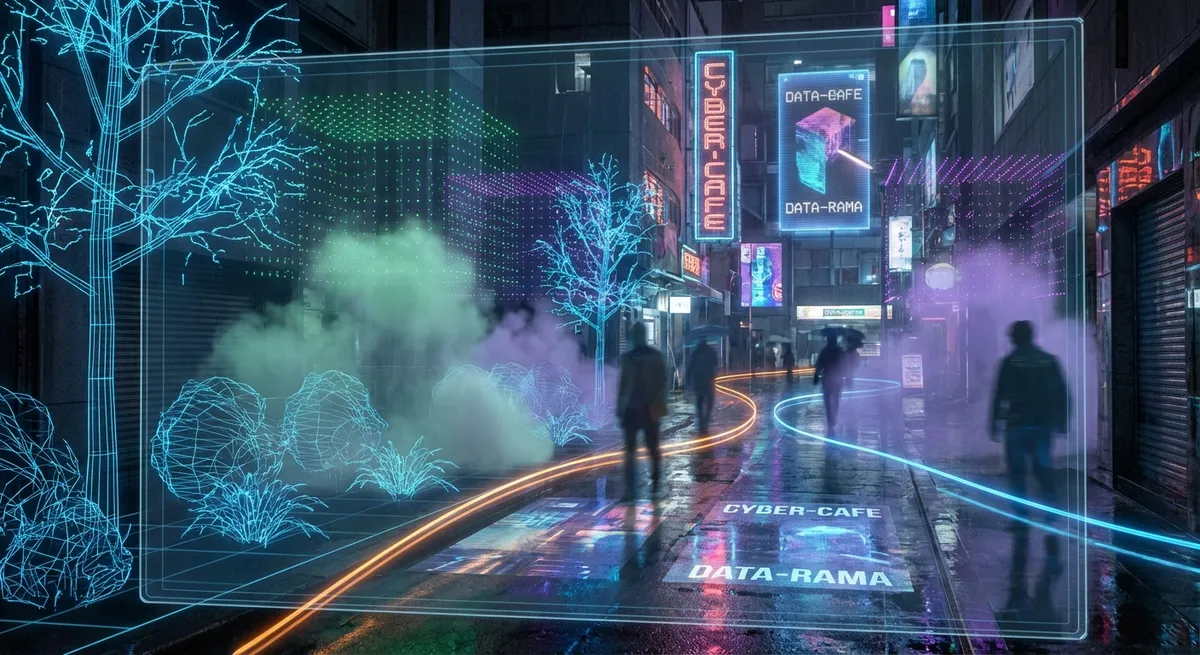
Games aren’t just prettier than they used to be—they’re stranger, smarter, and way more reactive. Under the hood, tiny design choices and bits of tech are quietly changing how games feel, even when you don’t notice them.
Let’s dig into some of the most interesting little details that make modern games feel more alive than ever.
1. Enemies That “Remember” You (Kind Of)
Old-school enemies used to be goldfish: see player, run at player, die, repeat. Now, more and more games give enemies a fake memory—and it makes everything feel way more intense.
Some NPCs track how loudly you move, where you last were seen, or how often you repeat a tactic. In stealth-heavy games, guards might check the spot you were last spotted, spread out, or even change their patrol routes after you’re caught a few times. You start to feel like you’re up against an actual system, not just walking hitboxes.
Even when it’s not full-on “AI,” clever scripting can do a lot. Enemies might intentionally miss their first shot to give you a chance to react, then tighten their accuracy if you’re playing too well. The game is quietly tuning the drama curve in the background, so fights feel “close” instead of stomp-or-be-stomped.
It’s not that these enemies are truly smart—they’re just faking it in very human ways. And that illusion is often more fun than pure realism.
2. Worlds That React to Your Chaos (Without Actually Being Fully Dynamic)
Open worlds love to pretend they’re completely freeform playgrounds where anything can happen. Underneath, there’s usually a lot of controlled chaos holding everything together.
Games use systems like:
- Destructible set-pieces: Not everything breaks, but the stuff that does is carefully chosen to look impressive while staying safe for performance.
- Soft rules instead of scripts: NPCs might follow routines (work, sleep, eat), and the game only intervenes if their behavior collides with your quest or breaks something important.
- “Rubber band” world states: That car pileup you caused? The game quietly cleans up messes behind you so the world doesn’t spiral into unplayable chaos.
Physics engines handle the messy math—how far a barrel rolls, whether a plank floats, where debris lands. But designers add invisible guardrails: objects that look loose but are secretly pinned down, or explosions that stop short of messing with a key bridge or quest area.
The result: you feel like you can break everything, even though the game is running a sophisticated “controlled destruction” simulation in the background.
3. Sound That Knows Where You Are (And What You Care About)
If you’ve ever turned off the music in a game and suddenly gone, “Wow, this still sounds incredible,” you’ve felt how far game audio tech has come.
Modern games don’t just play sounds—they place them. Engines simulate how sound would bounce in a tunnel, vanish in an open field, or get muffled behind a wall. With headphones, you can often tell whether something is above you, behind you, or around a corner just from audio.
Layer that with dynamic soundtracks that react to what you’re doing—combat themes that ramp up as more enemies spawn, subtle tension music when your health is low, or calmer ambient sound when you’re just exploring.
Some games even use spatial audio tricks to:
- Signal off-screen threats
- Guide you toward objectives without on-screen markers
- Make quiet spaces feel safe, and loud ones feel dangerous
None of this is flashy on its own, but together it’s what makes walking through a digital city or forest feel like being somewhere, not just looking at something.
4. Lighting That Tricks Your Brain into Feeling “Real”
Screens are flat. Game worlds are not. The thing doing most of the heavy lifting in closing that gap is lighting.
For years, games relied on “baked” lighting—pre-calculated shadows and brightness that never changed. It looked good, but it didn’t react. Now you’ve got things like:
- Dynamic lighting: Torches flicker, car headlights sweep, the sun actually moves and changes the mood of the world.
- Global illumination: Light bounces off surfaces, picking up color along the way—white light hitting a red wall might tint the room slightly red.
- Reflections and shiny surfaces: From glossy floors to wet roads, the way a game handles reflections tricks your brain into believing the space has depth.
Ray tracing grabs the headlines, but even without it, a lot of games fake realistic lighting through clever shortcuts. The point isn’t physical accuracy—it’s emotional accuracy. A dim hallway with a single, flickering light feels tense. A wide-open field at sunrise feels hopeful. The tech is just there to sell the mood.
5. Micro-Animations That Make Characters Feel Human
One of the biggest glow-ups in modern games isn’t resolution—it’s motion.
Watch closely and you’ll start noticing tiny details that weren’t there a generation ago:
- Characters shifting their weight when they stop running
- Fingers actually wrapping around objects instead of clipping through them
- Eyes tracking moving points in the world instead of staring straight ahead
- Cloth, hair, and gear reacting to wind, movement, and impacts
Animation systems now blend multiple “poses” in real time: your character might mix a “turning” animation, a “holding a gun” animation, and a “walking on stairs” animation all at once. The result is movement that feels less like a repeated clip and more like a living body adjusting to what’s happening.
These aren’t big, showy features you see in trailers. They’re tiny invisible upgrades that quietly make your brain go, “Yeah, that’s a person,” instead of “That’s a puppet.”
Conclusion
A lot of the coolest stuff in modern games is basically stagecraft—illusions stacked on illusions to make worlds feel alive, enemies feel smart, and small moments feel big.
For tech nerds, that’s half the fun: noticing the seams, appreciating the tricks, and realizing that what feels like “magic” is usually just very clever systems, tuned to make you forget they exist.
Next time you play, try this: instead of asking “How does this look?”, ask “What is this game faking really well right now?” You’ll start seeing the invisible tech everywhere—and it makes gaming even more fun.
Sources
- GDC Vault – AI and Game Design Talks - Conference sessions covering enemy behavior, systemic design, and AI tricks used in modern games
- Epic Games – Unreal Engine Documentation: AI and Gameplay Systems - Official docs on behavior trees, perception, and reactive worlds
- Unity – Game Audio and Spatial Sound Documentation - Overview of how spatial audio and dynamic mixing work in modern engines
- NVIDIA – Ray Tracing and Global Illumination Overview - Technical but accessible look at how advanced lighting and reflections are handled
- Siggraph – Character Animation and Motion Research - Example of academic work on realistic character animation and motion blending
Key Takeaway
The most important thing to remember from this article is that this information can change how you think about Gaming.