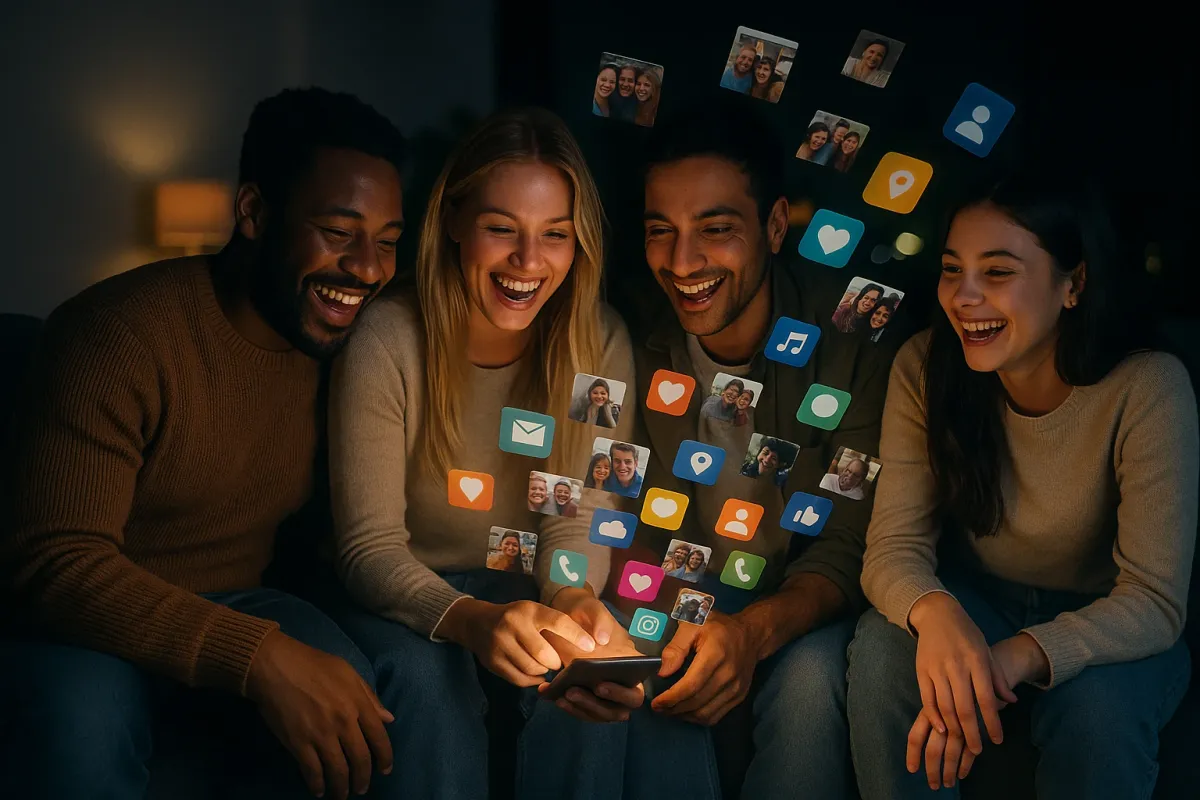
If you’ve felt like every other post on your feed is a screen recording of someone demoing a new AI camera or filter app, you’re not wrong. The “what did this app do to my face/room/pet” trend is everywhere right now. Behind a lot of that chaos is the same wave of apps that’s quietly turning your phone’s camera into something way closer to a creative studio than a point‑and‑shoot.
Today’s news cycle is full of apps leaning hard into AI, smart filters, and “do it for me” editing. Whether it’s Google quietly upgrading its Photos editing tools again, TikTok testing wild new effects, or indie devs dropping niche camera apps that blow up overnight, your default camera app suddenly has competition.
Here’s what’s actually interesting under the hype—and why your next favorite app might not be social, it might just be your camera.
Your Camera App Is Becoming a Photoshop Button
The big shift: more apps are treating editing like a single tap, not a project.
Inspired by tools like Google’s “Magic Editor” in Google Photos and the surge of viral “AI retouch” apps, a lot of new camera and photo apps now assume you don’t want to tweak sliders. You want to hit one button and have the app fix the lighting, clean up the background, and maybe remove that random stranger in the corner.
The cool part for tech enthusiasts is less “woo pretty filter” and more how this changes behavior. People who would never open Lightroom are suddenly comfortable letting an app rewrite their photo. That’s a big deal. It means the default expectation for any new photo app is: can it understand the image, not just color‑grade it? When casual users start trusting that level of automation, app makers can get more aggressive—think reorganizing your vacation shots by “vibes” instead of date, or offering edits that feel more like collaboration than correction.
Social Apps Are Quietly Turning Into Creation Suites
That headline you probably saw about another social platform testing new editing tools? That’s not an accident. TikTok, Instagram, Snapchat—they’re all in an arms race to keep you creating inside their apps instead of bouncing out to CapCut, VSCO, or some niche editor.
What used to be “add a filter and go” is now: multilayer editing, keyframed text, AI-generated captions, beat‑synced cuts, and built‑in green screen. That’s basically a mini editing studio, but wrapped in a UI that still feels like a casual app. Tech‑wise, it’s wild how much is running on‑device now without your phone melting.
For power users, this shift is sneaky but important: the line between “editing app” and “social app” is blurring. The more these platforms bake in pro‑level tools, the harder it is for standalone editing apps to stand out—unless they go super niche or super smart. Expect the next wave of hit apps to either do one weird, impressive thing incredibly well, or plug directly into whatever social platform is hot this month.
Subscription Creep Has Officially Hit Your Filter Folder
Another trend buried in today’s app news: more camera and editing apps are going full “Pro tier.” Free download, basic features, and then a premium layer that unlocks the stuff you actually saw in the ad—high‑end filters, watermark removal, AI background removal, batch editing, or export at real resolutions.
Blame (or thank) the success of apps like VSCO, Lensa, and a bunch of AI avatar and beauty filter apps that made absurd money on short bursts of subscriptions. Now even smaller devs are designing apps with a subscription in mind from day one instead of “maybe we’ll add it later.”
For enthusiasts, this creates an interesting decision tree: do you pay for one all‑in‑one editing app, or spread smaller subs across multiple specialized tools? The upside: competition is strong. New apps are stuffing their “free” tier with surprisingly high‑end features to get you hooked, which means you can do a lot without paying—if you’re willing to mix and match apps like a mobile editing pipeline.
AI Isn’t Just Fixing Photos—It’s Guessing What You Want Next
The splashy part of AI in apps is obvious: remove objects, smooth skin, swap skies. The less flashy (but more interesting) part is what’s happening under the hood: apps are starting to learn what you usually do and offer it before you ask.
You’re already seeing early versions of this in things like Google Photos surfacing “Best Take” or suggested edits, or iOS grouping Memories and spotlight photos you didn’t pick yourself. On the app side, some editors are watching which filters, crops, and aspect ratios you use most, then reshuffling their interfaces so your go‑tos are always within thumb reach.
The next step is predictive editing: open a photo, and the app instantly generates the three edits you’re most likely to want based on your past behavior, the content of the image, and where you usually share it (Reels? Stories? Shorts?). Instead of hunting through options, you’re just choosing which of the app’s guesses is closest. That’s a subtle UX change, but it’s the kind that ruins older apps for you once you get used to it.
Your Camera Roll Is the New Front Page
A lot of today’s trending app stories boil down to this: your camera roll is now more important than your home screen. Apps are less about where you post and more about what you do with what you’ve already captured.
We’re seeing more apps that don’t care which platform you’re on. They plug into your existing photo/video library, give you smarter ways to sort, search, and remix it, and then hand it back to whichever social network you’re using this week. Think automatic highlight reels, calendar‑driven memory recaps, or apps that quietly build a “year in review” montage long before Spotify Wrapped shows up.
For tech fans, that’s actually exciting. It means your content isn’t as locked to one app as it used to be. If one platform implodes or pivots, your photos, clips, and edits still live in tools that are platform‑agnostic. The ecosystem is shifting from “post here” to “create anywhere, post anywhere”—with your camera roll as the hub.
Conclusion
Right now’s app news might look like “yet another AI filter” on the surface, but underneath there’s a bigger shift: your phone’s camera is becoming less of a sensor and more of a creativity engine. Social apps are morphing into full editors, indie tools are experimenting with scary‑smart automation, and everything is slowly learning your style in the background.
If you haven’t explored beyond your default camera app lately, this is a very good time to poke around the app store and see what’s trending under photo and video. The next viral clip on your feed might not come from a new social network at all—it might come from a tiny app that quietly turned your regular Tuesday photo dump into something your followers can’t stop sharing.
Key Takeaway
The most important thing to remember from this article is that this information can change how you think about Apps.