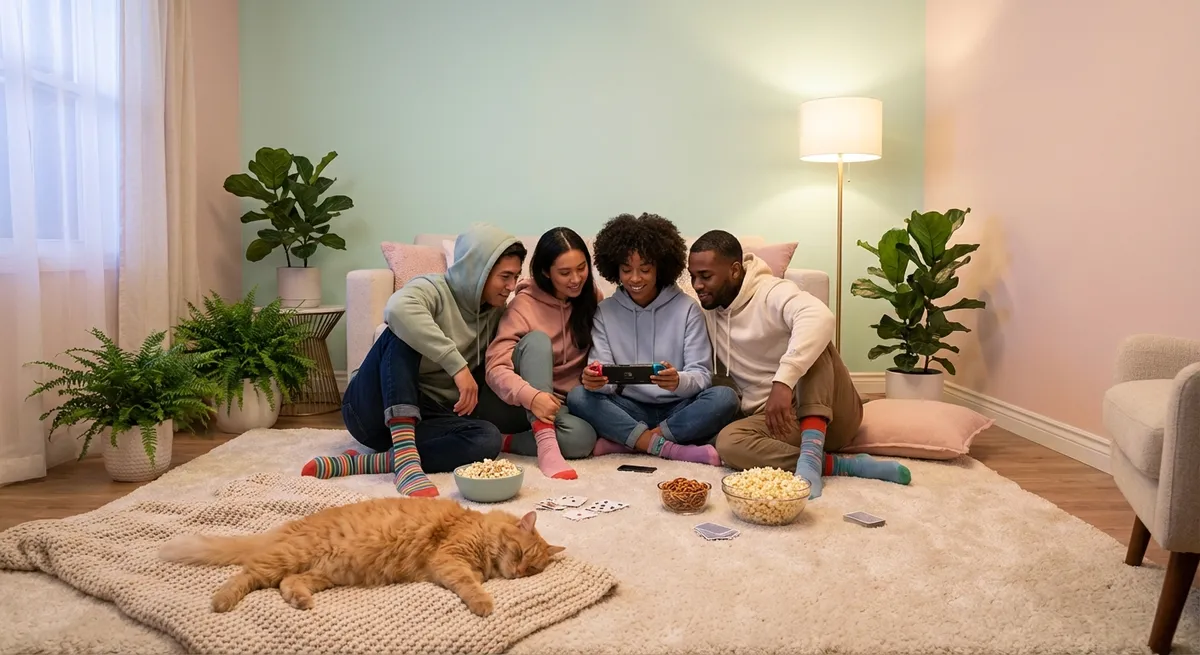
If you still think “real gamers” only play competitive shooters and giant open-world RPGs, you’ve missed a big plot twist. Cozy games—think Stardew Valley, Animal Crossing, Unpacking, Disney Dreamlight Valley—have quietly turned into one of the most influential corners of gaming. They look simple, they feel chill, and they seem low stakes… but under the surface, they’re doing surprisingly smart, techy things.
Let’s dig into how this “soft” side of gaming is actually pushing the medium forward—with five angles that tech-minded players will appreciate.
Cozy Isn’t Simple: Smart Systems Behind Chill Vibes
Cozy games look peaceful on the surface, but under the hood they’re juggling systems that would make a strategy game blush.
Time-based events, weather cycles, NPC routines, farming yields, crafting trees, relationship “flags” (who likes what, who remembers what you did)—all of that is basically a big simulation engine dressed in pastel colors. Animal Crossing: New Horizons, for example, tracks real-world time and seasons, daily shop rotations, visitor schedules, and even online island syncing when you visit friends.
That low-pressure atmosphere is actually the result of careful design choices. Instead of punishing you for missing a quest or misclicking in combat, cozy titles often:
- Avoid fail states (you can’t really “lose” Stardew Valley)
- Replace hard deadlines with soft nudges
- Swap combat difficulty for resource-based decision-making
The tech is serious; it’s just deliberately invisible. These games are proof that complexity doesn’t have to feel stressful—and that’s a design lesson everything from productivity apps to smart home dashboards could borrow.
The Brain Science of “One More Day” Gameplay
Cozy games have nailed something dopamine-heavy mobile games try to brute-force: the “I’ll just do one more thing” loop.
Instead of daily login streaks and push notifications, many cozy games use gentler hooks:
- Short in-game days that make “one more day” feel achievable
- Slow but satisfying progression (new crops, new recipes, new areas)
- Micro-goals that layer together (water plants, chat with villagers, decorate a room)
Research on games and mental health has started to notice this space. Studies looking at Animal Crossing: New Horizons during the pandemic found that players often reported lower stress and a sense of connection just from their daily in-game routines and social visits with friends.
What’s clever is that most cozy games don’t need heavy-handed engagement tricks. Their game loops feel more like tidying your desk or watering plants than grinding a battle pass. Yet they still keep you coming back because your little world feels alive and worth maintaining. That’s habit design done in a way that respects your brain instead of trying to hijack it.
Procedural Worlds, Personal Stories
Lots of cozy games are quietly using procedural generation and modular systems to make sure no two players have identical experiences—even if it doesn’t scream “roguelike.”
You see it in things like:
- Randomized layouts and decoration options that keep towns, islands, or farms unique
- NPC schedules and dialogue variations that make characters feel less like scripts
- Weather and event randomness that subtly changes how each play session feels
Even when a game isn’t fully procedural, it often leans on modular design: chunks of content that can appear in different orders or combinations. That’s how small indie teams pull off “endless” feeling games with limited assets.
For players, the tech magic trick is this: your cozy world feels handcrafted just for you, even though it’s assembled from reusable building blocks. For developers, it’s a smart way to scale charm without needing triple-A resources.
The Indie Powerhouse Behind the Cozy Wave
Cozy gaming has quietly turned into one of the most successful indie pipelines in the industry.
Games like Stardew Valley and Unpacking didn’t arrive with massive marketing budgets; they grew through:
- Word of mouth on social media
- Streamers and YouTubers who wanted something relaxing to share
- Aesthetic screenshots that look great in a single glance
From a tech and business angle, these games punch way above their weight. A solo developer or tiny team will often:
- Build on existing engines like Unity or GameMaker
- Use clever 2D art and simple interfaces to keep scope manageable
- Focus on systems design and replayability instead of sheer content volume
The result: small teams ship games that remain relevant for years, get constant updates, and create mod-friendly communities that extend the game’s life even longer. Cozy games aren’t just a mood—they’re a blueprint for sustainable game development.
Comfort Features Are Becoming Standard… Everywhere
Accessibility and comfort features that cozy games popularized (or leaned into heavily) are now seeping into the rest of gaming—and even outside it.
You’re seeing:
- Flexible difficulty or “no fail” modes
- Generous auto-save systems
- Customizable controls and UI scaling
- Colorblind modes and text-size options
- Chill or “story” modes in otherwise intense games
The idea that “games should be hard to be real” is being replaced by “games should be how you want to experience them.” Cozy games helped normalize that by making the entire experience about comfort, pacing, and customization.
Even productivity tools and wellness apps are taking notes—soft visuals, gentle reminders, and “no streak shaming” design are very much in the same family as your favorite cozy farm sim.
Conclusion
Cozy games might look like digital blankets and warm tea—and honestly, they are—but they’re also quietly flexing serious tech and design muscles.
Under those cute art styles you’ll find smart simulation systems, thoughtful habit loops, modular design, and some of the most player-friendly UX thinking in gaming. For tech enthusiasts, they’re a perfect example of how powerful systems don’t have to feel complicated, and how design choices can radically change how that power lands in someone’s everyday life.
They’re not just “comfort games.” They’re proof that gaming can be deep, clever, and technically impressive without ever raising your blood pressure.
Sources
- Nintendo – Animal Crossing: New Horizons – Official game page with feature overviews, including real-time systems and island customization
- Stardew Valley Official Website – Details on core systems like farming, relationships, and daily routines that underpin cozy gameplay
- Oxford Academic – Gaming Well: Links Between Video Games and Flourishing Mental Health – Research discussion on how games (including social and cozy titles) can support wellbeing
- BBC – How Animal Crossing became the game of the pandemic – Context on the rise of cozy games and their social/mental impact during lockdowns
- GDC – Designing Animal Crossing: New Horizons – Conference coverage and talk summary on the design philosophy and systems behind a leading cozy game
Key Takeaway
The most important thing to remember from this article is that this information can change how you think about Gaming.