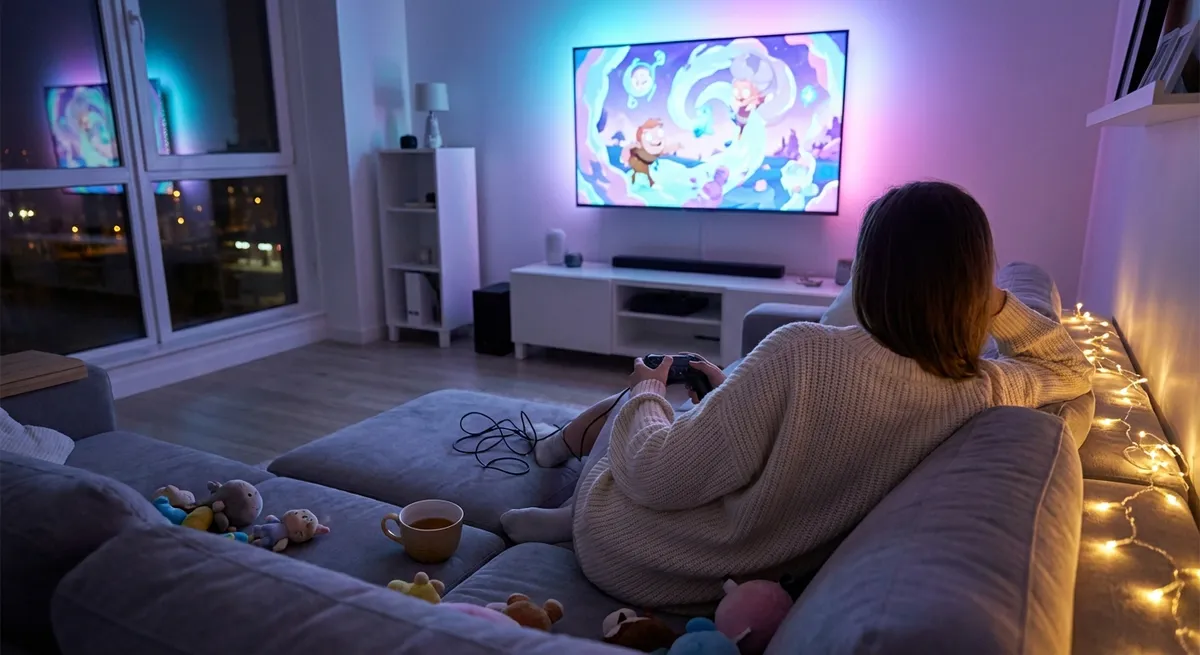
Not every game has to melt your GPU or scream in your headphones. Lately, there’s a different kind of trend sneaking into everyone’s Steam libraries and consoles: games that are low-stress, weirdly soothing, and still full of things to do. Think of them as “cozy chaos” games—chill vibes, but with just enough going on to keep your brain hooked.
Let’s dig into why this style of gaming is exploding, and what’s actually happening under the hood that makes it so addictive for tech‑minded players.
The Brain Hack Behind “Just One More Day”
Cozy games like Stardew Valley, Animal Crossing: New Horizons, and Disney Dreamlight Valley are designed around tiny loops that feel stupidly rewarding.
You plant something.
You come back later.
It grew. You feel weirdly proud of your pixels.
This is called a compulsion loop—a simple cycle of effort → reward → new goal. It’s the same type of psychology behind social apps and notification badges, just used for harvesting pumpkins instead of doomscrolling.
Underneath the cute art and soft music, these games are:
- Carefully pacing rewards so you always have something finishing “soon”
- Mixing short tasks (watering crops) with longer ones (expanding your house, finishing collections)
- Nudging you toward future goals so you log off feeling like you already started tomorrow
For tech enthusiasts, it’s fun to realize this: your calming farming game is secretly running a light version of the same engagement logic big platforms use—just without the anxiety.
Procedural Worlds That Still Feel Personal
A lot of cozy and sandbox games lean on procedural generation—basically, using algorithms to build worlds, maps, or events instead of hand‑crafting everything.
You’ll see it in:
- Randomly generated islands and maps
- Daily shop inventories that change
- NPC routines and weather patterns that feel “alive”
But here’s the twist: the good ones also layer handmade structure on top. The tech side is fascinating:
- The game builds a world layout with rules (no impossible terrain, enough resources, etc.)
- Designers anchor key spots or story beats so things don’t feel aimless
- Systems keep track of what you’ve done, so the world “remembers” you—unlocked areas, changed layouts, new buildings
The result: your game world feels like it was built just for you, even though a lot of it is generated on the fly. It’s a smart combo of math and human design that keeps things cozy instead of chaotic.
Low Pressure, High Systems: The Sneaky Complexity
Cozy doesn’t mean simple under the hood. Some of the chillest games run surprisingly complex systems:
- Time simulation – in‑game days, seasons, festivals, timed events
- Economy balancing – item prices, crafting recipes, resource scarcity
- AI behaviors – villagers with routines, relationships, and changing dialogue
- Environment rules – crops that grow faster in certain seasons or weather, creatures that only appear at specific times
What makes it feel so relaxing is how they surface this complexity:
- Instead of giant tutorial walls of text, they let you discover systems by playing
- Failure is usually soft: you don’t “lose,” you just get a bit less efficient
- Complexity is optional—you can min-max, or just vibe and decorate your house
If you like tech, there’s a kind of quiet joy in realizing your stress-free fishing session is being powered by layers of logic and simulation that would look right at home in a more hardcore strategy game.
The Social Side Without the Trash Talk
Multiplayer used to mean voice chat chaos and getting yelled at by strangers. Cozy games are flipping that script by focusing on collaboration instead of competition.
You can see this in:
- Shared farms and towns where everyone contributes
- Asynchronous play (you don’t have to be online at the same time)
- Gifting systems and shared goals instead of leaderboards
From a tech perspective, this often means:
- Lighter networking requirements (no twitchy hit detection, just syncing world states)
- Better tolerance for lag (no one’s getting headshot; you’re just planting carrots)
- Easier cross-platform options, since reaction time isn’t the main gameplay
It’s social gaming built more like a shared digital living room than a battlefield—and that’s a big reason it’s spreading so fast.
Comfort Games as Digital Self‑Care
There’s a reason cozy gaming started trending hard around global stress spikes: people wanted something interactive that didn’t feel like another pressure source.
Research into games and mental health has found:
- Games can help with stress relief and mood regulation when used intentionally
- Low-stakes, repetitive tasks (like organizing, crafting, or decorating) can be calming in the same way as hobbies like knitting or gardening
- Having a small, controllable world where your actions matter can feel grounding when real life is chaotic
This doesn’t mean “games are therapy” by default, but it explains why so many people now treat comfort games like a mental reset button. Tech-wise, it’s proof that interactivity can be designed not just to grab attention, but to genuinely lower the temperature of your day.
Conclusion
Cozy chaos games look simple on the surface—cute art, soft music, low stakes—but under all that are smart systems, sneaky psychology, and clever design choices that tech fans can absolutely appreciate.
They’re proof that gaming’s future isn’t just about more pixels and bigger explosions. Sometimes it’s about building small worlds that feel safe, smart, and strangely meaningful… even if all you did today was water some virtual parsnips.
Sources
- [Stardew Valley Official Website](https://www.stardewvalley.net/) - Overview of one of the most influential modern cozy games and its core systems
- [Animal Crossing: New Horizons – Nintendo](https://www.nintendo.com/store/products/animal-crossing-new-horizons-switch/) - Example of a major cozy life-sim and how it structures real-time play
- [American Psychological Association – Video Games and Stress](https://www.apa.org/news/press/releases/2013/11/video-games) - Discusses how video games can help people relax, manage moods, and cope with stress
- [Entertainment Software Association – 2023 Essential Facts](https://www.theesa.com/resource/2023-essential-facts-about-the-video-game-industry/) - Data on who plays games, why they play, and trends in game genres
- [Gamasutra (Game Developer) – The Compulsion Loop in Game Design](https://www.gamedeveloper.com/design/the-inner-workings-of-compulsion-loops) - Breakdown of how compulsion loops work inside game design and player engagement
Key Takeaway
The most important thing to remember from this article is that this information can change how you think about Gaming.