Gaming used to mean sitting still and mashing buttons. Now? Your heart rate, your sleep schedule, your living room lights, even your smartwatch are starting to join the party.
This isn’t just about “fitness games” or VR treadmills. It’s about games plugging into the rest of your tech stack in ways that feel weirdly personal—and sometimes surprisingly smart.
Let’s get into five ways gaming is slipping out of the screen and into the rest of your life.
1. Your Heart Rate Is Becoming a Game Mechanic
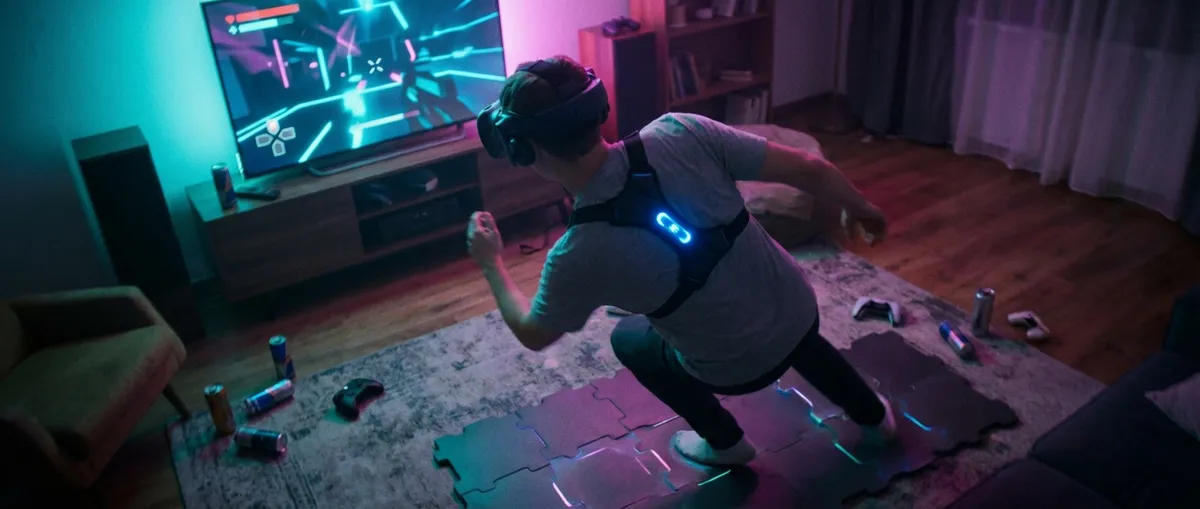
Some games and platforms are starting to read your actual body data—heart rate, motion, even stress levels—and fold it into the experience.
Fitness-focused titles like Ring Fit Adventure and Beat Saber already lean on movement, but we’re seeing a shift from “move to play” to “your body is the difficulty slider.” Imagine horror games that ramp up when your heart slows (you’re “too calm”), or matchmaking systems that pair you based on how stressed you usually get in ranked modes.
Wearables like Apple Watch, Garmin, and Fitbit already stream real-time heart data to phones and PCs. It’s not a stretch for games to tap into that—the tech stack is basically ready. Biofeedback games used in therapy (for anxiety or focus training) are proof that reading your physical state and reacting to it is more than a gimmick.
For tech enthusiasts, the interesting part isn’t just the sensor hookup—it’s what designers could do with it: adaptive difficulty using your actual stress, pacing that changes if you’re fatigued, or co-op games that reward the squad that stays physically calmer under pressure.
2. Your Smart Home Is Becoming Part of the Level Design
Your room doesn’t have to be a static backdrop anymore. Smart lights, speakers, and even thermostats can be synced with games to blur the line between “screen” and “space.”
Philips Hue and other smart lighting systems already integrate with PC platforms and consoles. A boss fight flashes your room red. A calm RPG village bathes everything in warm yellow light. Thunderstorms in-game sync with flickering lights and booming audio from your sound system.
Take that one step further: horror games that dim your lights to nothing when your character’s flashlight dies. Racing games that pulse your LEDs faster as your speed climbs. Co-op games where each player’s room glows with their team color.
For hardware nerds, this is a playground:
- Ambient RGB lighting that actually reacts to the scene instead of just cycling colors
- Smart speakers handling positional audio cues while your monitor focuses on visuals
- Even energy-aware systems—imagine your game politely easing brightness if it detects it’s 2 a.m.
It’s basically environmental UX, but for your entire space.
3. Game Tech Is Leaking Into Serious Training Simulators
The line between “game engine” and “serious simulator” is getting extremely blurry.
Modern game engines like Unreal Engine and Unity aren’t just running shooters and platformers—they also power:
- Driving and flight simulators for professional training
- VR medical practice environments where surgeons rehearse procedures
- Industrial training apps for factory workers, engineers, and emergency responders
What started as tech for making games look good and run smoothly—physics engines, real-time lighting, animation systems—now also helps train people to not crash cars, planes, or robots.
For tech enthusiasts, the wild part is that the same GPU that’s rendering your favorite sci-fi RPG might also be powering:
- A firefighter sim with realistic smoke and visibility
- A virtual hospital environment with dynamic patients
- A training tool for self-driving car perception and testing
Gaming hardware and software have quietly become “serious infrastructure.” Your graphics card isn’t just for frames per second; it’s part of how we prototype reality.
4. Cloud Gaming Is Turning Any Screen Into a Console
Cloud gaming slipped in quietly, but it’s a huge shift: your phone, cheap laptop, or random TV can now act like a high-end console if your internet is good enough.
Platforms like NVIDIA GeForce NOW, Xbox Cloud Gaming, and others stream high-end games from remote servers straight to your device. Your local hardware mostly just decodes video and sends your inputs back up.
The fun angles here:
- That “smart fridge runs Doom” joke? It’s not that far off when games run in the cloud.
- Low-power handhelds and thin-and-light laptops suddenly become legit gaming rigs.
- Your save files and sessions follow you from TV to phone to desktop without thinking about installs.
For tech-minded players, cloud gaming is a perfect storm of:
- Compression algorithms getting faster and cleaner
- Data centers with monster GPUs doing the heavy lifting
- Network routing and edge computing shrinking latency
We’re heading toward a future where “what can this device run?” becomes way less relevant than “what’s my connection like?”
5. AI Isn’t Just Smarter Enemies—It’s Smarter Worlds
We’re past the era where “AI in games” just means enemies that don’t instantly walk into walls.
AI tools now help with:
- Generating procedural worlds and levels that feel less copy‑pasted
- Animations that react more naturally to slopes, obstacles, or impacts
- NPCs that can respond with more than a fixed set of voice lines
On the dev side, AI assists in everything from testing (bots auto-running levels and stress-testing servers) to asset creation (upscaling old textures, cleaning audio, or prototyping environments).
On the player side, think:
- Dynamic difficulty that adjusts without feeling rigged
- Enemies that adapt to your habits instead of following one script
- NPCs that remember how you treated them and act accordingly across a whole game
For tech enthusiasts, the interesting bit is that games might become less “pre-baked” and more “co-authored” on the fly, using AI to fill in the gaps around your choices and playstyle.
Conclusion
Gaming isn’t just getting prettier; it’s getting more connected—to your body, your room, your other devices, and even the tools used in real-world training.
We’re moving from “game on a box under the TV” to “game as a layer across your entire tech ecosystem.” Your watch, your lights, your speakers, your cloud account, your GPU, and a bunch of background AI are all quietly collaborating to make the experience feel bigger than the screen.
If you’re into tech, this is the fun era: not just faster frames and sharper textures, but games that tap into everything else you own—and maybe everything else you are.
Sources
- [Philips Hue Sync with Gaming](https://www.philips-hue.com/en-us/explore-hue/apps/entertainment) - Details on how smart lighting can sync with games, music, and movies
- [Apple – Use Apple Watch for Fitness and Gaming Integrations](https://support.apple.com/en-us/HT204351) - Overview of Apple Watch fitness and health data that many apps (including games) can integrate with
- [NVIDIA GeForce NOW Cloud Gaming Overview](https://www.nvidia.com/en-us/geforce-now/) - Explains how cloud gaming streams high-end PC games to low-power devices
- [Epic Games – Unreal Engine for Simulation and Training](https://www.unrealengine.com/en-US/industries/simulation) - Examples of how game engines are used for serious training simulations beyond entertainment
- [Stanford University – Biofeedback in Therapy](https://med.stanford.edu/neurodevelopment/research/biofeedback.html) - Background on how biofeedback (like heart rate monitoring) is used clinically, showing the foundations of bio-responsive experiences
Key Takeaway
The most important thing to remember from this article is that this information can change how you think about Gaming.