Apparently, we’re all a little obsessed with time travel right now—at least digitally.
A Reddit post just went viral for “photographing” real people from the 1700s using modern tools, reminding everyone how weird it is to see distant history in ultra-clear detail. At the same time, gamers are deep into recreating old cities, wars, and even lost cultures inside engines like Unreal, Cities: Skylines, and Minecraft—with results that look more like museum exhibits than weekend hobby projects.
If you’ve ever paused a game cutscene because it looked “too real,” you’re going to like where this is heading.
History Is Getting the “Next-Gen Remaster” Treatment
That viral Reddit post, where users shared realistic visualizations of people from the 1700s based on old references, feels a lot like what’s happening in gaming right now: we’re “remastering” history with modern tech.
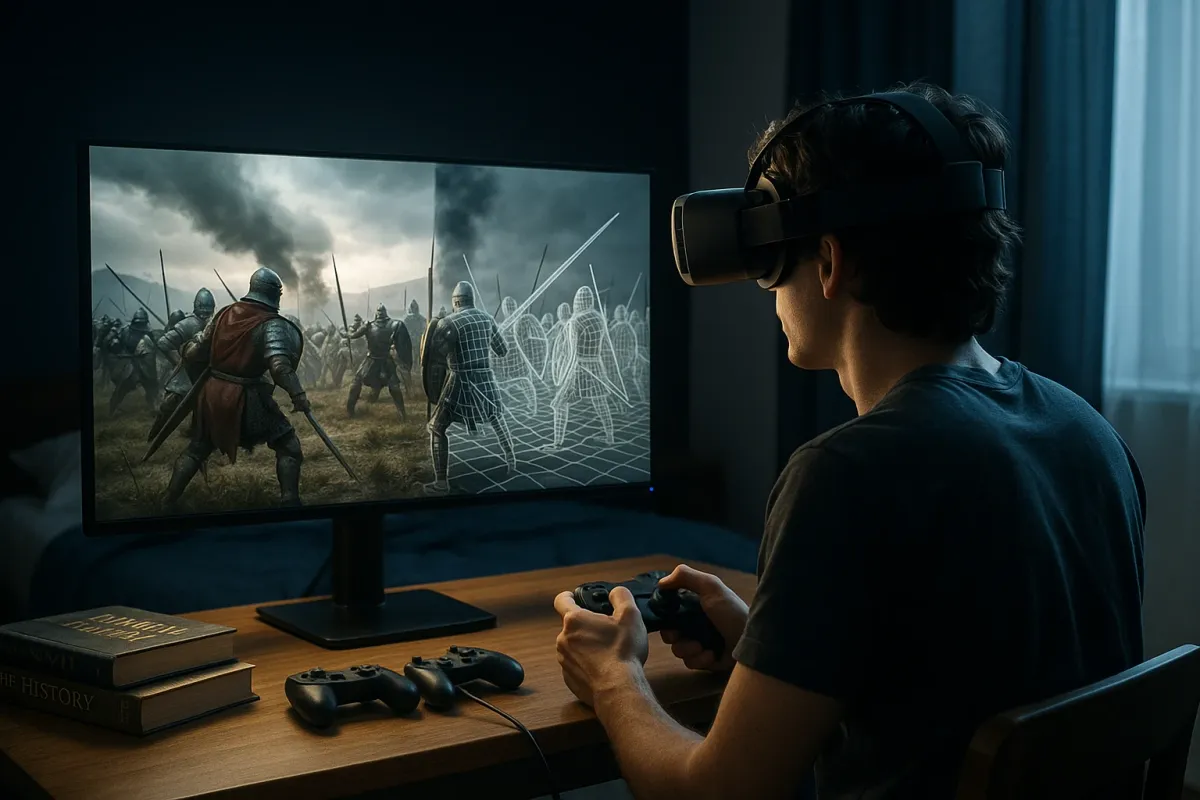
Instead of grainy portraits and vague descriptions, gamers are dropping historical figures and locations into high-fidelity worlds—sometimes with the help of AI, photogrammetry, or just an absurd amount of patience. You’ll see 18th-century streets rebuilt brick by brick in Unreal Engine, or historical battles rebuilt in Total War and Mount & Blade with authentic uniforms and formations. It’s like Assassin’s Creed’s DNA went airborne and infected the entire modding scene. The big shift: history isn’t just being told anymore, it’s being simulated—and players get to poke at it from every angle.
Gamers Are Accidentally Becoming Amateur Historians
What starts as “I just want a cool colonial-era town in my game” quickly turns into three browser tabs of academic papers and a YouTube rabbit hole on 1700s architecture.
You see it all over: players in Cities: Skylines obsess over historically accurate street layouts and zoning from specific decades. Minecraft builders recreate medieval fortresses with correct defensive structures, not just “castle but big.” Strategy fans mod in real regiments, flags, and logistics into games like Hearts of Iron IV and Europa Universalis IV. To make these worlds feel right, they end up researching trade routes, clothing dyes, sanitation, even how long it took to travel by horse. The line between “I play games” and “I casually know too much about 18th-century urban planning” is getting very blurry.
AI and Game Engines Are Turning Old Photos Into Playable Worlds
The tech that helped that Reddit post go viral—AI upscaling, face reconstruction, style transfer—is the same kind of stuff sneaking into game tools behind the scenes.
Creators are taking old maps, blurry photos, and even hand-drawn sketches, then feeding them into AI-assisted pipelines to generate game-ready environments. Old city plans become 3D street grids. Historic clothing references become character models. Tools in Unreal and Unity now make it almost trivial to slap realistic lighting and weather on top, so suddenly your rough historical project looks like a prestige Netflix docuseries you can walk around in. We’re still early, but you can see where this goes: “What did this town look like 300 years ago?” might soon be something you boot up, not just Google.
Museums and Classrooms Are Quietly Borrowing Gamer Energy
The same impulse that drives someone to rebuild a lost city in Minecraft is starting to power actual education and museum projects.
We’re seeing more collaborations where historians bring the facts and gamers bring the engines. Virtual tours of ancient sites, interactive exhibits where you can “walk through” old photographs, even history classes that use strategy games to explain how borders shifted and why. Some museums already run custom builds of popular engines to let visitors explore reconstructed historical districts. The wild part: the gap between a fan-made “historically accurate” mod and a professional “virtual exhibit” is shrinking fast—sometimes the fan version looks better, because gamers are willing to sink 300 unpaid hours into getting the roof tiles right.
The Future of “Retro” Might Be 1700s, Not 1990s
For years, “retro gaming” meant pixel art, CRT filters, and nostalgia for the 80s and 90s. Now there’s a new flavor of retro: going way further back.
With that Reddit post reminding everyone how strange it is to see 1700s faces in modern clarity, it’s not a stretch to imagine more games leaning hard into pre-photography eras but with ultra-modern presentation. Think: a cozy life sim set in a historically accurate 18th-century port town, or a narrative game that lets you jump between the real archival record and a reconstructed 3D version of the same street. As engines keep getting easier to use and AI fills in the boring bits, it becomes realistic for small teams—and even solo devs—to turn dusty archives into playable worlds. Retro won’t just mean “old games” anymore; it’ll mean “old time periods” rebuilt with tomorrow’s tech.
Conclusion
That viral “this is what people from the 1700s really looked like” moment is more than just a neat internet trick—it’s a preview of where gaming is headed.
We’re speeding past simple “historical settings” and into something weirder and cooler: interactive, community-built reconstructions of the past, powered by gamers, modders, AI tools, and engines that make photorealism look almost casual. Whether you’re here for deep strategy, chill city-building, or just walking around old streets that no longer exist, the next few years are going to feel a lot like time travel—with patch notes.
And honestly? That might be the most fun way to learn history yet.
Key Takeaway
The most important thing to remember from this article is that this information can change how you think about Gaming.