Games used to be simple: you pressed buttons, stuff happened, end of story. Now your games are quietly watching how you move, how fast you react, whether you’re bored or stressed—and changing themselves on the fly. It’s not sci-fi anymore. From shooters that learn your habits to story games that remember your smallest choices, gaming is shifting from “fixed experience” to “living system.”
Here are five ways that shift is already happening, and why tech nerds should be paying attention.
1. Difficulty That Learns You Instead of Punishing You
Once upon a time, “Easy / Normal / Hard” was your only choice. Pick wrong, suffer forever.
Modern games are starting to act more like adaptive tutors than brick walls. Instead of one difficulty curve for everyone, they quietly study how you play:
- Are you dying in the same spot over and over?
- Are you speedrunning past enemies like they’re cardboard props?
- Are you ignoring half the game’s mechanics?
Dynamic difficulty systems tweak things in the background: enemy accuracy, damage, health, even how aggressive they are. You don’t see a pop-up. You just feel like the game suddenly “clicks.”
Capcom talked openly about this with Resident Evil 4, where an “invisible hand” tunes the horror based on how you’re doing. Racing games like Forza scale opponents to keep your races tense but winnable. It’s not just about being easier or harder—it’s about staying in that sweet “this is tough but I can do it” zone.
For tech enthusiasts, this is basically reinforcement learning lite. The game’s reward? Keeping you in flow so you don’t quit.
2. NPCs That Actually Remember You (And Hold Grudges)
NPCs used to be moving furniture: walk here, say line, die, vanish from your brain.
Under the hood, that’s changing. More games are starting to treat every NPC like a tiny data node:
- Some remember your choices, even throwaway ones.
- Some shift behavior based on how you treated their friends or faction.
- Some don’t just “aggro”—they plan.
Middle-earth: Shadow of Mordor made this famous with its Nemesis System: orc captains remember if you killed them, or if they killed you, and they come back stronger, scarred, and angry. That was almost a decade ago, and the idea has been slowly spreading.
You can think of this as micro-simulation: every character has a lightweight profile (loyalty, fear, respect, prior encounters) and the game pulls from that profile to generate dialogue, AI decisions, or world events.
The cool part: the more you play, the more personalized your game world becomes. Technically, it’s just data structures and state machines. Experientially, it feels like the game has a long memory and its own version of office drama.
3. Physics Engines Are Becoming Tiny Science Labs
Gaming used to fake a lot of physics: pre-baked animations, invisible rails, carefully scripted chaos.
Now we’re getting closer to “what if this whole room actually existed?” territory:
- Fully simulated fluids, smoke, and fire that interact with the environment.
- Objects with real mass, momentum, and friction instead of canned behaviors.
- Destruction you can chip away at, not just one big “explode” animation.
Engines like Unreal Engine 5 and its Chaos physics system are pushing this pretty hard. Add in modern GPUs that are stupidly good at parallel math, and you get things like:
- Bullets that ricochet realistically based on angle and material.
- Collapsing structures that fall apart differently every time.
- Weather and wind affecting explosions, projectiles, and particles.
To a player, it just feels “more real.” To a tech nerd, it’s a giant, massively parallel physics experiment running in real time at 60+ frames per second.
Bonus: the same hardware and techniques are closely related to what’s used in engineering sims, robotics testing, and scientific visualization. Your GPU doing goofy ragdoll physics is basically moonlighting as a tiny supercomputer.
4. Your Controller Is Low-Key a Sensor Array
That “just a controller” in your hand? It’s basically a compact data capture device with buttons attached.
Modern controllers typically include:
- Gyroscopes and accelerometers to track tilt, rotation, and motion.
- Pressure-sensitive triggers to detect how hard you’re pressing.
- Haptics that can fire in patterns based on game state.
- Sometimes microphones and touchpads on top.
Games can combine all of that into a kind of low-grade telemetry:
- Did you jerk the controller after dying? That might indicate frustration.
- Are you making tiny, precise movements? Maybe you’re dialed in and focused.
- Are your inputs getting sloppier over time? You may be getting tired.
Most devs don’t fully exploit that yet, but the potential is there: adaptive haptics that calm down when you’re stressed, aim assist that scales based on fatigue, or motion gestures that open up entirely new control schemes.
On a hardware level, this is exactly the same thinking behind wearables and IoT: cheap, tiny sensors plus real-time data processing equals “smart” behavior. It just happens that in gaming, the smartest thing the system can do is make the experience more fun.
5. Procedural Worlds That Feel Less Random and More Intentional
Procedural generation used to mean “bland, ugly levels made by a robot.” Now it’s moving toward “handcrafted vibes, algorithmic scale.”
The trick is controlled randomness:
- Designers set rules, themes, constraints, and “no-go” zones.
- The game’s algorithms fill in the rest: terrain, loot, NPC placement, events.
- Telemetry from millions of players helps refine what “good” feels like.
Open-world games and roguelikes lean hard on this. Instead of placing everything by hand, devs build systems that design content on demand. Over time, those systems get tuned by actual play data—what players skip, what they linger on, what makes them quit.
From a tech perspective, this starts to look like a feedback loop:
- Game generates world or levels.
- Players interact with them.
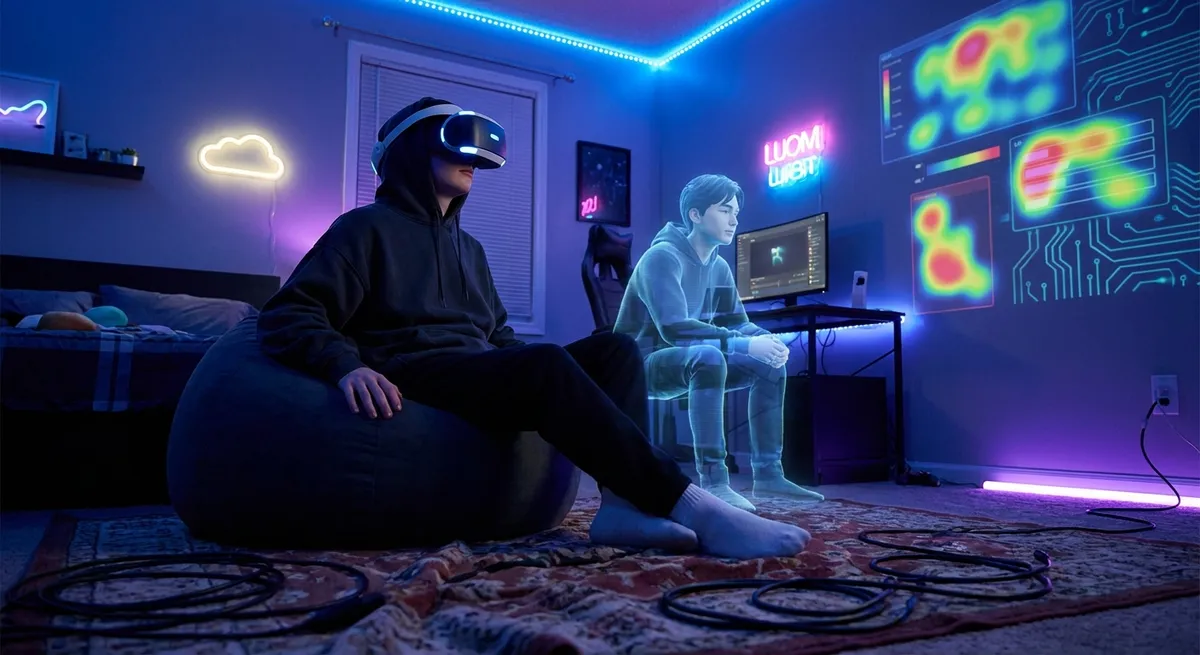
- Data gets collected (time spent, deaths, heatmaps, quits).
- Devs (or automated tools) adjust generation rules.
The result is levels that feel curated but can scale to absurd size without a studio burning out. It’s the same core idea powering modern recommendation systems—except instead of suggesting videos, it’s building your next dungeon.
Conclusion
We like to talk about graphics, frame rates, and GPUs melting under ray tracing, but the quietly wild stuff in gaming is happening in the invisible layer: systems that watch you play, learn your habits, and adjust the experience around you.
Games are creeping closer to being interactive simulations of you as much as of their worlds. They don’t just run on a console—they run on your patterns, your inputs, your reactions.
If you’re into tech, gaming is no longer just entertainment. It’s a front-row demo of adaptive systems, real-time simulation, and human-in-the-loop design, all disguised as fun.
Sources
- Capcom: Resident Evil 4 Developer Interview (Dynamic Difficulty) – Discussion of the “invisible hand” difficulty system and design philosophy
- GDC Talk: The Nemesis System – Middle-earth: Shadow of Mordor – Deep dive into persistent NPCs, memory, and systemic design
- Epic Games – Unreal Engine 5 Features Overview – Official breakdown of physics, world-building, and real-time tech powering modern games
- Microsoft – Xbox Wireless Controller Technical Overview – Technical look at sensors, haptics, and features in modern controllers
- MIT CSAIL – Procedural Content Generation in Games – Research-focused overview of how procedural generation is used and studied in game design
Key Takeaway
The most important thing to remember from this article is that this information can change how you think about Gaming.