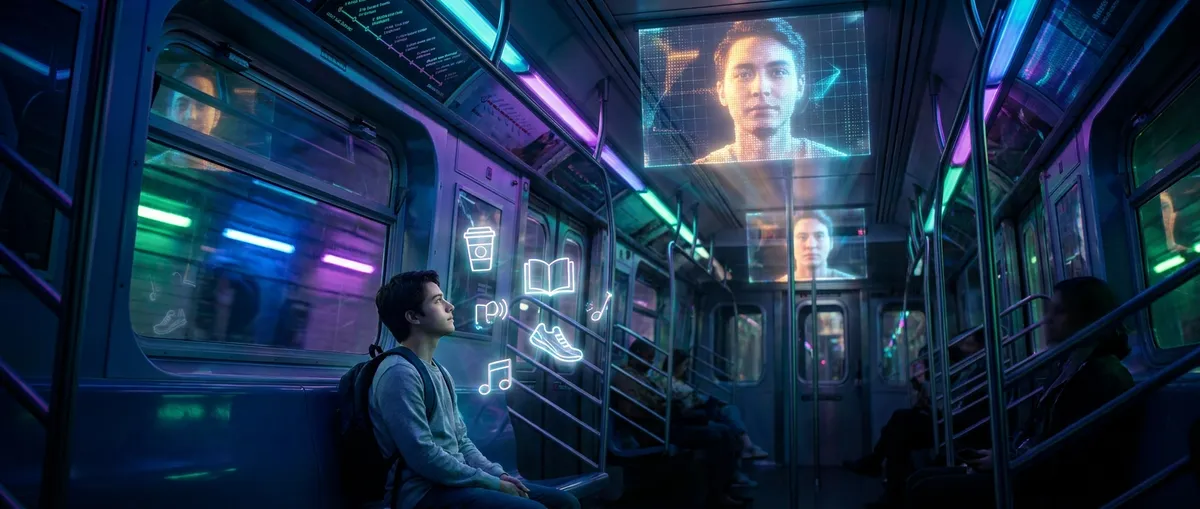
You’ve definitely felt it: that moment when Netflix, Spotify, or your email app recommends something and you think, “Okay, that’s spooky accurate.” That’s not magic or your phone listening (mostly) — it’s AI getting really good at learning your patterns.
But what’s actually happening under the hood when apps seem to “get” you? Let’s dig into some of the weird, surprising ways AI studies your habits — and how that’s quietly changing the tech you use every day.
1. Your “Random” Late-Night Scrolls Aren’t Random to AI
From your side, you’re just scrolling Instagram at 1:42 a.m. because you can’t sleep.
From the AI’s side, that’s a data point:
- Time of day you’re active
- What posts you slow down on
- Which creators you keep coming back to
- Whether you watch with sound on or off
Over time, algorithms build a kind of “rhythm profile” of you. They don’t just know what you like — they start to learn when you’re most likely to engage and how your mood shifts during the day.
That’s why:
- You might see more light, chaotic content late at night
- More serious, long-form stuff during lunch or after work
- More shopping-focused content on weekends
This isn’t about one big creepy file labeled “You.” It’s a thousand tiny patterns stitched together until the AI can predict what will keep you on the app for just one more scroll.
2. AI Isn’t Just Tracking Clicks — It’s Watching Hesitations
You know that moment where you hover over a video, don’t click, then scroll away?
That tiny hesitation is data.
Modern recommendation systems care less about simple yes/no actions (“did you click?”) and more about micro-behaviors, like:
- How long a video was on your screen before you scrolled
- Whether you turned the volume up
- If you moved your cursor toward the “close” button and then changed your mind
- How quickly you backed out of something you did click
To AI, your attention is a slider, not a switch. It’s not just “interested” or “not interested” — it’s:
- “Mildly curious”
- “Very into this”
- “Immediately regretted clicking that”
That’s how platforms slowly learn your “nope” territory and your “tell me everything about this obscure topic for the next 40 minutes” territory.
3. “Smart” Features Are Often Just Very Good Pattern Matching
A lot of AI-powered features feel way more magical than they really are. Underneath, they’re usually doing one main thing: spotting patterns humans don’t notice at scale.
Here are a few examples that look super smart but are really super systematic:
- Email suggestion lines (“Sounds good, thanks!” appearing before you type it):
These systems are trained on billions of real emails, spotting which phrases usually follow certain types of messages. It’s autocomplete on steroids, not telepathy.
- Music recommendations that match your “vibe”:
AI uses things like tempo, instruments, mood tags, and what similar listeners enjoy. It doesn’t understand your feelings — it just sees that people who like these 12 songs also tend to like that 13th one you haven’t heard yet.
- Photo apps grouping people and places:
They’re comparing face features and background elements across endless photos, looking for what repeats. It’s pattern recognition, not memory.
The wild part: once pattern matching gets accurate enough, it feels like understanding, even when the AI has zero idea what anything “means” in human terms.
4. Your Devices Are Quietly Becoming Personal Behavior Archives
Your phone, laptop, smart TV, and even your earbuds are slowly building an ongoing record of how you interact with tech — and that’s gold for AI systems.
Think about what your devices silently notice over time:
- How fast you usually type or swipe
- The apps you open first thing in the morning
- How long you stick with a new app before deleting it
- Which notifications you always ignore
- What you usually do after finishing a show/game/song
When companies talk about “personalization,” this is what they’re leaning on. Once there’s enough data, AI can:
- Preload apps it thinks you’re about to open
- Cache videos in advance so they don’t buffer
- Surface shortcuts you’re likely to need next
- Recommend settings you didn’t know existed
The upside: things feel smoother and more “made for you.”
The downside: your behavior over the last year might be guiding what you see more than what you actually want right now.
5. The Line Between “Helpful” and “Pushy” Is Getting Very Thin
Because AI is so good at optimizing for “engagement,” it often ends up optimizing for one thing: whatever keeps you interacting.
Helpful side of that:
- Apps learn your preferences so you dig less through menus
- Recommendations surface stuff you actually care about
- Tools like writing assistants or coding copilots speed up boring tasks
Pushy side of that:
- You get nudged toward content that’s more extreme or emotional, because it hooks attention
- Platforms keep recommending similar things until your feed feels like an echo chamber
- You interact with what’s in front of you, not necessarily what’s best for you
The next phase of AI design isn’t just “make it smarter.” It’s “decide what we want it to optimize for”:
- Just time spent?
- Long-term satisfaction?
- Mental health?
- Learning something new instead of seeing more of the same?
Those choices sound abstract, but they shape what your tech nudges you toward — every single day.
Conclusion
AI knowing your habits isn’t inherently good or bad — it’s powerful. It can make apps feel smoother, smarter, and honestly, a lot less annoying. It can also quietly steer your time, attention, and even mood without you really noticing.
The fun part for tech enthusiasts right now is that we’re early enough in this shift to still see the gears turning:
- Which apps actually use your data to help you, not just hook you?
- Which AI features feel like they respect your choices instead of trying to outsmart you?
- Where do you draw the line between “conveniently personalized” and “a little too much”?
If you start paying attention to how apps react to what you do — the pauses, the scrolls, the hesitations — you’ll notice something: AI isn’t just learning you.
You can learn it back.
Sources
- How Netflix’s Recommendations Work - Netflix’s official research hub explaining how they personalize what you see
- How YouTube’s Algorithm Really Works - YouTube’s breakdown of how its recommendation system uses watch history and engagement
- Spotify Personalization and Discovery - Spotify engineering blog on how Discover Weekly and similar playlists are generated
- The Impact of Social Media Algorithms on User Behavior - Pew Research Center report on how people see and experience algorithmic feeds
- AI and Personalization in Consumer Tech - McKinsey analysis on how personalization systems work and why companies invest in them
Key Takeaway
The most important thing to remember from this article is that this information can change how you think about AI.