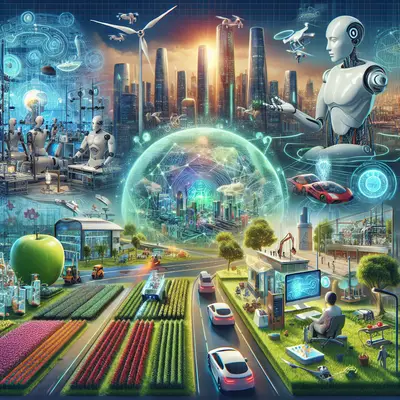
AI used to feel like sci-fi wallpaper—cool, distant, and mostly theoretical. Now it’s in your camera, your playlists, your emails, and your games… silently making calls about what you see, hear, and even think about next.
This isn’t just “machines getting smarter.” It’s AI getting personal. And the way it does that is way more interesting (and a little weirder) than most people realize.
Let’s dig into five angles on everyday AI that tech nerds can actually chew on—no fluff, no doomer rant, just how this stuff really works in our lives.
1. Your Data Doppelgänger: How AI Builds a Ghost Version of You
Every time you tap, search, scroll, or pause on something, you’re feeding an invisible clone of yourself that lives inside someone’s recommendation system.
Streaming services, shopping sites, social platforms, and even navigation apps all build a probabilistic “you” made out of patterns:
- What you watch late at night vs. during lunch
- How long you hover over a product before closing it
- Which posts you scroll past vs. which ones you zoom in on
- How often you break your own habits
AI doesn’t “know” you like a human does; it just bets on what’s likely next. Watch three cyberpunk movies in a row? Your ghost copy suddenly becomes “the type of person” who might like graphic novels and synth playlists. Order a standing desk, then a posture corrector, then a grip strengthener? Congratulations, your data twin is now a “productivity optimization” enjoyer.
This ghost isn’t stored as a single profile picture—it’s scattered across models: one that predicts what you’ll buy, one that predicts what you’ll click, one that predicts whether you’ll cancel your subscription. The creepy/fascinating part: different AIs can form totally different “versions” of you based on the same history, depending on what they’re optimizing for.
It’s not mind-reading. It’s pattern-reading. But the more data you feed it, the more it feels like the system is finishing your sentences before you think them.
2. AI Doesn’t Just Predict You—It Quietly Trains You Back
Most people assume it’s a one-way street: you use the app, the AI learns. In reality, it’s a feedback loop—AI is also shaping how you behave.
Recommendation systems don’t just show you what you already like; they gradually nudge you into what’s easy to like:
- Platforms boost slightly more extreme or emotional content because it keeps engagement high
- “People like you also bought…” nudges you toward the statistically common choice
- Auto-complete in search or chat suggests phrases you might not have used but end up adopting
Over time, your preferences don’t just inform the model; they get steered by it. You think you’re browsing freely; in practice, you’re exploring a curated corridor where certain choices are made more convenient, prominent, or repeatedly visible.
What’s wild is that this can change behavior at scale: language shifts, meme formats standardize, opinion clusters get sharper. AI becomes a kind of social gravity—subtle, constant, and almost invisible unless you deliberately step outside the system (incognito mode, new accounts, different platforms).
AI is not just answering “What do you want?”
It’s quietly asking, “Can I convince you to want this instead?”
3. When AIs Start Talking to Each Other (And You’re Not the Main Character)
So far, most people think about AI as something they talk to: chatbots, voice assistants, support bots, game NPCs. But a lot of the real action happens when AIs talk to each other behind the scenes.
A few examples:
- Your bank’s fraud detection AI flags a transaction as suspicious. That triggers another AI to decide whether to text you, freeze your card, or silently log it.
- In logistics, one model predicts demand, another schedules trucks, a third optimizes routes, and a fourth handles pricing—chaining decisions across systems.
- In some multiplayer games, AI anti-cheat tools watch for suspicious patterns, then hand off flagged behavior to moderation tools—or even tweak matchmaking.
You’re not always the customer here. Sometimes you’re the variable. The system doesn’t ask, “What does this user prefer?” but instead, “How does this user affect system stability, risk, or revenue?”
As more businesses wire their internal workflows into model-to-model pipelines, you get decisions you never directly see:
- Whether your refund gets auto-approved
- Whether your resume makes it to a human
- Whether your content gets quietly deprioritized instead of outright removed
This doesn’t automatically mean “black box conspiracy”—a lot of it is just efficiency. But it does mean more of your life runs on invisible negotiations between AIs where you’re not in the room.
4. The Hidden Cost: What It Takes to Train the Brains Behind the Magic
Every slick AI demo hides a very un-slick reality underneath: huge power bills, big data centers, and armies of human labelers doing the digital equivalent of cleaning the training wheels.
A few under-the-hood realities:
- Training large models is energy-hungry. Data centers that run AI workloads can consume as much electricity as small towns. That cool auto-caption feature in your app sits on top of staggering compute.
- “Smart” models learn from a lot of “dumb” work. Humans manually label spam emails, rank search results, tag toxic content, and compare AI answers so models can be trained on what “good” looks like.
- There’s a carbon and water footprint. Some data centers use large amounts of water for cooling; some regions are already raising questions about AI’s environmental impact and power grid strain.
It doesn’t mean AI is evil by default—tech has always had trade-offs—but the “infinite intelligence in the cloud” vibe is misleading. Underneath the sleek UX is:
- Hardware that wears out
- Datasets that might be biased, messy, or incomplete
- People doing repetitive work to make “automation” feel seamless
If you’re into tech, this is where the interesting questions live: How do we build models that are smarter per watt? How do we reduce labeling pain but maintain quality? How transparent should companies be about what goes into the models that run our digital lives?
5. You Don’t Need a Supercomputer to Build Weird, Fun AI Stuff
It’s easy to think AI is only for labs with 10,000 GPUs and funding from people who own too many hoodies. But the ecosystem has shifted hard: a solo dev or small team can now build surprisingly powerful AI experiments using open models and off-the-shelf tools.
Some cool realities:
- Open-source models are legit now. You can run language and vision models locally on a decent laptop or mini PC with some optimization. No monthly API bill required.
- Prebuilt toolkits do the heavy lifting. Libraries and frameworks handle most of the annoying math and infrastructure, so you can focus on what your tool does, not how tensors multiply.
- Tiny, single-purpose models are underrated. Instead of trying to build “the next ChatGPT,” you can create focused tools: a script that tags your screenshots, a model that spots glitches in game footage, or a local assistant that understands your folder structure.
The interesting shift is this: AI is becoming less of a magic box and more of a building material. Like databases or graphics libraries, it’s just another part of the stack that you can mash into side projects.
You don’t have to launch a startup or change the world. You can just:
- Make a bot that auto-sorts your downloads by content instead of file extension
- Build a local recipe searcher that understands “stuff I can cook with what’s in my fridge photo”
- Train a tiny model to recognize your own handwriting or your own keyboard patterns
AI becomes way less intimidating once you stop treating it like a god and start treating it like a glorified toolbox.
Conclusion
AI isn’t just “getting smarter.” It’s getting closer—embedded in your choices, your feeds, your work, and your devices.
- It builds ghost versions of you
- It shapes your behavior while learning from it
- It negotiates with other AIs about your life, often offstage
- It runs on real-world resources and real human labor
- And it’s now something you can actually tinker with, not just read headlines about
The interesting question for tech enthusiasts isn’t “Will AI take over?” It’s: How much of myself am I comfortable outsourcing—and how much of this system do I want to build, bend, or break for fun?
Because whether you’re hands-on with it or not, AI has already joined the cast of characters in your daily life. You can ignore it, fear it, or—much more fun—start poking at how it works.
Sources
- [Stanford HAI – Artificial Intelligence Index Report](https://aiindex.stanford.edu/report/) - Comprehensive annual report on global AI trends, including compute, energy use, and real-world deployment
- [MIT Technology Review – “Big batteries, small batteries, and the race to electrify AI”](https://www.technologyreview.com/2023/10/10/1081115/ai-energy-consumption-data-centers/) - Explores the energy and infrastructure demands of large AI models and data centers
- [European Commission – Guidelines on Automated Decision-Making](https://digital-strategy.ec.europa.eu/en/policies/explainable-ai) - Policy-focused overview of explainable AI and automated decision systems affecting users
- [Google AI Blog – “Recommendation Systems: The Good, The Bad, The Ugly”](https://ai.googleblog.com/2021/04/recommendation-systems-good-bad-and.html) - High-level look at how recommendation models work and how they impact user behavior
- [OpenAI – “Safety Best Practices for Deploying Language Models”](https://openai.com/index/safety-best-practices-for-deploying-language-models/) - Practical discussion of how AI systems are developed, refined, and monitored in real applications
Key Takeaway
The most important thing to remember from this article is that this information can change how you think about AI.