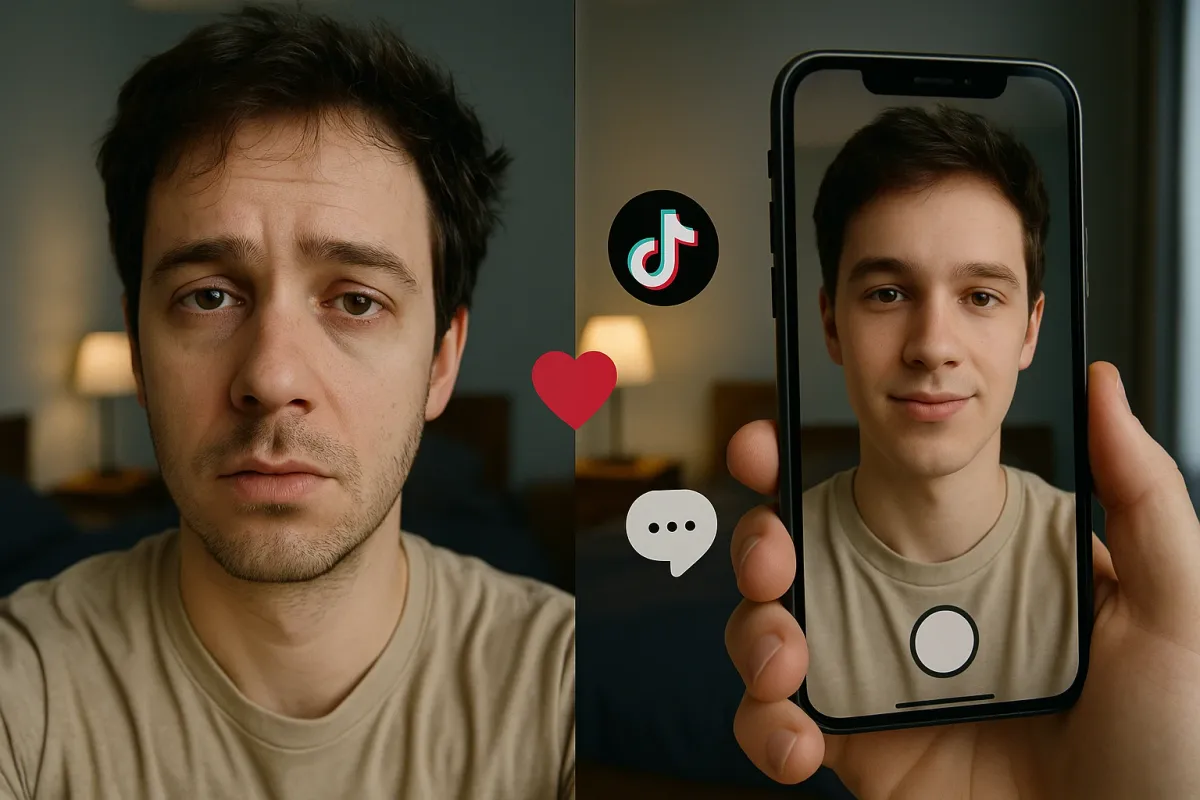
If you’ve opened TikTok lately, your For You page has probably been hijacked by people “aging in reverse.” The viral Benjamin Button trend (inspired by the Brad Pitt movie) has users stitching old photos next to new ones, showing how they somehow look younger now than they did ten years ago. It’s funny, weirdly wholesome, and also a perfect snapshot of how apps quietly shape how we see ourselves.
This isn’t just another TikTok challenge. It’s a live demo of what social apps are really good at in 2025: remixing your past, rewriting your image, and turning your camera roll into content fuel on demand. Let’s break down what this trend accidentally reveals about the apps we’re all glued to.
1. Your Camera Roll Is An Untapped Content Goldmine
The Benjamin Button trend basically runs on one thing: old, slightly cursed photos. People digging up 2010s Facebook pics, blurry party shots, and middle-school selfies… and TikTok is turning them into viral content.
That’s exactly where apps are heading right now. Instead of asking you to create something from scratch, they want to help you repackage what you already have. TikTok’s editing tools, CapCut’s auto-templates, and even Instagram’s “Memories” and archive features are all nudging you to recycle your past into something new. The apps are doing the heavy lifting: syncing photos to trending sounds, auto-cutting clips, adding captions. The Benjamin Button challenge is just a visible example of this bigger pattern — your old photos are no longer just nostalgia; they’re raw material.
2. Viral Challenges Are The New “Social Search Engine”
This trend didn’t blow up because people woke up one day and decided to relive their awkward phase. It spread because TikTok’s algorithm loves formats it can easily copy and remix: duets, stitches, and template-based videos. One person posts their wild glow-up, someone stitches it, then another person copies the same audio and format — suddenly your feed is a grid of people “aging in reverse.”
In a weird way, these trends are how we “search” now. Want to know how people really looked in 2009? Scroll through the Benjamin Button videos. Curious what office life is like? Dive into a work meme sound. Instead of typing in keywords, you tap a sound, filter, or hashtag and fall down a rabbit hole. TikTok, Instagram Reels, and YouTube Shorts have quietly turned “trends” into a discovery system that’s way more emotional and personal than a Google search result.
3. Beauty Filters Are Everywhere… But Confidence Is What’s Actually Viral
Here’s the twist: a trend about reverse-aging could have been a hyper-filtered, face-tuned mess. But a lot of the most shared Benjamin Button videos are the opposite — they lean into the awkwardness. Braces. Overplucked eyebrows. Horrible haircuts. 2000s flash photography doing everyone dirty.
This doesn’t mean filters are going away. TikTok’s beauty effects, Instagram’s smoothing tools, Snapchat’s lenses — they’re still baked into most camera apps. But what’s really getting traction in this trend is the contrast between then and now, and the confidence in showing both. People aren’t just flexing their looks; they’re flexing the journey. That’s a big shift: apps that once pushed a single glossy “ideal” are now accidentally boosting content that’s more raw, self-aware, and funny about how we actually look.
4. Apps Are Turning Aging Into A Shared, Editable Story
The Benjamin Button challenge hits because everyone has that one photo they swore would never see daylight again. But posting it doesn’t feel as scary when you’re doing it inside a trend where thousands of other people are doing the exact same thing.
That’s one of the sneaky powers of modern apps: they turn big, personal topics — aging, body image, mental health — into shared experiences that feel lighter because they’re framed as a meme or a challenge. Today it’s “I look younger now than I did at 20.” Yesterday it was the “photo dump” era. Before that, it was the 10-year challenge. The underlying pattern is the same: social apps keep giving us formats to package our lives into bite-sized stories. It’s deeply personal, but also oddly… standardized.
5. TikTok’s Trend Machine Is Quietly Redefining What “Time” Feels Like Online
The reason this particular challenge exploded now isn’t just nostalgia — it’s timing. We’re in that post-2010s moment where enough time has passed for everyone to have truly chaotic old pics, but we’re still close enough to remember how it felt. TikTok’s algorithm is scarily good at sensing when the internet is in the mood for a specific vibe: cozy nostalgia one week, chaos memes the next, now “look how far I’ve come” glow-ups.
What’s wild is how apps compress time while pretending to highlight it. You scroll through someone’s Benjamin Button video and watch a decade pass in eight seconds. Your own “past you” becomes just another beat drop in a trending sound. Social apps — especially TikTok — have turned time into an effect, something you can scrub through, remix, and post on loop. Our lives aren’t just chronological anymore; they’re editable.
Conclusion
The Benjamin Button TikTok trend might look like just another silly challenge, but it’s actually a perfect snapshot of where apps are in 2025: mining your old photos, remixing your identity, and turning your entire life into a reusable content library.
If you’re a tech nerd, this is the real headline: short-form apps aren’t just shaping what we watch — they’re reshaping how we see our past, our looks, and even our sense of time. Today it’s reverse aging. Tomorrow it’ll be something else. But the rule stays the same: if it’s in your camera roll, your favorite app is already figuring out how to make it go viral.
Key Takeaway
The most important thing to remember from this article is that this information can change how you think about Apps.