Some gadgets are loud about how “revolutionary” they are. Then there are the quiet overachievers—the devices that just live in your bag, your pocket, or your home and slowly rewire your habits without making a big scene.
This isn’t about spec sheets or who has the most megapixels. It’s about the surprisingly small pieces of tech that, once you start using them, you never want to live without.
Let’s talk about five types of gadgets that are doing exactly that—and why they’re way more interesting than they look at first glance.
1. The “Never Think About Charging” Era of Everyday Gadgets
We’re inching into a world where some gadgets basically never die on you—and that’s a bigger shift than it sounds.
From e-readers that last weeks on a charge to wireless earbuds that can get hours of playback from a 10-minute top-up, gadget makers are quietly reshaping how often you even think about batteries. Some smart rings and fitness trackers now squeeze multiple days (or more) from tiny batteries by using low-power sensors and clever software tricks.
Then you’ve got things like power banks that can not only charge your phone but also your laptop and handheld gaming console, all from one brick in your bag. Combined with USB-C fast charging, your “dead phone panic” windows are getting smaller and smaller.
The sneaky upgrade here: less battery anxiety means you use your devices more freely—taking more photos, streaming more, tracking more health data—without constantly hunting for an outlet. You stop planning your day around power, which makes the tech fade into the background and just work.
2. Smart Home… Without Making Your Home Look Like a Gadget Store
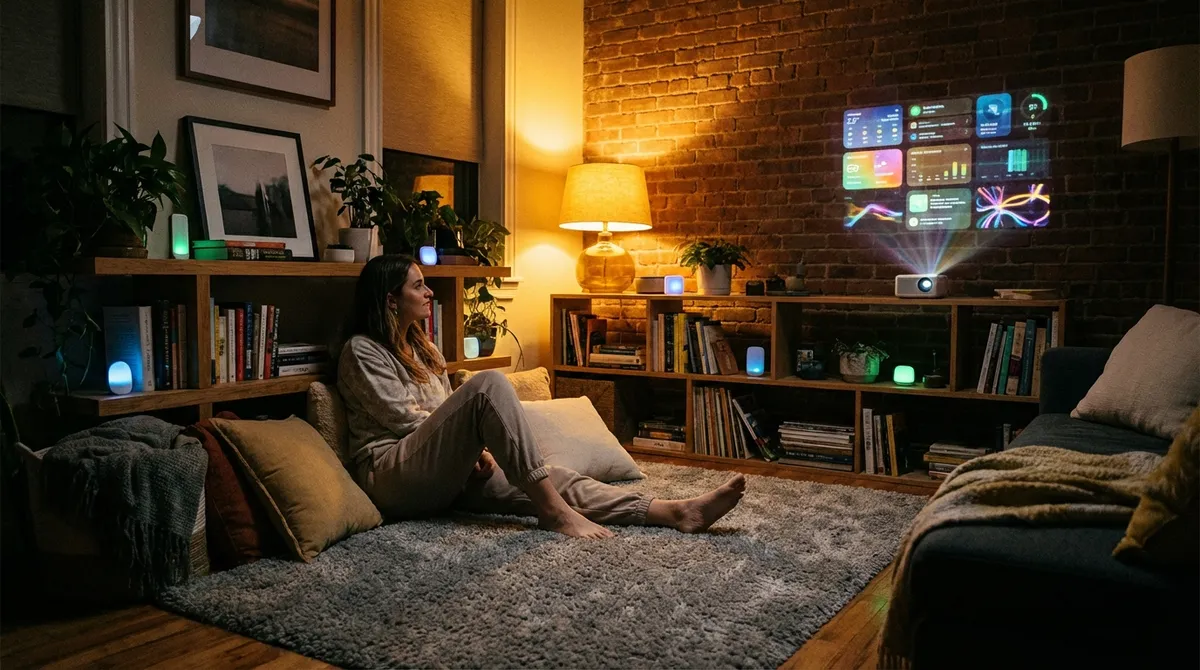
For a lot of people, “smart home” used to mean bulky hubs, glowing boxes, and a dozen random apps. Now, the most interesting smart home gadgets are the ones that blend in so well you almost forget they’re there.
Think smart plugs that turn any “dumb” lamp into a voice-controlled light. Or smart bulbs that look like normal bulbs but let you dim, schedule, and color-tune your room from your phone. Smart thermostats learn your routine and trim your heating/cooling bill without you constantly fiddling with buttons.
Modern video doorbells and smart locks look more like regular hardware, and some run on batteries you only swap a couple of times a year. Add in motion sensors and smart switches, and suddenly your house is reacting to you: lights turning on when you walk in, coffee makers on timers, fans spinning up before your room gets stuffy.
The big shift here isn’t just “remote control everything.” It’s how these gadgets slowly teach your house to behave the way you wish it would—while still looking like a normal place, not a sci-fi movie set.
3. Wearables That Want to Help You, Not Just Yell at You
Early fitness trackers felt a bit like judgmental wristbands: “You didn’t hit 10,000 steps. Again.” Now, the most interesting wearables are less about guilt and more about context.
Smartwatches and rings don’t just count steps—they track heart rate, sleep stages, temperature trends, and even stress signals through heart rate variability. Instead of just telling you to “move more,” they can spot patterns: you sleep terribly after late caffeine, or your resting heart rate spikes right before you get sick.
Some gadgets are shifting from raw data to guidance: recommending rest days, suggesting bedtime windows, or warning you when your exercise is getting a bit too intense. Others add subtle mental health support—breathing reminders, mindfulness prompts, or just a gentle buzz telling you to get up and stretch.
The fascinating thing isn’t the sensors themselves; it’s what they’re slowly changing. You start going to bed a little earlier, walking a bit more, catching burnout a bit sooner. Over time, that’s bigger than any single “killer feature.”
4. Handheld Gaming Is Quietly Becoming “Console Enough”
Handheld gaming used to be “the thing you used when you couldn’t get to a real console.” Not anymore.
Between dedicated handheld consoles and surprisingly powerful phones paired with controllers, portable gaming has blurred the line between “on the go” and “on the couch.” You can stream big-budget games from the cloud or your own console/PC, or just run them locally on hardware that fits in your bag.
You’re not just killing time in a waiting room anymore—you’re picking up the same game session you were playing at home. Save files sync, multiplayer works across platforms, and controllers fold up small enough to live in a pocket.
What’s fascinating is how this is changing where gaming happens. Commutes, coffee shops, park benches, road trips—anywhere you’ve got a decent connection or a downloaded game, you’re basically carrying a mini living room with you. And that makes gaming feel less like a “blocked off” activity and more like something that can flex around your day.
5. The New “Analog-ish” Gadgets: Digital Tools That Feel Old-School
Some of the coolest modern gadgets are the ones that don’t feel especially digital—at least not until you look closer.
E-ink devices are the best example. E-readers look like simple book screens, but under the hood they’re carefully tuned to be easy on your eyes and ultra-efficient on battery. Then there are e-ink notepads and tablets designed to feel like writing on paper, but with cloud sync, search, and backup built in.
You see it in smart notebooks you can scan and wipe clean, or in digital pens that track your writing on real paper. Even “dumb-looking” kitchen gear is changing: smart scales that walk you through recipes, Bluetooth meat thermometers that ping your phone when dinner’s done, and coffee grinders that remember your exact settings.
These gadgets are fascinating because they bridge two worlds—you get the comfort and familiarity of analog tools, plus the convenience and memory of digital ones. The result: you capture more ideas, waste less paper, and make fewer “whoops, I burned it” mistakes… without feeling like you’re working on a laptop all day.
Conclusion
Gadgets don’t have to shout about being futuristic to seriously upgrade your life. The most interesting ones today are:
- Fading into the background
- Lasting way longer on a charge
- Learning your habits quietly
- Mixing analog comfort with digital brains
They’re not just about “more power” or “more pixels.” They’re about slowly adjusting your routines—how you charge, sleep, play, cook, move—until one day you realize: you’re living with a lot of tech, but you’re not bored of any of it.
Sources
- [U.S. Department of Energy – Energy Saver: Lighting Choices](https://www.energy.gov/energysaver/lighting-choices-save-you-money) – Explains how modern lighting (including smart LEDs) can save energy and costs
- [Mayo Clinic – Fitness Trackers: How to Choose](https://www.mayoclinic.org/healthy-lifestyle/fitness/in-depth/fitness-trackers/art-20420559) – Overview of what fitness trackers and wearables can monitor and how they affect habits
- [Harvard Health Publishing – Blue Light Has a Dark Side](https://www.health.harvard.edu/staying-healthy/blue-light-has-a-dark-side) – Discusses screen tech, eye strain, and why displays like e-ink can feel easier to use
- [FTC Consumer Advice – Home Internet of Things Security](https://consumer.ftc.gov/articles/protecting-your-home-internet-things-devices) – Guidance on smart home devices and how to keep them secure
- [Microsoft – Cloud Gaming Overview](https://support.xbox.com/en-US/help/games-apps/cloud-gaming/get-started-cloud-gaming) – Explains how modern cloud and remote gaming works on handheld and mobile devices
Key Takeaway
The most important thing to remember from this article is that this information can change how you think about Gadgets.