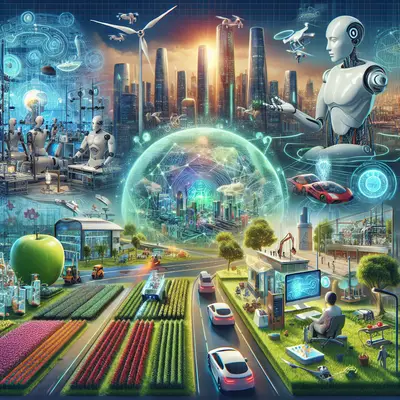
AI isn’t just answering your homework questions or helping you write emails anymore. Behind the scenes, it’s taking on a bunch of strange, very specific “jobs” that didn’t exist a few years ago—and they’re quietly reshaping how tech actually works.
If you’re into gadgets, games, or just love poking at the future, these are the corners of AI you should know about. No hype, no doomscrolling—just the fun (and slightly wild) ways AI is slipping into places you probably haven’t looked yet.
1. AI Is Becoming Your Personal Sound Engineer
AI isn’t just generating songs; it’s starting to edit and remix the audio around you in real time.
Modern smartphones, laptops, and meeting apps already use AI-based noise suppression to cut out barking dogs and keyboard clacking. That’s the basic level. The next wave goes way further:
- AI can isolate individual instruments from a full song, even if the original track is decades old.
- Streaming platforms are experimenting with AI that can normalize volume between songs, tweak EQ to match your headphones, or even subtly boost dialogue in movies so you don’t have to ride the remote.
- Some tools let creators “re-record” dialogue without getting back in the studio—AI models can mimic a person’s voice well enough to fix lines, dubs, or mistakes after the fact.
To you, it just feels like “wow, this sounds better.” Under the hood, an AI-driven audio nerd is working overtime.
2. AI as the Internet’s Recycling Plant
If the internet is a massive landfill of content, AI is slowly turning into its recycling facility.
We’re hitting a weird moment online:
- There’s too much content for humans to manually tag, summarize, or organize.
- Search is changing from “10 blue links” to “just tell me the thing I want.”
So AI is being hired as a full-time content recycler:
- It reads huge piles of text and turns them into short summaries, FAQ pages, or quick answers.
- It scans images and videos to auto-generate captions and tags so they’re actually searchable.
- It helps platforms moderate toxic or illegal content, flagging stuff that would take armies of humans to review.
The twist: AI is now also being used to detect other AI-generated content, like a spam filter for machine-written junk. We’ve basically built bots to clean up after other bots.
3. AI Is Acting Like a Social “Translator”
Humans are surprisingly bad at interpreting tone online. AI is quietly stepping in as a sort of emotional translator.
You’re already seeing this in small but telling ways:
- Email clients suggesting you “soften” a sentence or remove aggressive wording.
- Collaboration tools prompting you to rewrite a message to be clearer, shorter, or more polite.
- AI systems that analyze customer support chats and tell agents, in real time, “this person is frustrated, here’s how to respond.”
Companies also use AI to scan massive amounts of feedback—reviews, posts, support tickets—to gauge how people feel about a product or update, not just what they said.
It’s not mind reading, but it is pattern reading at a scale humans can’t touch. Your mildly passive-aggressive email? Yeah, AI noticed.
4. AI as a Training Partner for Everything
We usually think of AI as something we “ask questions,” but a growing use case is treating AI like a coach or sparring partner.
And not just for coding:
- Language learners use AI chat to practice conversations without worrying about embarrassing mistakes.
- Creators use AI to stress-test ideas: “Critique this pitch like you’re an annoyed investor,” “Challenge this argument from the opposite political side,” etc.
- Athletes and gamers can analyze performance data—AI can surface patterns, predict weak spots, or simulate opponents with different play styles.
The interesting part: AI doesn’t get tired, bored, or annoyed. You can repeat the same scenario 50 times, from 50 different angles, and it’ll keep showing up as your infinitely patient (and occasionally harsh) practice buddy.
5. AI as the World’s Pickiest Efficiency Inspector
AI is becoming the ultimate “this could be faster” machine.
In a lot of industries, AI’s new job is to stare at massive operational systems and point out all the ways humans are wasting time, money, or energy:
- In factories, AI models predict when machines are about to fail, so companies can fix them before they break.
- In logistics, AI plans delivery routes, loading patterns, and schedules to cut fuel use and delays.
- In offices, AI analyzes workflows to find repetitive tasks that should be automated—or sometimes eliminated entirely.
It’s not glamorous, but it’s powerful. A tiny percentage improvement in efficiency, multiplied across millions of packages, flights, machines, or keystrokes, adds up to huge real-world impact.
This is the kind of AI work most people never see—but it’s where an enormous amount of money (and attention) is quietly flowing.
Conclusion
AI isn’t just “that chatbot thing” anymore. It’s sneaking into roles we don’t normally think of as “AI jobs”:
- Sound engineer for your calls, movies, and music
- Recycling plant for the internet’s content mess
- Emotional translator for awkward human communication
- Training partner for skills, sports, language, and strategy
- Hyper-picky efficiency inspector for everything from factories to office work
The fun part for tech enthusiasts? We’re still early. Most of these roles are half-baked compared to where they’ll be in a few years. If you like tinkering with new tools, this is the perfect time to experiment with AI not as a magic answer box, but as a strangely specific coworker you can assign weird jobs to.
Sources
- [Google AI Blog – Advances in Audio & Speech](https://ai.googleblog.com/search/label/Speech%20Recognition) – Official posts on AI-based audio processing, speech recognition, and enhancement
- [OpenAI – Introducing GPT-4](https://openai.com/research/gpt-4) – Background on large language models and how they power summarization, conversation, and tooling
- [IBM – What is Predictive Maintenance?](https://www.ibm.com/topics/predictive-maintenance) – Overview of how AI is used to anticipate equipment failures in industrial settings
- [MIT Technology Review – How AI Is Cleaning Up the Internet](https://www.technologyreview.com/2023/02/08/1067826/how-ai-is-cleaning-up-the-internet/) – Discussion of AI’s role in content moderation and organizing online information
- [Microsoft – Responsible AI for Language & Sentiment](https://learn.microsoft.com/en-us/azure/cognitive-services/language-service/sentiment-opinion-mining/overview) – Documentation on how AI analyzes sentiment and opinion in text
Key Takeaway
The most important thing to remember from this article is that this information can change how you think about AI.