If your phone can technically do everything, why are so many people buying little gadgets that only do one thing? E‑readers, dedicated music players, tiny translation devices, smart notepads, smart remotes—you’d think they’d be dead in a world of “there’s an app for that.” But they’re not. In a weird twist, the future of gadgets is starting to look a lot more… focused.
Let’s dig into why “single‑task” gadgets are making a comeback, what makes them secretly powerful, and a few under‑the‑radar details tech enthusiasts will appreciate.
Why Single‑Task Gadgets Aren’t Dumb at All
On paper, it makes no sense to carry more devices. Your phone already:
- Streams music
- Controls your smart home
- Stores notes, books, tickets, IDs, and more
But in practice, single‑task gadgets solve three problems phones are terrible at: distraction, battery anxiety, and “good enough” experiences.
Dedicated e‑readers kill notifications and eye strain. A simple music player means you can go for a run without Slack pinging you. A smart remote can be used by your grandparents without a 10‑step app tutorial. These gadgets are not replacing phones; they’re quietly specializing where phones are just okay.
Under the hood, a lot of these “simple” gadgets are actually tiny computers running Linux or Android variants. The difference is design philosophy: fewer features by choice, not by limitation.
Point 1: E‑Ink Screens Are Way Smarter Than They Look
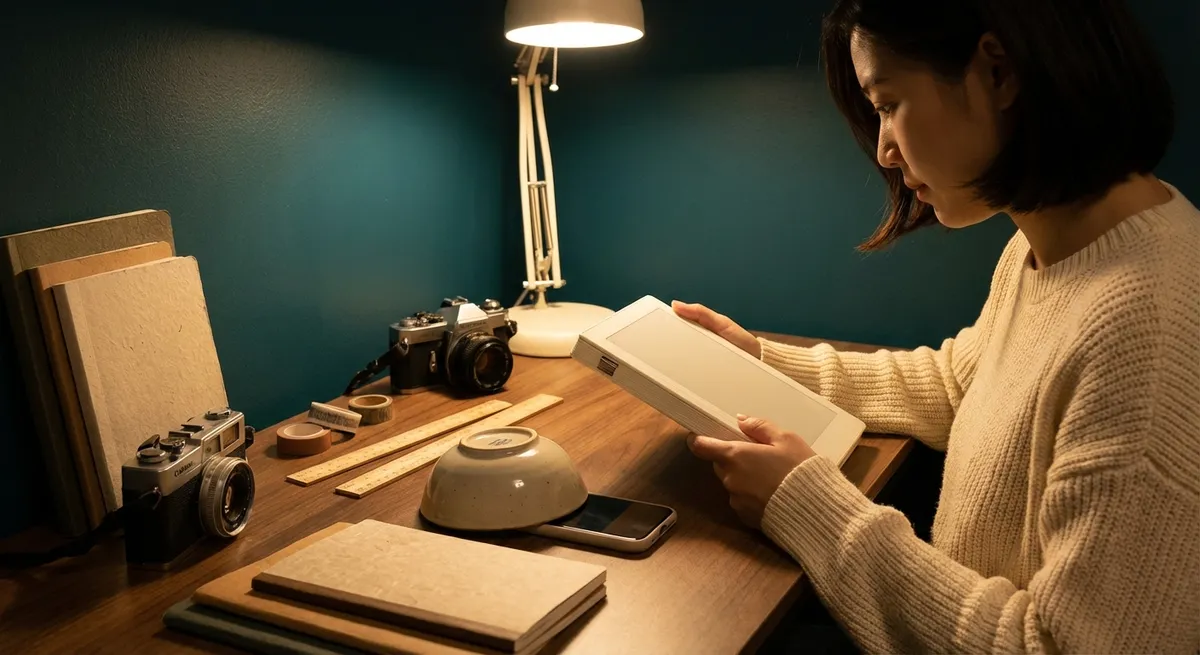
E‑readers and e‑ink notepads look low‑tech, but the display tech behind them is surprisingly advanced.
E‑ink works by moving microscopic black and white particles with electric charges. Unlike your phone screen, which constantly refreshes and drains power, e‑ink only uses energy when the image changes. That’s why an e‑reader can go weeks on a single charge.
What’s getting interesting now:
- Color e‑ink: Devices like the Kobo Libra Colour and Kindle with Scribe competitors are bringing comics, magazines, and note‑taking to the e‑ink world—still with way better battery life than tablets.
- Note‑taking latency: The delay between pen and “ink” has gotten low enough that writing on an e‑ink tablet like the reMarkable actually feels close to paper.
- Hybrid devices: Some laptops and phones are experimenting with e‑ink second screens for notifications, reading, or low‑power modes.
For tech enthusiasts, e‑ink is this rare case where “worse” (slower, lower refresh rate, less color) is actually better for certain jobs: reading, annotating, and focusing.
Point 2: Tiny Translation Gadgets Are Low‑Key Global Tools
Yes, your phone can translate speech. But handheld translation devices are carving out a niche because they’re faster to activate, easier to share, and sometimes more reliable offline.
Here’s what makes them interesting under the hood:
- On‑device processing: Some translators run models locally instead of in the cloud, which means faster responses and better privacy.
- Noise filtering: Dedicated mics and DSP (digital signal processing) let them pick up speech more clearly in busy environments like airports and markets.
- Dual‑screen designs: A lot of these devices now show both languages side‑by‑side so two people can talk with fewer awkward handoffs.
Are they perfect? No. But for travel, clinics, classrooms, and customer service desks, they remove the friction of “wait, let me find the app, open it, switch the language, increase the volume…” and just do the one job well.
Point 3: “Offline‑First” Music Players Still Have a Fanbase
In the era of streaming everything, high‑end portable music players (DAPs—digital audio players) look like nostalgia gear. But they’re quietly evolving into serious niche gadgets.
A few reasons audio nerds still love them:
- Better DACs and amps: Many DAPs have higher‑quality digital‑to‑analog converters and built‑in amplifiers than phones, which means cleaner sound and the ability to power more demanding headphones.
- Bit‑perfect playback: They can play high‑resolution audio without the compression or volume normalization that many streaming apps apply by default.
- Separation from your phone: No notifications, no calls interrupting your playlist, no “battery at 2%” panic when you’re just trying to listen.
The interesting twist is that many “dedicated” players now support streaming apps anyway—but they still keep audio as the main priority in hardware and software design.
Point 4: Smart Remotes Are Quietly Solving the Living Room Mess
The living room is one of the last places regular people still feel “tech overload”: TV, soundbar, game console, streaming stick, maybe smart lights, maybe a receiver, maybe a set‑top box.
Smart remotes and hub‑style controllers are becoming the brain of that chaos.
Modern versions can:
- Control TVs, lights, thermostats, and speakers from one place
- Use Wi‑Fi, Bluetooth, IR, and sometimes even RF to talk to multiple generations of devices
- Trigger “scenes” like Movie Night (lights dim, TV on, soundbar input changed) with one button
For power users, the real fun is in the automations—tying your remote or hub into systems like Home Assistant, HomeKit, or Google Home. You can have your TV pause when someone rings the doorbell or lower blinds automatically when you start a game console.
What looks like a “universal remote” is actually a tiny automation computer masquerading as a simple gadget.
Point 5: Low‑Key Stylus Tech Is Getting Seriously Advanced
Stylus gadgets—smart pens, tablets, and digital notebooks—have gone way beyond “barely tracks your handwriting.”
Behind the scenes, a lot of clever tech is involved:
- Pressure and tilt sensing: Pens can detect how hard and at what angle you’re pressing, which changes line weight in drawing apps and makes handwriting feel more natural.
- Palm rejection: The system distinguishes between your hand and the pen so you can rest your palm on the screen without messing everything up.
- Sampling rates: High‑end stylus systems sample hundreds of times per second, cutting down on visible lag between your pen and the digital ink.
- Handwriting recognition: Machine learning models now turn messy handwriting into searchable, editable text with surprising accuracy.
On the surface, you’re “just writing.” Underneath, there’s a chain of sensors, software prediction, and AI cleaning up your input so it feels nearly analog.
Why This All Matters: The Future Is Focused, Not Just “Smarter”
The big pattern across all these gadgets is simple: we’re hitting a point where “can do everything” is less interesting than “does one thing extremely well.”
Phones and laptops aren’t going anywhere. But the more they try to be the center of everything, the more space opens up for:
- Distraction‑free readers
- Dedicated music players
- Single‑purpose remotes and hubs
- Focused note‑taking and drawing devices
- Translation tools that just work
For tech enthusiasts, this is a fun era: under the simple plastic shells, these “single‑task” gadgets are often running surprisingly sophisticated hardware and software. They’re not dumb; they’re specialized.
The next wave of cool gear might not be about cramming in more features—but about ruthlessly cutting them until what’s left feels effortless.
Conclusion
We’ve spent a decade turning every screen into a Swiss Army knife. Now the pendulum is swinging back toward tools that pick a lane and stay there. E‑ink readers that refuse to distract you. Translation bricks that bridge human conversations. Music players that care more about sound than social feeds. Remotes that hide the complexity of your living room behind one simple button.
If you’re into tech, these gadgets are worth paying attention to—not because they’re flashy, but because they’re quietly redefining what “good” feels like: less noise, more intention, and just enough smart to get out of your way.
Sources
- [E Ink Official Technology Overview](https://www.eink.com/technology.html) - Explains how e‑ink displays work and why they’re so power efficient
- [Amazon Kindle Scribe Product Page](https://www.amazon.com/dp/B09BS26B8B) - Example of a modern e‑ink device focused on reading and handwriting
- [Sony Digital Paper System](https://www.sony.com/electronics/digital-paper-notepads) - Details on e‑ink note‑taking devices and their use cases
- [Audio Engineering Society (AES) – High-Resolution Audio Overview](https://aes2.org/high-resolution-audio/) - Background on why dedicated audio players still appeal to sound enthusiasts
- [Apple Pencil Technology Overview](https://www.apple.com/apple-pencil/) - Showcases how modern stylus systems use pressure, tilt, and low latency to mimic real writing and drawing
Key Takeaway
The most important thing to remember from this article is that this information can change how you think about Gadgets.