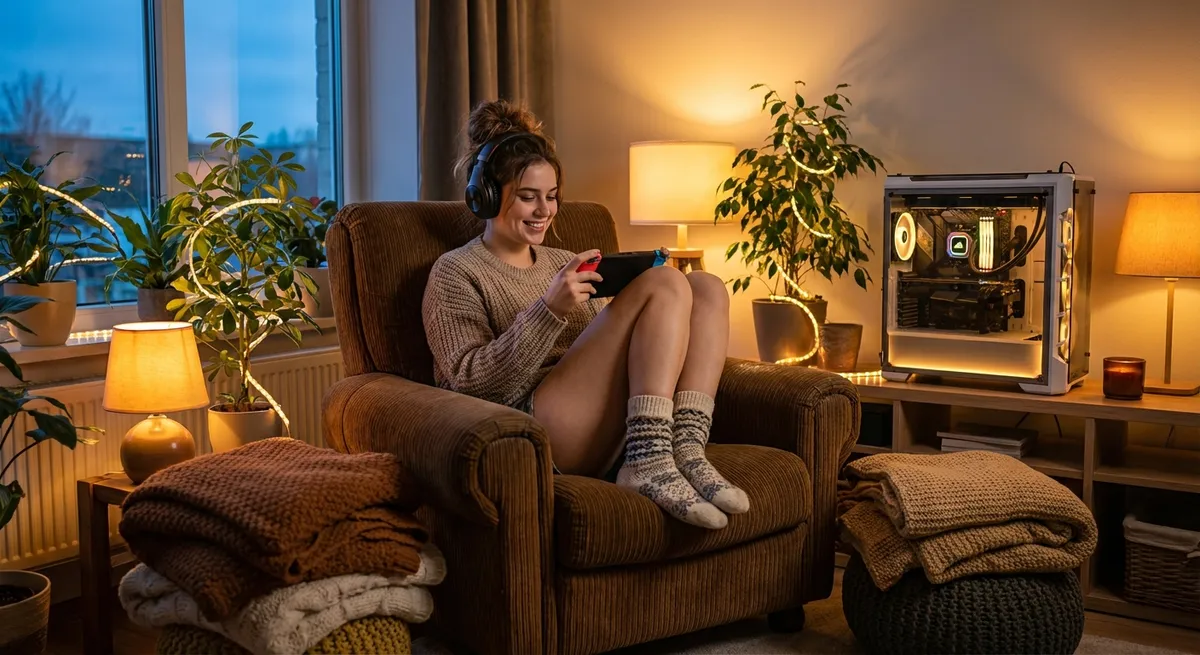
Not every gaming session has to be sweaty ranked matches and RGB everything. Lately, there’s been a quiet shift toward “cozy gaming” — games that feel like a warm hoodie: low stress, high vibes, and surprisingly deep once you look under the hood.
What sounds like “just cute games” is actually a fascinating tech playground. Behind the pastel colors and relaxing soundtracks, there’s some seriously clever engineering going on.
Let’s dig into how cozy games are secretly flexing modern tech in five interesting ways.
1. Soft Vibes, Hard Tech: How Cozy Games Use Procedural Worlds
Cozy games love routine: plant crops, decorate rooms, wander around town. But under that chill surface is a lot of procedural generation — fancy term for “the game builds content on the fly instead of hand-crafting every pixel.”
In farming and life sims, this can mean:
- Weather and seasons that change in believable patterns
- Random events or characters that keep things from feeling stale
- Worlds that react differently each playthrough, even if the game feels predictable
The trick is to hide the math. Developers use controlled randomness so your cozy village doesn’t suddenly spawn chaos. They tweak algorithms to make things feel “natural,” not truly random. That’s why the game feels endlessly replayable without feeling like a rogue-like.
This kind of subtle procedural design used to live mostly in hardcore, systems-heavy games. Now it’s quietly running underneath the most relaxing titles on your Switch or PC.
2. “Low-Stress” Doesn’t Mean Low-Spec: Art Styles That Hack Performance
Cozy games look simple — but that “simple” look is often a performance cheat code.
Instead of chasing hyper-realistic graphics that melt GPUs, cozy games use:
- Stylized visuals (soft edges, pastel palettes, minimal detail)
- Clever lighting and shading to suggest depth without heavy rendering
- Smart reuse of assets, so one model works in multiple contexts
The upside? These games run beautifully on older laptops, handhelds, and even phones. Developers can target a wider audience without wrestling with ultra-high-end hardware constraints.
For players, this means smoother performance, less fan noise, and more battery life — all while the game still looks intentional and charming, not “cheap.”
It’s low anxiety in both vibes and system requirements.
3. Soundtracks That Calm You Down (By Design, Not Accident)
One of the secret weapons of cozy gaming: audio engineering.
Those background tracks that feel like lo-fi beats for your brain are often:
- Loop-friendly compositions designed to never get annoying
- Layered soundscapes that change based on time of day or activity
- Subtle sound cues (footsteps, wind, soft UI clicks) to help your brain track what’s happening without staring at the HUD
A lot of cozy games borrow ideas from mindfulness and ambient music. Developers use tempo, repetition, and gentle sound transitions to keep you in a relaxed, focused state. It’s not just “nice music” — it’s almost UX design for your nervous system.
And because many people play cozy games while multitasking (podcasts, Discord, streaming), the sound design has to be good enough to complement other media without clashing.
4. Cozy Communities: How Social Features Stay Friendly (On Purpose)
Cozy doesn’t stop at the graphics; it extends into multiplayer design.
Instead of competitive leaderboards, these games focus on:
- Asynchronous play: sending gifts, visiting each other’s islands, sharing designs
- Limited or curated chat tools (emotes, pre-set phrases) to reduce toxicity
- Optional co-op where one player can help without ruining the other’s progress
Under the hood, this often means lighter networking loads and fewer real-time sync issues. If your friend is just dropping by to water your crops or admire your interior design, the game doesn’t need the kind of millisecond-perfect netcode used in shooters.
There’s also a moderation angle: by limiting what players can say or do to each other, devs cut down on harassment and spam. That’s partly UX and partly infrastructure — fewer systems to abuse means fewer systems to police.
The result: social gaming without the dread of voice chat roulette.
5. Short Sessions, Long Games: Save Systems Built for Real Life
Cozy games are designed for real humans with jobs, classes, and random interruptions. The tech behind “pick up and play” design is more complex than it looks.
You’ll often find:
- Auto-saves so you can quit anytime without losing progress
- Cloud saves across devices so your farm or town travels with you
- Time systems that move forward even when you’re offline — or pause gracefully when the game is closed
Designers carefully decide what should be tied to real time (like daily resets) and what should follow in-game time. Too much real-time pressure, and your cozy game becomes another to-do list. Too little, and it loses that “living world” feel.
On the backend, this means:
- Storing more state data than you’d expect (character positions, growth timers, event flags)
- Syncing safely across platforms without corrupting saves
- Handling players who time-skip, play offline, or bounce between devices
All so you can boot up for ten minutes, pet a few animals, rearrange some furniture, and bounce out without stress.
Conclusion
Cozy games might look like digital comfort food, but under the soft colors and gentle music is some seriously thoughtful tech and design.
They’re:
- Using procedural systems without feeling “random”
- Turning stylized art into a performance advantage
- Treating sound like part relaxation, part user interface
- Building social tools that feel human instead of hostile
- Designing saves and time systems around real people’s lives
If you’re a tech enthusiast who usually gravitates to big-budget shooters or complex strategy titles, cozy games are worth a second look. Not just for the chill vibes, but for the smart engineering choices making those vibes possible.
Sources
- GDC: Designing Animal Crossing’s World - Talk on how Animal Crossing: New Leaf uses systems and design to create a relaxing, persistent world
- Nintendo Developer Interview on Cozy Game Design - Official Nintendo Q&A about how Animal Crossing: New Horizons balances systems, art, and player comfort
- Game Developer: The Subtle Power of Sound Design in Games - Explores how audio supports mood, focus, and player experience
- MIT Press – Procedural Generation in Game Design - Book overview on how procedural systems are used to create dynamic game worlds
- Xbox Cloud Saves Overview - Technical explanation of how cloud save systems work across devices
Key Takeaway
The most important thing to remember from this article is that this information can change how you think about Gaming.