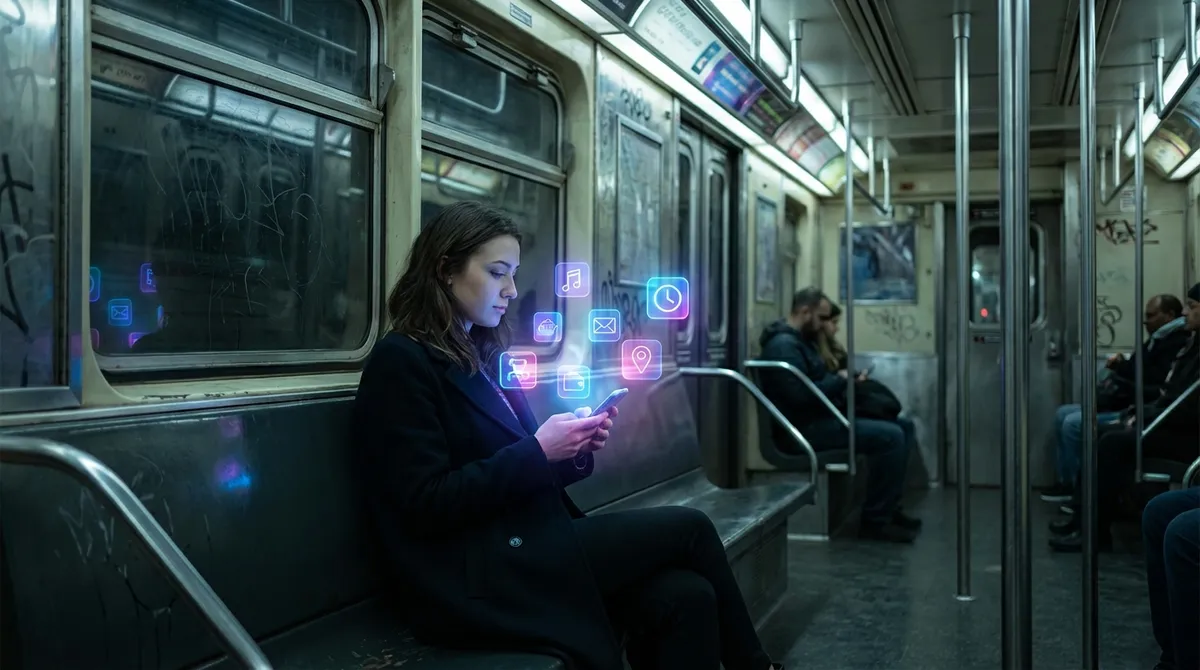
There’s a full‑blown revolution happening on your phone, and it’s not just about shinier icons or dark mode. Modern apps are quietly changing how we live, work, and think—often in ways you only notice when something breaks or goes offline.
Let’s dig into some of the most interesting, slightly mind‑bending trends in the app world that tech enthusiasts should absolutely have on their radar.
1. Your Phone Is Turning Into a “Remote Control” for the Real World
Apps aren’t just screens anymore—they’re becoming remote controls for physical things.
Think about it:
You can unlock cars, open doors, change your thermostat, adjust your lights, track your packages across continents, and even start your washing machine… all from your phone.
What’s wild is how normal this now feels. The same device you use to send memes is quietly:
- Talking to your car to check battery or fuel levels
- Syncing with your smart lock to let someone in while you’re not home
- Tweaking your AC to save power when you’re out
The tech behind this is a mix of Bluetooth, Wi‑Fi, and cloud APIs, but from your perspective it’s just: open app → tap button → the physical world reacts. That’s a huge mental shift. Phones used to be about consuming information; now they’re about controlling environments.
The next step? Expect more “invisible” automation. Instead of tapping your smart home app, your phone will just notice you’re close to home and prep everything before you get there.
2. Super‑Apps Want to Replace Half the Apps on Your Home Screen
In some parts of the world, people don’t juggle 40 different apps—they live inside one.
So‑called “super‑apps” like WeChat, Grab, and Gojek bundle:
- Messaging
- Payments
- Food delivery
- Ride‑hailing
- Shopping
- Bills and banking
…all into a single interface. Instead of “there’s an app for that,” it becomes “there’s a mini‑app inside this one app for that.”
While this model is huge in Asia, Western companies are clearly eyeing it. PayPal, Cash App, Uber, and even social platforms like Instagram and X are slowly bolting on payments, shopping, and services inside their apps.
Why this matters:
- For users: It’s convenient, but also means one app can know a lot about your life.
- For developers: It changes the game—building a “mini app” inside a super‑app might compete with building a standalone app.
- For platforms: Whoever controls the “hub” can shape what the digital economy looks like.
Super‑apps are basically trying to become an operating system on top of your existing operating system.
3. Offline‑First Apps Are Making Bad Connections Less Annoying
We’re used to thinking that “good app experience = good internet connection,” but a growing number of apps are flipping that idea and designing for “meh” connectivity by default.
Offline‑friendly and “offline‑first” apps:
- Let you read, write, or edit while offline
- Store changes locally on your device
- Quietly sync things back to the cloud when you’re online again
You’ve probably used this without thinking about it—Google Docs editing offline, mapping apps caching routes, note apps syncing across devices, or messaging apps holding onto messages until your signal comes back.
Why this is fascinating:
- It’s a UX upgrade: Your app doesn’t feel “broken” just because a signal drops.
- It’s a design shift: Developers assume disconnections are normal, not rare.
- It’s an accessibility win: People in low‑coverage areas get a smoother experience.
As more services move to the cloud, offline‑first design is a subtle but important counterbalance. We’re building systems that respect the fact that the real world has dead zones.
4. Health and Mood Are Quietly Becoming App Features
Your phone is slowly turning into a health dashboard—sometimes quite literally.
Major platforms are baking health and wellness tracking directly into their operating systems:
- iOS and Android collect steps, standing time, and basic movement
- Smartwatches feed heart rate, sleep stages, and workout data into health apps
- Some phones and wearables can spot irregular heart rhythms or blood oxygen drops
- Journaling and mindfulness apps are adding mood tracking and breathing exercises
What’s new isn’t just tracking—it’s integration. Workout apps can feed into health dashboards, health apps can share anonymized data for medical research (with permission), and your watch can tap your wrist if it detects something that might need a doctor’s attention.
There’s a real tension here:
- Huge potential for early detection and better habits
- Huge responsibility around privacy, consent, and data security
We’re basically carrying around cheap, always‑on health sensors that talk to apps. The question over the next few years isn’t “Can we track this?” but “Who gets to see it, and what are they allowed to do with it?”
5. App Stores Are Being Forced to Evolve (Whether They Like It or Not)
For more than a decade, app stores operated like walled gardens: you build the app, you follow the rules, you pay the fee, end of story. That model is now under serious pressure.
A few things happening at once:
- Governments are questioning how much control Apple and Google should have over payments and distribution.
- Developers are pushing back on app store fees and restrictions, especially for subscriptions and in‑app purchases.
- New regulations (like the EU’s Digital Markets Act) are trying to open the door to alternative app stores and sideloading on mobile.
This matters for regular users more than it may seem:
- You might see more ways to install apps beyond the “official” store.
- App pricing and payment methods could get more flexible.
- Security models will have to adapt to a world where not everything funnels through one gatekeeper.
We’re basically watching the “web vs. walled garden” fight replay itself in the app world—with governments and regulators playing a much bigger role this time.
Conclusion
Apps used to be little boxes that did one thing on your screen. Now they:
- Control devices in your house and car
- Bundle half the internet into a single experience
- Keep working even when your signal doesn’t
- Track aspects of your health and behavior
- Sit at the center of giant legal and economic battles
The interesting part isn’t just what any single app can do—it’s how all of them together are quietly reshaping your expectations of what a phone, a service, or even a “product” actually is.
If you’re a tech enthusiast, this is the moment to pay attention not just to new apps, but to the deeper shifts in how apps are built, regulated, and woven into real life. The revolution is already in your pocket; you’re just living inside it.
Sources
- [Apple – Health app](https://www.apple.com/ios/health/) - Overview of how Apple’s Health app aggregates and visualizes health data from apps and devices
- [Google – Health Connect by Android](https://developers.google.com/health-connect) - Technical but accessible explanation of how Android apps securely share health and fitness data
- [European Commission – The Digital Markets Act](https://digital-strategy.ec.europa.eu/en/policies/digital-markets-act) - Details on EU rules affecting app stores, gatekeepers, and platform control
- [WeChat Official Site](https://www.wechat.com/en/) - Shows the broad, super‑app style services bundled inside a single app
- [U.S. CDC – Using Wearables in Health Research](https://www.cdc.gov/pcd/issues/2022/21_0293.htm) - Discusses how wearable and app‑based data are used in public health research
Key Takeaway
The most important thing to remember from this article is that this information can change how you think about Apps.