AI usually gets talked about like it's either a world-ending villain or a magical genie. Reality is way stranger—and way more interesting—than either of those.
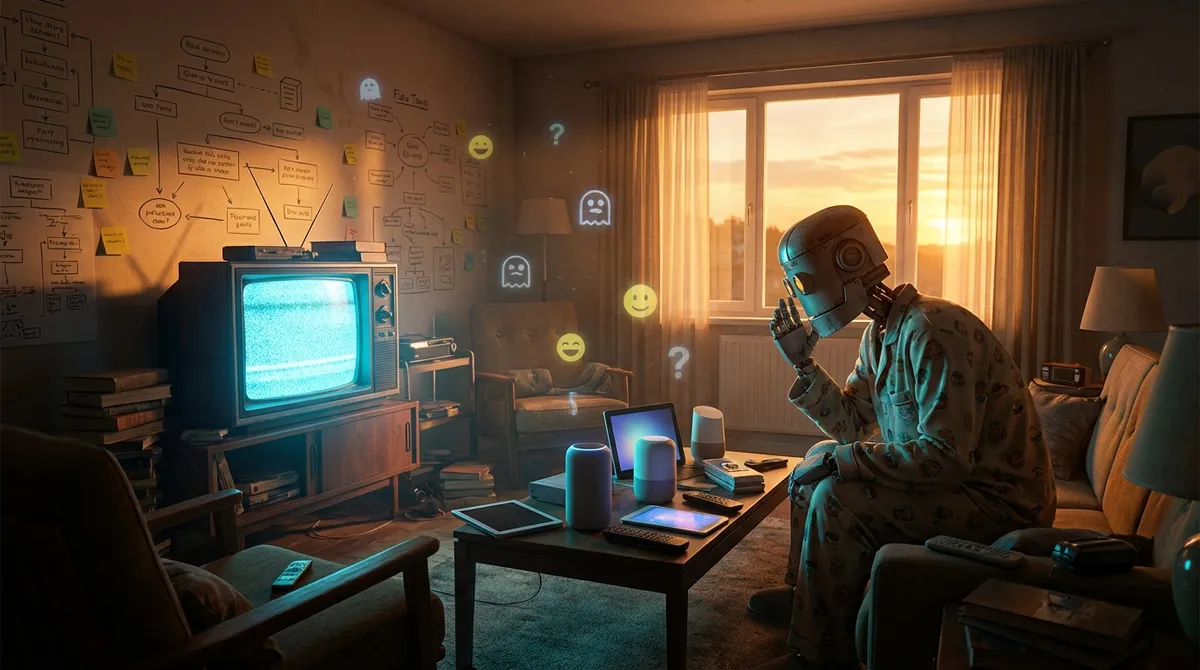
Beneath all the hype, modern AI has quirks, blind spots, and surprisingly “human” habits that make it feel less like a calculator and more like… a weird coworker who’s brilliant at some things and shockingly bad at others.
Let’s dig into five genuinely interesting angles on AI that go beyond the usual “it’s going to take all our jobs” conversation.
1. AI Is Brilliant at Guessing Patterns… and Terrible at Understanding Them
Most modern AI, especially the stuff behind chatbots, recommendation systems, and image generators, is basically pattern-guessing on steroids.
It doesn’t “understand” the world like we do. It predicts what should come next:
- In text: the next word
- In images: the next pixel or patch
- In audio: the next sound
This is why AI can:
- Write code that compiles
- Generate art in specific styles
- Mimic your texting tone disturbingly well
But ask it why it chose a certain answer, and things get messy. It’ll give you a neat explanation, but that explanation is also a prediction. It’s storytelling after the fact, not a peek into its actual “thinking.”
That’s partly why:
- Models sometimes “hallucinate” facts that sound perfectly legit
- They can solve advanced math in some formats, then fail at simple logic in others
- They crush standardized tests yet stumble on tasks a 10-year-old finds obvious
Under the hood, it’s closer to autocomplete than consciousness—but it’s autocomplete dialed up to a level that starts to feel uncanny.
2. Your Data Doppelgänger: AI Builds a Shadow Profile of You
Even if you never typed “train an AI on my life” into a prompt box, you probably have a data clone floating around in some model somewhere.
AI systems learn from:
- Browsing habits
- Click patterns
- Purchase history
- Viewing time on posts, videos, and ads
From that, they build a surprisingly accurate sketch of you:
- When you’re likely to be online
- What content keeps you scrolling
- What you might buy if nudged at the right moment
These shadow profiles are why recommendations feel spooky:
- That song that hits your exact mood
- That gadget ad right when your old one breaks
- That creator you didn’t know existed but now binge for two hours
The twist: a lot of this is statistical prediction, not mind reading. You’re not uniquely predictable—people like you are. You’re part of a crowd pattern, and the AI is betting you’ll follow the trend.
Cool for discovery. Creepy for privacy. Powerful for anyone who controls the model.
3. AI Can Be Biased, Not Because It’s Evil—But Because We Are
One uncomfortable truth: AI picks up its “personality” from us.
If you train a model mostly on:
- Biased hiring histories
- Skewed medical data
- Unrepresentative images or text from the internet
…it will happily learn those patterns, even if we don’t like them.
Real-world examples have already surfaced:
- Hiring algorithms favoring certain demographics over others
- Facial recognition working better on lighter skin tones
- Medical tools underestimating risk in underrepresented groups
The model doesn’t “hate” anyone. It just reflects the rules baked into its training data, whether we meant to encode them or not.
The interesting part for tech folks: the frontier now isn’t just bigger models—it’s better guardrails:
- Curated training data
- Fairness audits
- Tools that explain why a model made a decision
- Policies deciding when not to use AI at all
AI isn’t neutral by default. Someone has to decide what “fair” even means—and that’s where the real debate lives.
4. AI Is Quietly Becoming a Creative Collaborator, Not a Replacement
There’s a big gap between “AI can generate art or code” and “artists and developers are obsolete.”
In practice, AI is turning into more of a co-pilot:
- Musicians use audio models to explore chord progressions or remix ideas
- Writers use AI to brainstorm angles, outlines, or alternative phrasings
- Developers use code models to scaffold boilerplate or refactor messy functions
- Designers use image tools to iterate concepts way faster than by hand
The magic isn’t in “click button, get masterpiece”—it’s in rapid iteration:
- You test five ideas in minutes instead of one idea per afternoon
- You explore styles or approaches you wouldn’t normally consider
- You can prototype at a “what if” pace instead of a “when I have time” pace
The people getting the most out of AI right now:
- Know their craft well
- Treat AI as a sketchpad, not a finished product
- Keep a strong filter on what’s actually good vs. just “AI-generated”
AI can flood the internet with average. It still takes a human to pick what’s worth keeping.
5. The Future of AI Might Be Less “Bigger Model” and More “Smarter Context”
For the last few years, the trend has been: more data, more parameters, more compute. Bigger = better.
We’re starting to hit the point where the interesting gains might come from context, not just scale:
- AI that remembers your preferences over time (safely and transparently)
- Models that are specialized for a domain—law, medicine, games—instead of trying to do everything
- Systems that can work with your files, tools, and workflows, not just a single chat window
Think less “one giant mind in the cloud” and more:
- Personal mini-models living on your devices
- Domain-specific “experts” plugged into tools you already use
- Hybrid setups, where local and cloud AI tag-team tasks
This opens up new questions:
- What should live on your device vs. on a company server?
- Who owns and controls the “memory” of how you work?
- Can you take your AI assistant with you when you switch platforms?
The next wave of AI might feel less like talking to a public chatbot and more like having a digital roommate that actually knows your life—but only as much as you let it.
Conclusion
AI isn’t just “smart robots” or “dangerous algorithms.” It’s a messy, fascinating mirror of us: our patterns, our biases, our creativity, and our limits.
Right now, we’re in the weird middle stage:
- Models are powerful but not magical
- They feel human in some ways and alien in others
- They’re quietly rewiring everything from search to shopping to creativity
For tech enthusiasts, the interesting part isn’t just what AI can do—it’s how we decide to aim it.
The tools are here. The real experiment now is us.
Sources
- Stanford HAI – AI Index Report – Annual overview of global AI trends, capabilities, and impacts
- MIT Technology Review – “What are AI hallucinations?” – Explains why AI models confidently generate false or fabricated information
- Brookings Institution – “Algorithmic bias detection and mitigation: Best practices and policies” – Deep dive into how bias appears in AI systems and what can be done about it
- Harvard Business Review – “How Generative AI Is Changing Creative Work” – Looks at how AI is affecting artists, designers, and other creative professionals
- NIST (U.S. Department of Commerce) – AI Risk Management Framework – Framework for understanding and managing risks in AI systems
Key Takeaway
The most important thing to remember from this article is that this information can change how you think about AI.