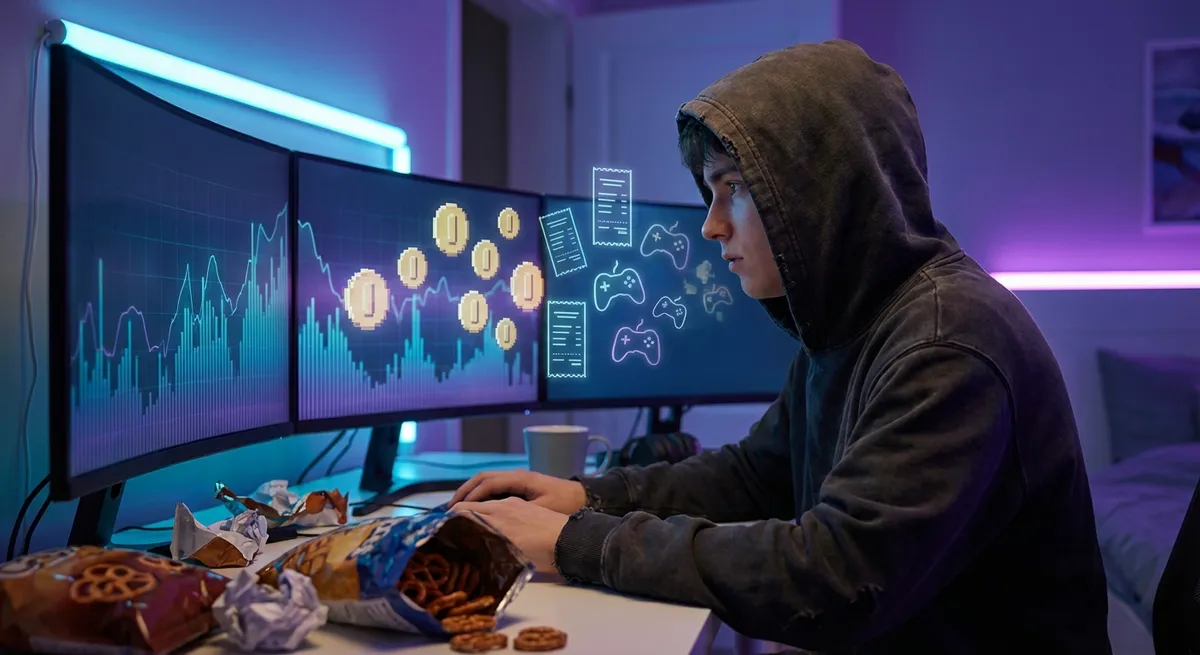
If you’ve ever rage-bought a skin, waited for a Steam sale, or wondered why every game suddenly has a “season pass,” congrats—you’ve already taken part in the invisible economy that keeps gaming running. Behind every loot drop, battle pass, and “limited-time event” is a whole ecosystem of strategy, psychology, and tech quietly steering how games get made (and how we pay for them).
Let’s pull back the curtain on some of the most interesting ways your gaming habits are literally reshaping the industry.
Your Backlog Is a Goldmine (And Publishers Know It)
That mountain of unplayed games in your library isn’t just guilt—it’s data.
Platforms like Steam, PlayStation, Xbox, and Epic don’t just track what you buy; they track how long you play, when you drop off, and whether you ever come back. That “I’ll get to it later” purchase? To a publisher, it still counts as success, and it quietly encourages more of the same.
What’s wild is how this changes game design. Games don’t just compete to be bought; they compete to be launched on your device again and again. That means:
- More “daily login” rewards to lure you back
- Frequent updates to bump a game back into your mind
- Notifications, emails, and in-game events designed around FOMO
Your backlog proves people are willing to buy games they don’t immediately touch. So studios are experimenting with ways to feel “worth it” at a glance: huge open worlds, long campaigns, and tons of side content, even if most players never see half of it.
The paradox: the more games we hoard, the more game makers try to justify that purchase with sheer volume—and the harder it becomes to actually finish anything.
Free-to-Play Isn’t Free—It’s a Giant Behavior Experiment
On paper, free-to-play sounds simple: the game is free, cosmetics and extras cost money. In reality, it’s one of the most finely tuned experiments in player behavior you’ll ever see.
Modern free-to-play games run constant A/B tests: different shop layouts, bundle prices, skin rotations, and event timing—all to see what makes people more likely to spend. Not in a cartoonishly evil way, but in a “what if we tweak this and see what happens” way that’s very data-driven.
You’ll notice patterns:
- Time-limited bundles that vanish soon (hello, urgency)
- “Starter packs” that offer huge discounts on your first purchase
- Progress that feels slightly slow until you buy a booster… then “normal” again
The surprising part: only a small percentage of players ever spend serious money. But those few “whales” can fund an entire game’s ongoing support. That means a game you love might be kept alive by a tiny fraction of its audience while the rest of us coast for free.
On the flip side, this model also enables:
- Huge games like Fortnite, Apex Legends, and Genshin Impact to be free upfront
- Continuous updates, live events, and new content for years
- Massive player bases that would never pay $60 upfront
Free-to-play games aren’t just games—they’re live experiments in how far convenience, time-saving, and cosmetic flexing can be monetized without scaring everyone away.
Game Pass, PS Plus & Subscriptions Are Quietly Redefining “Value”
Flat $60 or $70 games used to be the rule. Now? People are asking, “Is it on Game Pass?” before they even look at the price tag.
Subscription services like Xbox Game Pass, PlayStation Plus, and even Apple Arcade are shifting what “value” means:
- You’re less likely to impulse-buy games when you can try so many “for free”
- You can test genres you’d never risk paying full price for
- You discover games from smaller studios that you might have ignored on a store page
For developers, it’s a double-edged sword. On one hand, being added to a big subscription service can massively boost visibility and player count. On the other, it raises questions: how do they get paid, and what kind of games do these services incentivize?
There are signs that subscriptions may subtly favor:
- Games that are “sticky” and keep you around (good for engagement stats)
- Titles that get talked about a lot, even if they’re not bestsellers
- Experiences that are easy to sample quickly and recommend to friends
As players, we’re drifting from “owning” games to “having access” to them. That changes how we commit: it’s a lot easier to bounce off a game after 20 minutes when it doesn’t feel like a sunk cost.
The industry is still figuring out the long-term math here—but one thing’s clear: the subscription era is already influencing what gets pitched, funded, and finished.
In-Game Economies Are Basically Tiny Countries
If you’ve traded skins, farmed gold, flipped items on an in-game auction house, or watched the price of a rare mount spike after a patch, you’ve brushed up against a full-blown virtual economy.
The most hardcore example: EVE Online, where single battles have destroyed the equivalent of hundreds of thousands of real-world dollars in ships and resources. But even more “normal” games like World of Warcraft, Counter-Strike 2, and Genshin Impact all run economies with:
- Inflation and deflation
- Marketplace speculation
- Rarity that drives demand (real and artificial)
- External trading and third-party reselling (official or not)
Developers are basically acting as central banks. They:
- Decide how much currency comes into the game
- Patch items to adjust rarity and value
- Ban or throttle certain forms of trading to keep things sane
- Try to avoid runaway inflation that makes new players miserable
Sometimes, outside factors crash the party. Policy changes, esports rule tweaks, or new anti-cheat systems can suddenly tank the value of certain items. Steam’s Community Market and other platforms add a real-money layer that starts to look a lot like trading stocks—except the “company” can nerf your investment with one patch.
You might just be farming gold for a mount, but behind the scenes, there’s an entire balancing act happening to keep your virtual wallet from becoming worthless.
Esports Aren’t Just Tournaments—They’re Full-On Media Ecosystems
On the surface, esports is about competitions: teams, brackets, prize pools. Underneath, it’s a full media business with its own logic.
Where traditional sports took decades to build global fanbases and media deals, games like League of Legends, Counter-Strike, and Valorant did it in a fraction of the time by building everything on digital platforms from day one.
Some wild ways gaming economics shows up in esports:
- Broadcast rights & sponsorships: Major tournaments now have media deals, sponsored segments, branded drops, and custom in-game items tied to events.
- Team brands as products: Jerseys, mousepads, collab merch, creator rosters—teams aren’t just competing; they’re selling identity.
- Game devs as league owners: Unlike football or basketball, the publisher often controls the league (maps, meta, formats). It’s more like the NBA being owned by the company that makes the basketball itself.
And then there’s the content layer: streamers, watch parties, co-streams, highlights, meme accounts, analysts on YouTube, TikTok breakdowns. You barely have to watch a full match to be part of the culture.
This loop matters: the more you watch and engage, the more valuable the game becomes as a platform, not just a product. That value then flows back into skins, battle passes, and in-game events—paradoxically, your esports hype can eventually change the price and design of the cosmetic items you buy.
Conclusion
Underneath the flashy trailers and crunchy sound effects, gaming is quietly one of the most innovative economic playgrounds on the planet. Your time, your attention, and your spending habits are all signals—and studios are listening closely.
From your ever-growing backlog to the free-to-play rabbit hole, from subscriptions changing what “ownership” means to in-game economies acting like mini financial systems, gaming today is as much about how we interact with value as it is about fun.
The next time you log in, buy a skin, grind an event, or add something to your wishlist “for later,” remember: you’re not just playing the game—you’re participating in the giant, evolving experiment that decides what kinds of games get made next.
Sources
- [Valve / Steamworks Documentation](https://partner.steamgames.com/doc/store) – Official info on how Steam’s store, visibility, and pricing tools work
- [Microsoft – Xbox Game Pass for Developers](https://www.xbox.com/en-US/developers/id) – Details on how games are brought into the Game Pass ecosystem and supported
- [Riot Games – League of Legends Esports Ecosystem](https://lolesports.com/article/inside-the-league-of-legends-esports-ecosystem/bltff08e73b338d6f02) – Overview of how Riot structures and runs its global esports scene
- [CCP Games – EVE Online Economic Reports](https://www.eveonline.com/news/tags/monthly-economic-report) – Monthly breakdowns of the virtual economy in EVE Online
- [BBC – How Free-to-Play Games Make Money](https://www.bbc.com/news/technology-50940515) – Accessible explanation of free-to-play monetization strategies and player spending behavior
Key Takeaway
The most important thing to remember from this article is that this information can change how you think about Gaming.