Tech hasn’t just gotten faster—it’s gotten sneakier. Your “normal” gadgets are hiding features you probably haven’t touched, sensors you didn’t know existed, and software that learns you better than some of your friends. If you feel like your stuff is smarter than you remember… you’re not wrong.
Let’s dig into some under-the-radar ways gadgets have seriously leveled up—and why tech nerds should be paying attention.
1. Your Phone Is Packed With Invisible Sensors You Never Think About
You probably know your phone has a camera and GPS. Cool. But under the hood, it’s basically a tiny lab stuffed with sensors doing background magic.
Modern smartphones typically include:
- Accelerometer (detects movement and tilt)
- Gyroscope (tracks rotation for smoother gaming, AR, and video stabilization)
- Magnetometer (compass-style orientation)
- Barometer (helps with altitude and more accurate location)
- Proximity sensor (turns the screen off near your face)
- Ambient light sensor (adjusts brightness automatically)
All of these combine to give apps a creepy-good sense of where you are, what you’re doing, and how you’re holding the device.
That’s how your phone knows you’re walking vs. running, why some games feel insanely responsive when you tilt or turn the screen, and how your mapping app can pin you to a specific lane or floor in a building more accurately than older GPS alone.
For tech enthusiasts, this opens up weirdly cool possibilities—like DIY motion trackers, more accurate fitness experiments, and AR projects that piggyback on hardware that’s already in your pocket.
2. Headphones Are Turning Into Personal Sound Computers
Headphones used to just be “speakers on your head.” Now they’re doing full-on audio processing in real time.
Modern wireless earbuds and headphones quietly pull off things like:
- Active noise cancellation using built-in microphones and signal processing
- Adaptive noise control that changes based on your environment
- Personalized sound profiles based on a quick hearing test
- Transparency modes that blend real-world audio with your music
Some high-end models even track your head position to keep audio “anchored” in front of you, which is wild when you’re watching movies or using spatial audio.
What’s interesting is that a lot of the magic isn’t just in the hardware—it’s in the software updates. You can literally wake up one day, update a firmware file, and suddenly your same earbuds support new features, better noise reduction, or improved call quality.
Headphones have quietly crossed the line from accessories into upgradeable, semi-smart gadgets with their own operating logic. Not bad for something that still lives in your hoodie pocket.
3. Smartwatches Are Becoming Health Gadgets First, Timepieces Second
At this point, the “smart” in smartwatch is less about notifications and more about your body.
Most modern smartwatches aren’t just tracking steps—they’re monitoring:
- Heart rate and heart rate variability
- Blood oxygen levels (SpO₂) on some models
- Sleep stages and breathing
- Irregular heart rhythms like possible atrial fibrillation
- Stress estimates based on changes in your body signals
Some watches can generate ECG-like readings right on your wrist and flag anomalies you can share with a doctor. Others watch your sleep trends and nudge you if they spot long-term patterns that might be worth checking out.
Is it a medical device? Officially, not exactly (unless it’s cleared for specific functions). But it is a data collector with sensors rivaling entry-level health gear from just a few years ago.
For anyone into biohacking, stats, or just tracking how your late-night gaming sessions mess with your sleep, your watch is basically a wearable data feed. You can experiment with different routines, workouts, or habits and see how your body responds over time.
4. Your TV Isn’t “Just a Screen” Anymore—It’s Basically a Giant Tablet
If you bought a TV in the last few years, you didn’t just buy a display—you bought a full-blown computer.
Smart TVs now pack:
- Multi-core processors and dedicated graphics capabilities
- Their own operating systems (Google TV, Tizen, webOS, Roku OS, etc.)
- App stores with streaming apps, games, browsers, and tools
- Built-in voice assistants listening for “Hey Google,” “Alexa,” or brand-specific wake words
With that power, TVs are doing more than streaming Netflix. They’re running light cloud games, mirroring your devices, hosting Zoom calls, and even acting as a smart home dashboard.
The flip side: they can also track what you watch, recommend content, and send anonymized viewing data back to manufacturers and partners. That’s why you see scarily accurate rows of “Because you watched…” across apps and brands.
For tech enthusiasts, your TV is now a modifiable node in your smart home setup—something you can integrate with home automation, voice routines, or custom dashboards, not just a “dumb” display for HDMI inputs.
5. “Dumb” Gadgets Are Getting Smart Through Companion Apps
Even gadgets that look simple are quietly leveling up through their apps.
Think about:
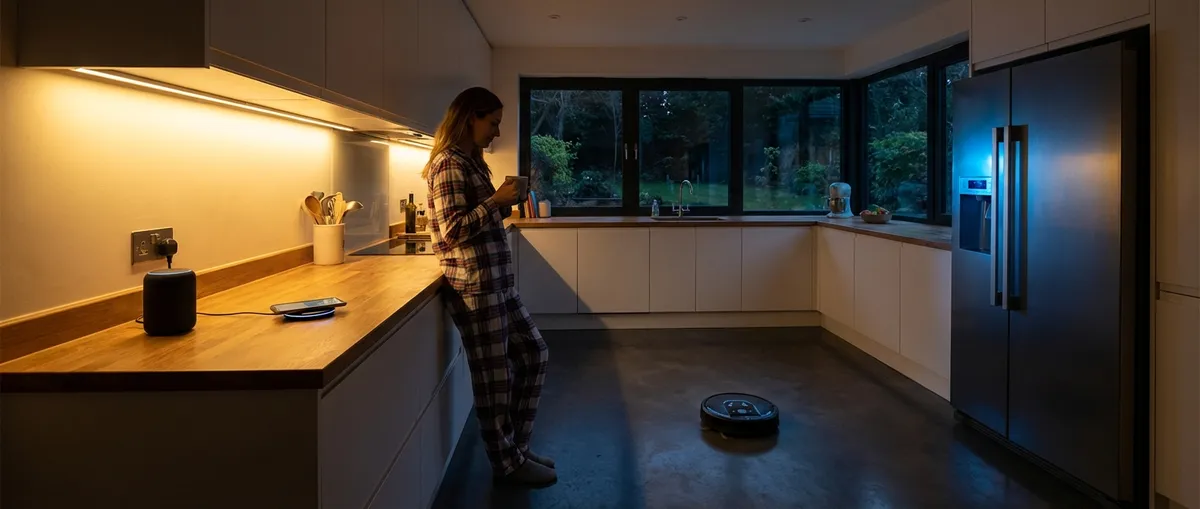
- Robot vacuums that map your floor plan and remember rooms
- LED light strips that sync color to music, games, or movies
- Toothbrushes that gamify brushing and score your coverage
- Smart plugs that turn old lamps or fans into voice-controlled devices
On the surface, these devices aren’t insanely complex. The real power is in how they talk to your phone, your network, and each other. The app is where you get data, schedules, routines, and integrations.
That’s why a lot of newer “basic” gadgets ship with over-the-air update support. You might buy a robot vacuum for simple cleaning and end up with features like no-go zones, voice commands, or improved navigation months later—without buying new hardware.
From a tech-nerd perspective, this is fun territory: local control vs. cloud control, API access, home automation tinkering, and combining multiple brands into one smart routine. The gadget is just the body. The app is the brain.
Conclusion
Gadgets haven’t just evolved—they’ve gone undercover.
Your phone is a sensor-packed lab. Your headphones run real-time audio tricks. Your watch is a low-key health device. Your TV is a computer with a huge screen. And even “simple” devices get smarter over time through their apps and updates.
If you’re into tech, now’s a good time to poke around the settings you’ve been ignoring. There’s a decent chance your gear can already do something you thought you’d need to buy a new gadget for.
Sources
- [Apple – iPhone Tech Specs](https://www.apple.com/iphone/compare/) – Detailed breakdowns of sensors and features built into modern smartphones
- [Samsung – Understanding Motion Sensors](https://www.samsung.com/global/galaxy/what-is/motion-sensors/) – Explains how accelerometers, gyroscopes, and other motion sensors work in mobile devices
- [Bose – How Noise Cancelling Headphones Work](https://www.bose.com/en_us/better_with_bose/better_sound/how-do-noise-cancelling-headphones-work.html) – Clear overview of the audio processing tech behind modern ANC headphones
- [U.S. Food & Drug Administration – Examples of Wearable Health Technologies](https://www.fda.gov/medical-devices/digital-health-center-excellence/examples-wearable-health-technologies) – Describes how wearables and smartwatches are used for health monitoring
- [Consumer Reports – Smart TV Data Collection and Privacy](https://www.consumerreports.org/electronics/smart-tv/smart-tv-data-collection-a2311442323/) – Discusses how smart TVs function as connected devices and what data they collect
Key Takeaway
The most important thing to remember from this article is that this information can change how you think about Gadgets.