You don’t have to live inside Instagram or TikTok to feel connected anymore. A new wave of apps is quietly rebuilding how we hang out, collaborate, and keep in touch—without chasing likes or doomscrolling for hours.
These apps aren’t trying to be “the next big social network.” Instead, they focus on small, specific parts of your life: your closest friends, your hobbies, your neighborhood, or even your co‑workers. And the result is surprisingly… human.
Let’s dig into a few trends and apps that tech enthusiasts should have on their radar.
1. Group Chats Are Becoming Full-On Operating Systems for Friendships
What used to be “just a group chat” is mutating into a full social layer for friend groups, families, and communities.
Apps like Discord, Telegram, and even upgraded versions of iMessage and WhatsApp are turning chats into hubs where everything happens: planning trips, watching streams together, sharing playlists, running polls, and even automating tasks with bots.
What’s interesting isn’t the features themselves—it’s how people are using them. A Discord server isn’t just a glorified chatroom; it’s often:
- A shared archive of inside jokes, links, and media
- A coordination center for events, gaming nights, or side projects
- A semi-private internet, with channels as your “pages”
You can run a whole indie community, game clan, or study group completely inside one app. For a lot of people, Discord is more “social media” than any public platform—they just don’t call it that.
Why it matters: The center of gravity is shifting from public feeds to private, persistent spaces. Instead of broadcasting to everyone, we’re building long-lived “micro-internets” with the people we care about.
2. Calendar and Planning Apps Are Turning Social Again
Yes, calendars. Somehow, one of the driest app categories has become surprisingly social.
Apps like Google Calendar, TimeTree, Eventbrite, and Calendly are being used less like personal organizers and more like social coordination tools:
- Shared calendars for couples, roommates, and friend groups
- Event pages that feel closer to mini social networks (comments, photos, guest lists)
- Simple scheduling links that make “we should hang out” actually happen
On top of that, newer apps experiment with shared planning: maps of places you want to try, bucket lists for the year, or “activity boards” for your city. The social part isn’t flashy—but it’s sticky. Once you rely on a shared calendar with someone, you’re basically tied into a quiet little network.
Why it matters: Social apps used to be where you talk about plans. Now utility apps are where you actually make them happen—and they’re building just enough social glue to keep you there.
3. Collaborative Creation Apps Are the New Digital Hangout Spots
Instead of just talking in group chats, people are making stuff together—docs, beats, slides, boards, entire games.
Think about how many hours people now spend inside:
- Figma and Miro for whiteboarding and design
- Notion, Dropbox Paper, or Google Docs for shared notes and worldbuilding
- BandLab, Soundtrap, or Splice for collaborative music creation
- Roblox Studio or game engines with cloud tools for building shared worlds
These apps often look like productivity software on the surface, but they feel more like social spaces once you’re in them. You see other people’s cursors moving in real time, comments dropping in the margins, assets appearing out of nowhere. It’s less “I’m editing a file” and more “I’m in a room with people, making something.”
For a lot of remote teams and friend groups, the “place we hang out” isn’t a social network—it’s a shared canvas or document.
Why it matters: The old pattern was: talk on social media, work somewhere else. Now the workspaces are the social spaces, and that’s changing how apps are designed: presence indicators, emojis, voice chat, live cursors, and shared templates are becoming standard.
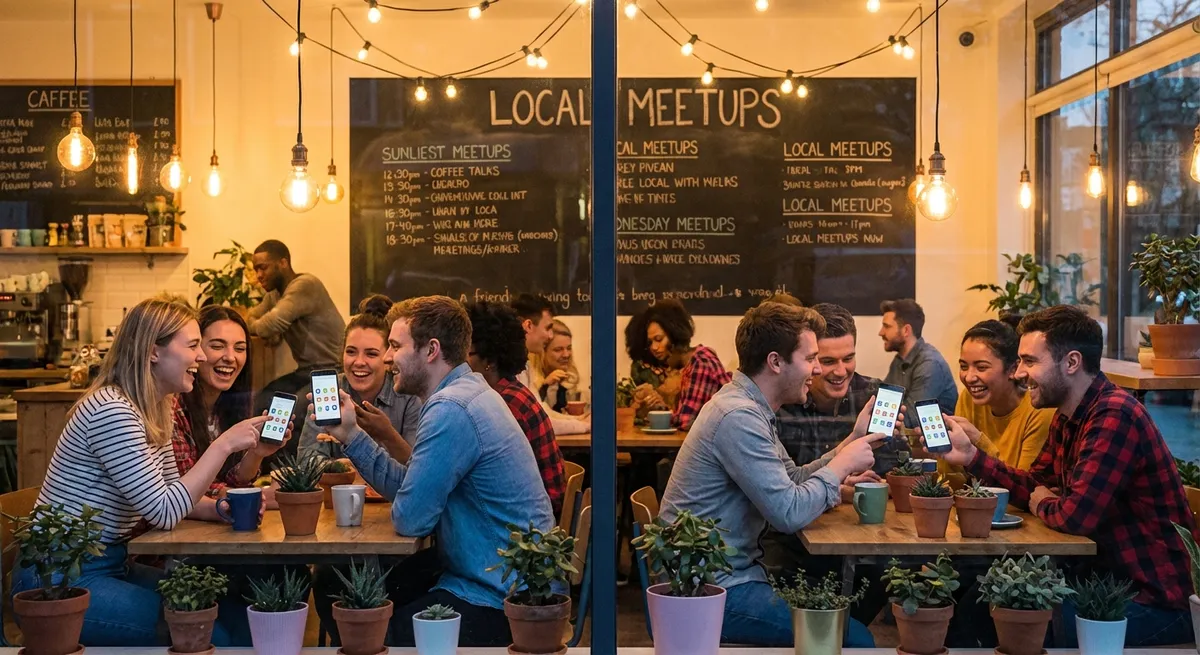
4. Hyper-Local Apps Are Quietly Rewiring Neighborhoods
Not all “social” is global. Some of the most interesting apps right now only care about a few blocks around you.
Neighborhood-focused apps and tools—like Nextdoor, Facebook Groups, local Discord servers, and municipal apps that report issues or show transit—are rebuilding a kind of slow, low-key social layer on top of real-world spaces.
You see it in:
- Local buy/sell/trade groups turning into micro-economies
- Neighbors organizing tool sharing, childcare swaps, or carpooling
- Hyper-local news, from lost pets to road closures, spreading faster than official channels
The tech here isn’t wild. What’s interesting is the scope: these apps deliberately limit who you interact with and what you see. Instead of “everyone, everywhere,” it’s “people near me, about things that actually affect my daily life.”
Why it matters: Social apps used to flatten geography. Now there’s a growing category of apps that lean into geography and treat your location as the most important social filter.
5. “Quiet” Companion Apps Are Redefining What Counts as Being Social
Some apps don’t look social at all, but they quietly depend on other people to work.
Think about:
- Language learning apps that match you with real tutors or conversation partners (e.g., iTalki-style platforms referenced by Duolingo users)
- Fitness and running apps where leaderboards, shared routes, or challenges keep you honest
- Study timer apps where you co-work in virtual rooms, cameras on, silently grinding
- Mood trackers, journaling, or mental health tools that connect you to coaches or peer support
You might open these apps for something “solo”—learning, running, focus—but the retention magic often comes from subtle social layers: streak sharing, tiny leaderboards, accountability buddies, or occasional live sessions.
Instead of being “social media,” these are “socially powered tools.” You’re not scrolling through content; you’re doing something, and other people are gently woven into that activity.
Why it matters: The line between “communication app” and “everything else” is blurring. Nearly any app can add a light social layer—and when done right, it can be more motivating than an entire feed of content.
Conclusion
If you only look at the big social platforms, it’s easy to think online life is all algorithms and endless feeds. But underneath that, a quieter ecosystem of apps is reshaping how we actually connect: small, private, purpose-driven, and often built around doing things with people instead of performing for people.
For tech enthusiasts, this is where a lot of the interesting design is happening. Not in the next “huge network,” but in apps that sneak social features into calendars, canvases, docs, maps, and tools you already use every day.
The future of social might not look like a new Facebook at all. It might look like your calendar, your whiteboard, your neighborhood app—and the people you share them with.
Sources
- Discord Official Site – Details on Discord’s communities, features, and how servers and channels are structured
- Google Workspace – Collaboration Tools – Overview of real-time collaboration in Docs, Sheets, and other Google tools
- Figma – About Collaboration – Explains live collaboration features like multi-cursor editing and shared workspaces
- Nextdoor – How It Works – Describes how neighborhood-based social networking functions and what it’s used for
- Duolingo – Research on Learning & Motivation – Covers how features like streaks, challenges, and social mechanics impact user engagement and learning outcomes
Key Takeaway
The most important thing to remember from this article is that this information can change how you think about Apps.