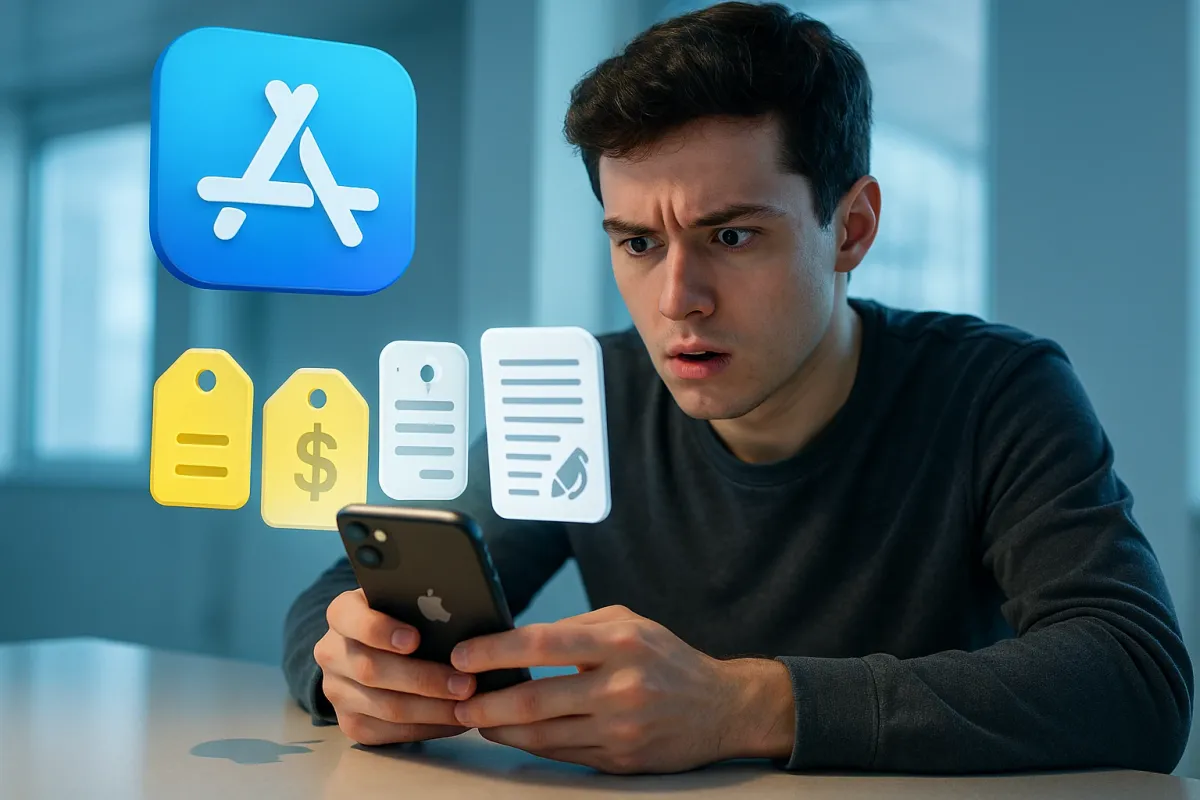
Apple just quietly shook up the entire app world, and if you use an iPhone, this absolutely affects you—even if you never read a developer blog in your life. Between antitrust pressure from regulators, wars with Epic Games, and Apple slowly relaxing (and then re-tightening) its App Store rules, we’re watching something rare: the app ecosystem actually changing in real time.
Right now, Apple is being pushed on multiple fronts: the EU’s Digital Markets Act is forcing it to open things up, U.S. regulators are poking at App Store fees, and developers are getting louder about how much control Apple has over what lives on your phone. That tension is finally turning into real policy changes, new fees, and brand‑new ways apps might land on your device.
Here’s what’s going on, and why this might completely change what your home screen looks like over the next year.
Apple’s “Open” App Store… With Asterisks All Over It
In Europe, Apple is being forced to allow alternative app stores and new ways to install apps (aka sideloading). On paper, that sounds like Android‑style freedom: grab apps from different stores, bypass Apple’s rules, maybe even snag better deals on subscriptions. In reality, Apple’s response has been a very “fine, but on our terms” kind of move.
The company announced a new fee structure where developers can technically use their own payment systems and stores, but there’s still a “core technology fee” lurking in the background once apps get popular. That means your favorite indie dev can theoretically ditch Apple’s 30% cut—but not without doing some careful math first. For users, this might mean seeing new app stores (think: game‑focused stores, brand‑specific stores, or “privacy‑only” app stores), but also a lot of devs hesitating because the economics are messy. Translation: yes, more choice is coming, but no, it won’t feel like the wild west overnight.
Subscriptions Might Finally Start Competing On Price
One of the biggest complaints from companies like Spotify, Netflix (before it pulled in‑app sign‑ups), and Epic Games is Apple’s App Store tax. When Apple takes a cut of every in‑app subscription, apps either eat the loss or quietly raise prices for iOS users. With regulators breathing down Apple’s neck, we’re starting to see more flexibility: links to external sign‑ups, experimental payment flows, and in some regions, looser rules for how apps talk about cheaper options outside the App Store.
Why you should care: if this keeps going, you might actually see services offer real discounts for signing up outside Apple’s ecosystem—or different plans depending on where you subscribe. Imagine a world where your music, cloud storage, or productivity apps are a few bucks cheaper just because the devs no longer have to pay Apple as much every month. It’s not guaranteed, but the pressure is finally there, and companies like Spotify are already turning that into a public “we’d be cheaper if Apple got out of the way” marketing angle.
Gaming Apps Are Quietly Becoming The Battlefield
Gaming is where all this drama started getting loud. Epic Games literally went to war with Apple over Fortnite’s in‑app purchases, and that lawsuit lit up the whole “who controls the App Store” conversation. Now, with cloud gaming platforms like Xbox Cloud Gaming, NVIDIA GeForce Now, and others trying to land on iOS, Apple has been forced to rethink long‑standing rules that basically banned full game stores inside apps.
We’re already seeing Apple loosen up on game streaming, and with new regulatory pressure, the next wave might be full‑blown game hubs inside a single app—or separate game stores competing with the App Store altogether in markets like the EU. If that happens, your iPhone could start looking more like a Nintendo Switch crossed with Steam: one device, multiple game libraries. That’s great for gamers, terrifying for Apple’s in‑app purchase revenue, and a huge incentive for Apple to push Apple Arcade harder than ever.
Your Default Apps Might Not Stay “Default” Much Longer
Another quiet trend: the right to pick your own default apps. On iOS, Apple has already allowed users to swap out the default browser and email app, mostly because regulators started asking uncomfortable questions about Apple’s home‑field advantage. Now, as new rules roll in (especially in Europe), that same energy is coming for more categories: maps, music, maybe even assistants.
Imagine a setup screen on a brand‑new iPhone that says: “Choose your default browser, music app, and app store.” That’s wild compared to how locked‑down iOS used to be. For app makers, being “default” is everything—just ask Google how important default search is. For users, it means you might finally be able to live in Spotify, DuckDuckGo, and whatever third‑party AI assistant you like without constantly wrestling iOS back into your preferences.
AI Is Sneaking Into Every App You Already Use
While all the legal and payment drama gets headlines, the actual apps on your phone are quietly transforming into AI‑powered versions of themselves. Big platforms—Meta, Google, Microsoft, and OpenAI—are racing to push their AI models into mobile apps as fast as possible. You’re already seeing it: AI in photo editors, AI in note‑taking, AI chat baked into messengers, AI in shopping apps that “help” you decide what to buy.
The twist: Apple is both a gatekeeper and a competitor here. As third‑party apps integrate OpenAI, Anthropic, or other models, Apple is working on its own AI upgrades for iOS and system apps. Depending on how aggressive Apple gets with rules around on‑device AI versus cloud AI, some features may be limited, delayed, or forced to use Apple’s own tech. So the AI race on your phone is about more than who has the smartest chatbot—it’s about which apps are allowed to do what, under whose rules, and how much of that happens on your actual device versus a data center you’ll never see.
Conclusion
The app world used to feel simple: you open the App Store, you download stuff, Apple takes a cut, everyone shrugs. That era is ending. Between regulators in the EU and U.S., high‑profile fights with companies like Epic and Spotify, and an AI arms race happening on top of all that, your home screen is about to become a lot more interesting—and a lot more political.
Over the next year, expect to see new app stores, weirder subscription pricing, more power‑user control over defaults, and apps that quietly get way smarter thanks to AI. The gate is finally cracking open. The real question now is: when the dust settles, will your iPhone feel more like a locked garden with prettier flowers, or an actual city with competing shops on every corner?
Key Takeaway
The most important thing to remember from this article is that this information can change how you think about Apps.