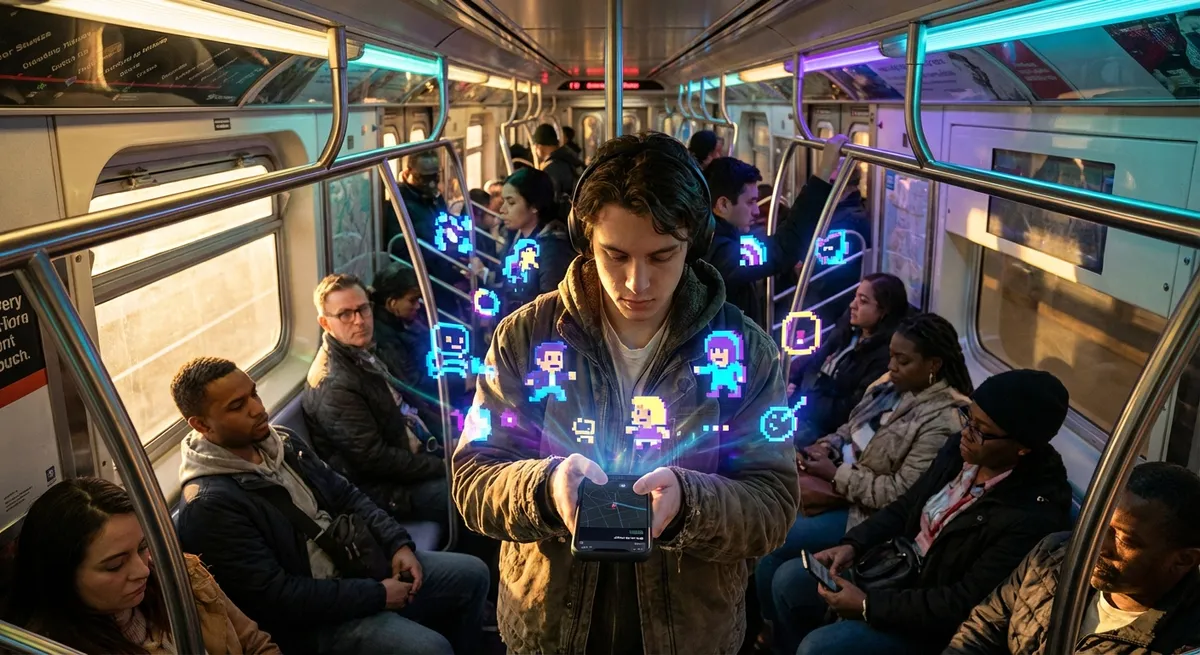
You open your phone to answer a text and somehow end up editing a photo, tracking your sleep, and joining a random group chat about electric cars. Modern apps are less “tools” and more like social side‑quests: one tap, and you’re down a completely different rabbit hole.
Let’s unpack some of the weird and wonderful ways apps are quietly changing how we create, connect, and kill time—without going full nerd-mode.
1. Your “Notes” App Is Secretly a Second Brain
Most people treat their notes app like a junk drawer: random grocery lists, half-baked ideas, and that one Wi‑Fi password from three apartments ago.
But power users treat notes apps as an offloaded brain. Instead of trying to remember everything, they store it in searchable text:
- Quick voice memos that auto‑turn into text
- Screenshots with searchable text (thanks, OCR)
- Links, quotes, and random thoughts, all tagged or grouped
This idea—called a “second brain” by productivity folks—isn’t just a fad. Psychologists have been studying “cognitive offloading”: when we let tools remember things for us so our actual brain can focus on thinking, not storing.
And because notes apps sync across devices, you’re basically carrying a searchable timeline of your thoughts in your pocket. The cool part: the more you throw into it, the more useful it becomes. Search “coffee” and you’ll get café ideas, saved orders, screenshots, and maybe that startup idea you forgot you had at 2 a.m.
It’s not just about being organized. It’s about turning your random chaos into something you can actually use later.
2. Sleep Apps Are Turning Your Night Into Data You Can Actually Read
Sleep-tracking apps used to be rough: vague graphs, weird scores, zero context. Now, they’re getting way better at telling you what’s actually going on when you’re unconscious and drooling on your pillow.
Modern sleep apps can:
- Use your phone’s microphone and motion sensors to detect movement and snoring
- Pair with wearables to estimate heart rate and breathing patterns
- Turn that noise into straightforward insights: “You went to bed late, woke up twice, here’s how much deep sleep you got”
What’s really interesting: they’re getting more behavior‑aware. Instead of just saying “you slept 6 hours,” some apps cross‑reference when you drank coffee, exercised, or stared into TikTok’s infinite scroll at 1 a.m. Then they nudge you with stuff like: “You sleep 45 minutes less on days you drink caffeine after 4 p.m.”
They’re not medical devices (that’s still the domain of proper sleep labs), but as personal feedback tools, they’re surprisingly powerful. Over time, people actually start to see patterns: you might notice your sleep tanks when you game past midnight or scroll doom‑news right before bed.
It’s a little unsettling that your phone knows how badly you slept—but very satisfying when you start gaming the system and your sleep score finally climbs.
3. Creative Apps Are Making Everyone a “Casual Creator”
Not so long ago, editing video or music required a decent PC, expensive software, and at least one YouTube tutorial meltdown.
Now? You can:
- Shoot, edit, and color‑grade short videos on your phone
- Use templates to sync clips to music automatically
- Record multi-track audio or build beats on an app while waiting for your coffee
- Turn your scribbles into layered digital art without buying a single brush
We’re living in the era of “casual creators.” You don’t have to call yourself a filmmaker or musician—you just post something that looks surprisingly polished for someone who edited it on the bus.
This is changing more than just social media feeds. Entire trends (like vertical video, lo-fi beats, or hyper‑short tutorials) exist because apps made it insanely easy to create and share this stuff. There’s a feedback loop: platforms encourage a certain format, apps optimize for it, people create more of it, and suddenly that format becomes “normal.”
The real twist: these apps blur the line between “consumer” and “creator.” You might open an app to watch something, then end up making your own version 5 minutes later because the tools are just sitting there, waiting.
4. Niche Community Apps Are Replacing the One-Size-Fits-All Feed
Big social platforms are still massive, but there’s a quiet migration happening: more people are hanging out in smaller, purpose‑built community apps.
Think:
- Group chat apps built around specific interests (coding, K‑pop, local food)
- Fitness apps with built‑in communities that share progress and advice
- Learning apps where you can talk to others studying the same language or topic
- Hobby apps for gardening, mechanical keyboards, fountain pens—yes, really
What’s different is the vibe. Instead of a chaotic public feed, these apps often feel like digital clubhouses: focused, semi‑private, and full of people who actually care about the same weirdly specific things you do.
This “smaller but deeper” community model can be a game-changer for people who are burned out on algorithm roulette. You’re not posting for engagement; you’re talking to people who get why you’re obsessing over niche details.
The trade-off? You might end up juggling more apps. But for a lot of users, it’s worth it to swap endless scrolling for fewer, better conversations.
5. Automation Apps Are Turning Your Phone Into a Personal Assistant
Most of us use our phones reactively: something pops up, we tap it. Automation apps flip that script by letting your phone do routine tasks in the background.
With a bit of setup, you can:
- Automatically silence notifications when you start a workout or join a calendar event
- Save every new photo to cloud storage without thinking about it
- Turn on low‑power mode at a certain battery level or time of day
- Log your location or activities to a journal or tracker app automatically
You don’t need to be a programmer to do this anymore—many automation apps use simple “if this, then that” style building blocks. Even built‑in tools (like Shortcuts on iOS or Routines on Android) make it easy to chain actions together.
The cool part is how personal this can get. You can create tiny workflows that reflect your habits:
- Plug in headphones → auto-open your favorite music app
- Arrive at the gym → track your workout, turn on Do Not Disturb
- At 11 p.m. → dim your screen, block certain apps, set an alarm
Individually, these are small wins. Together, they make your phone feel less like a needy device and more like a quiet assistant that takes a hint.
Conclusion
Apps used to be simple: one icon, one job. Now they’re more like side‑quests layered on top of everyday life—helping you sleep better, remember more, create faster, connect smarter, and automate the boring stuff.
You don’t have to use every feature or live inside a perfectly optimized phone. But paying attention to how your favorite apps actually shape your day can help you nudge things in a direction you like: less noise, more signal, and maybe a few extra “whoa, that’s cool” moments along the way.
Sources
- [American Psychological Association – Offloading Memory](https://www.apa.org/monitor/2015/01/memory) - Explains how relying on external tools (like notes apps) affects how we think and remember
- [National Institutes of Health – Sleep and Health](https://www.nhlbi.nih.gov/health/sleep-deprivation) - Overview of why sleep quality matters and how poor sleep impacts daily life
- [Pew Research Center – Social Media and Online Communities](https://www.pewresearch.org/internet/2021/09/08/the-state-of-online-social-networks/) - Research on how people are using online platforms and communities
- [Apple – Shortcuts User Guide](https://support.apple.com/guide/shortcuts/welcome/ios) - Official documentation showing how everyday users can automate tasks on iOS
- [Google – Digital Wellbeing](https://wellbeing.google) - Google’s hub on tools and features that help people manage screen time, notifications, and app use
Key Takeaway
The most important thing to remember from this article is that this information can change how you think about Apps.