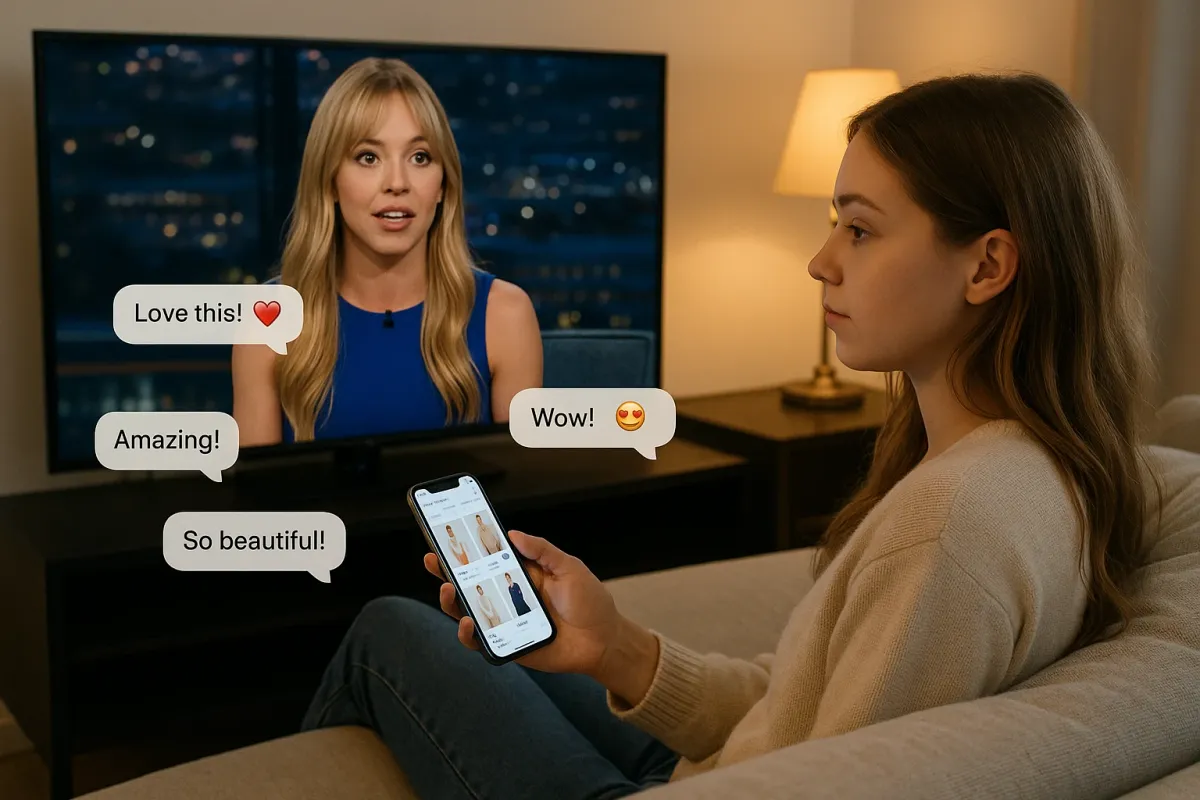
Sydney Sweeney probably didn’t expect a jean ad to turn into a political debate, but here we are. After finally addressing the backlash around her American Eagle campaign, she’s now at the center of a much bigger question: when does a cute outfit in your feed stop being “just an ad” and start feeling like a statement?
And if you spend any time on your phone (so… everyone), you already know this isn’t just about billboards and brand deals anymore. Shopping has fully moved into the app era — TikTok Shop, Instagram Shops, Amazon’s scroll of doom, Shein, Temu, and every retailer begging you to “download our app for 10% off.” Sweeney’s situation just adds another layer: the personalities and creators tied to these apps are now expected to answer for what brands mean, not just what they sell.
Let’s talk about how we got here, and what Sydney’s “too late” apology moment accidentally reveals about the apps we’re all glued to.
1. Your Shopping Apps Aren’t Neutral — They’re Culture Machines
When Sweeney’s American Eagle campaign went viral for all the wrong reasons, the arguments weren’t about fabric or price tags — they were about symbolism, politics, and identity. That’s the same energy powering modern shopping apps: they’re not just showing you products, they’re feeding you stories about who you are.
TikTok Shop pushes you “that girl” water bottles, Stanley cups, and aesthetic planners. Instagram Shops leans into “soft life” and curated vibes. Even Amazon’s “influencer storefronts” are built around personalities, not products. That’s not an accident — recommendation algorithms reward things that trigger emotion, and nothing gets shared faster than content that feels like part of a bigger cultural fight. When you see a campaign blow up like Sweeney’s, you’re basically watching what happens when marketing, identity, and online tribalism collide… inside the same apps you use to buy socks.
2. Influencers Are Now Walking Terms Of Service
Sydney Sweeney having to “explain” an American Eagle ad is peak 2025 energy. But her situation mirrors what’s happening across every major app: creators are expected to be part entertainment, part brand, part PR damage control.
On TikTok, creators have to disclose #ad and still appear “authentic.” On Instagram, they’re expected to look aspirational but relatable. On X and YouTube, one wrong collab can get you trending for the worst reasons. Brands don’t just pay for reach anymore — they’re buying into a creator’s reputation score in the court of public opinion. And that reputation now lives inside shopping and social apps that can nuke your visibility overnight if you trip an algorithmic wire or get mass-reported.
So when a campaign like Sweeney’s gets politically charged, you’re watching the real-time stress test of this whole system: how much can an app-driven creator economy rely on “feelings” while pretending it’s just running ads?
3. “Add To Cart” Is Now A Public Performance
Remember when shopping was private? Not anymore. TikTok Shop literally shows you live comment threads while people buy. Instagram Reels flex “unboxing” rituals like they’re mini lifestyle trailers. Even Amazon has a public “found it on TikTok” vibe now, where people chase the same viral items so they don’t feel left out.
The Sydney Sweeney/American Eagle drama fits into this shift. An ad is no longer something you pass on the highway — it’s content that people duet, stitch, re-caption, meme, and argue over. The moment your shopping experience happens in public feeds, every purchase becomes a tiny social signal: what you value, what causes you support (or ignore), what aesthetic you’re trying on this month. That’s why campaigns can blow up into full-on discourse — we’re not just reacting to brands, we’re reacting to what those brands say about us for liking or sharing them.
4. Apps Have Turned Outrage Into An Engagement Feature
There’s no nice way to say this: your favorite apps make money when people fight. They don’t “want” drama in some evil mastermind way, but their entire business model is tuned for one metric — engagement. If a controversy keeps you scrolling, commenting, and refreshing, it wins.
Sweeney’s delayed response to the American Eagle backlash is a perfect case study. The longer something simmers, the more videos, takes, and stitches pile up. That means more watch time, more clicks, and yes, more chances to push you another ad in between. Algorithms don’t care why you’re angry, they just see a hot cluster of activity and boost it. And because creators and brands both live inside this machine, shopping app culture now runs on a wild mix of hype cycles and outrage loops.
The tech part is simple: anything that spikes reactions gets promoted. The human part? That’s the messy bit Sweeney just walked into.
5. The Next Big “Feature” Isn’t AR Try-Ons — It’s Accountability
We’ve already seen apps test virtual fitting rooms, AI sizing, and 3D previews. Cool, sure. But the real shift happening right now isn’t visual — it’s social. People don’t just want to know: “Does this look good on me?” They want to know: “What does it mean if I support this?”
That’s why you’re seeing more:
- “Receipts” threads about brands and their past behavior
- Creators disclaiming which companies they’ll work with
- Users dragging platforms for shady recommendation or moderation decisions
Expect shopping and social apps to lean into this, even if reluctantly. Better transparency tools, clearer ad labels, possibly even built-in context around campaigns that attract controversy. Not because they suddenly grew a conscience, but because trust is now a ranking factor — if users think a platform is constantly dropping them into PR fires, they eventually bounce.
Sydney Sweeney’s “too late” apology is just one incident in a long timeline, but it highlights where all this is heading: your favorite shopping apps can’t pretend they’re passive anymore. Once you mix commerce, celebrity, and algorithmic reach, you’re not just selling clothes — you’re selling narratives.
Conclusion
Sydney Sweeney tried to talk about a jeans ad and ended up touching a nerve that runs straight through TikTok, Instagram, and every app on your home screen: nothing we see there is “just” content anymore. Campaigns are culture. Creators are brands. Shopping is social. And every tap feels a little more public than it used to.
If you’re a tech enthusiast, this is the moment to watch: not just what new shopping features roll out, but how apps handle the fallout when a campaign goes sideways. Because the next big upgrade for shopping apps won’t be a shinier buy button — it’ll be how they deal with the humans on both sides of the screen.
Key Takeaway
The most important thing to remember from this article is that this information can change how you think about Apps.