If you’ve ever paused a game and thought, “None of this matters outside this screen,” I’ve got news: it absolutely does. Modern games quietly train your brain in ways that spill over into work, school, and everyday life—whether you’re clutching a controller, a mouse, or your phone on the train.
This isn’t the usual “games improve hand‑eye coordination” conversation. We’re going deeper into how gaming habits line up with the stuff tech‑savvy people deal with every day: problem‑solving, data, teamwork, and even handling failure without rage‑quitting your actual life.
Below are five ways your time in digital worlds is sneakily upgrading your real‑world toolkit.
1. Strategy Games Are Basically Brain Workouts in Disguise
If you’ve sunk hours into strategy games—city builders, real‑time strategy, grand strategy maps that look like someone spilled Risk all over Europe—you’ve been doing more than just “playing around.”
You’re constantly:
- Balancing resources (gold, power, population, time)
- Watching multiple systems at once (economy, defense, expansion)
- Making decisions with incomplete information (since you never see the whole map)
That’s basically the same mental muscle you use when you:
- Plan a project at work with limited budget and time
- Decide which tech to upgrade first (GPU vs. storage vs. that monitor you definitely don’t “need” but want)
- Juggle side projects, hobbies, and actual responsibilities
Research has linked strategy games with better problem‑solving skills and improved cognitive flexibility—in plain language, they help your brain get better at switching tasks and adapting when things change. In a world where tech tools, frameworks, and trends move fast, that “adapt on the fly” skill isn’t just nice to have; it’s survival.
2. Loot, Builds, and Loadouts: Your Brain Loves Systems
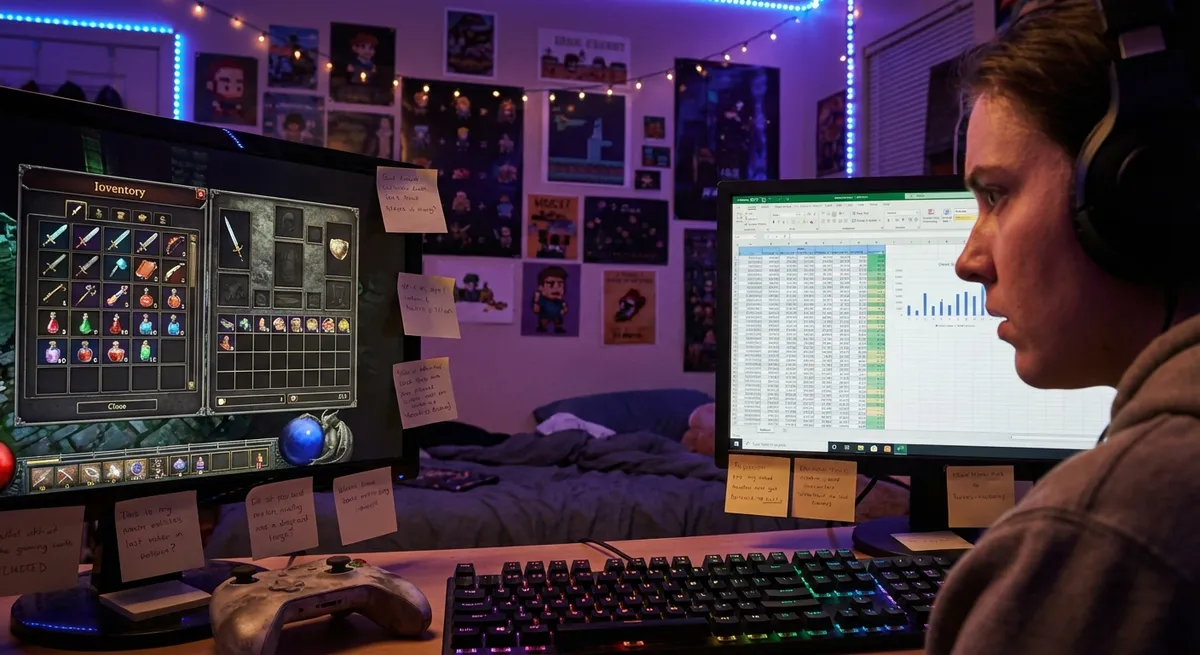
RPGs, shooters with detailed loadouts, even card‑based games with builds and decks—these all scratch the same itch: tinkering with systems until they’re just right.
Think about what you do without even realizing it:
- Compare item stats and bonuses
- Build specific “loadouts” for different scenarios
- Run small experiments: “What if I swap this perk for that one?”
- Track how a tiny change (a new ring, card, or skill point) affects your entire setup
That’s dangerously close to how people work with:
- PC builds and component choices
- Automation setups with smart home gear
- Task setups in productivity apps or Notion/Obsidian dashboards
- Experimenting with browser extensions, plugins, or dev tools
In other words, gamers are often naturally good at system thinking: seeing how small parts affect the whole. In tech, that’s gold. It’s the difference between just “using tools” and actually designing workflows that feel smooth, fast, and fun.
3. Team Chat, Raids, and Ranked: Multiplayer as Soft‑Skill Training
Online games are basically soft‑skill bootcamps with voice chat and occasional chaos.
If you’ve:
- Led a raid, clan, guild, or squad
- Called out plays in a fast‑paced match
- Tried to keep a tilted teammate from going nuclear
…you’ve been practicing:
- Communication under pressure
- Quick conflict resolution
- Role awareness (who does what, and when)
- Leading without formal authority (no one’s getting fired, but they might log off)
Competitive and cooperative multiplayer environments force you to read people fast, manage expectations, and keep the group focused on a shared goal—even when things go sideways.
For tech people who end up in cross‑functional teams—devs working with designers, PMs working with engineers, creators working with editors—that raid‑leader mindset maps over almost perfectly: set a goal, divide roles, communicate clearly, adjust the plan when things break (which they will).
4. Failure, Checkpoints, and the Art of Not Giving Up
Games teach something school and work often struggle with: failure isn’t the end, it’s data.
Speedrunners, for example, will fail hundreds or thousands of runs just to shave off a few seconds. Soulslike players will die so often it becomes part of the experience. Roguelike fans literally sign up for “you lose everything, try again.”
This teaches a few powerful habits:
- Treating failure as feedback, not an identity crisis
- Breaking huge challenges down into “learnable” chunks
- Getting comfortable with iteration (try, tweak, repeat)
- Staying patient when progress is slow and invisible
If you work in tech—or want to—you’re living in that world already:
- Debugging weird issues that don’t make sense
- Shipping a feature, then patching it three times
- Experimenting with side projects that may or may not go anywhere
The same mentality that keeps you retrying a boss fight at 2 a.m. is the one that keeps you pushing through a tricky bug, a broken build, or a project that looks impossible until it suddenly…isn’t.
5. Mods, Custom Rules, and the Maker Mindset
A lot of gamers aren’t just playing games—they’re quietly modding, tweaking, and customizing them.
Think about:
- UI mods and overlays
- Custom keybinds and control setups
- Total conversion mods that turn one game into something completely different
- Community balance tweaks, custom maps, fan patches
That “what if I just change this?” curiosity is the same energy that drives:
- Home‑lab setups, self‑hosted tools, and DIY servers
- Tweaked Linux desktops or heavily customized Windows/macOS setups
- Browser setups so personalized they barely resemble a browser anymore
- Automation chains (shortcuts, scripts, macros) to remove annoying steps
Even if you never write a line of code, that willingness to poke at systems, break them a bit, and rebuild them better is very close to how builders, hackers, and creators approach tech. Gaming can be the on‑ramp from “I like using cool stuff” to “I wonder if I can make this do something new.”
Conclusion
Gaming isn’t the opposite of “real life”—it’s a weird little training ground for it.
When you zoom out, you’re not just grinding levels or chasing cosmetics. You’re:
- Practicing strategy and resource management
- Learning to think in systems and tweak them
- Building communication and leadership skills in chaotic environments
- Training yourself to treat failure as part of the process
- Developing the curiosity to open things up and change how they work
So the next time someone side‑eyes the hours in your Steam library or your latest late‑night raid, you can be honest: this is fun—but it’s also sharpening skills that quietly matter everywhere else.
Play on. Just maybe drink some water between matches.
Sources
- [American Psychological Association – Video games: Play that can do serious good](https://www.apa.org/monitor/2014/02/video-game) – Overview of research on how games can improve problem‑solving, learning, and social skills
- [Frontiers in Human Neuroscience – Neural Basis of Video Gaming: A Systematic Review](https://www.frontiersin.org/articles/10.3389/fnhum.2017.00248/full) – Research review on how gaming relates to attention, cognitive flexibility, and other mental abilities
- [Pew Research Center – How young adults use video games](https://www.pewresearch.org/internet/2008/12/07/how-young-people-view-their-lives-futures-and-politics/) – Insights into how gamers perceive the role of games in their lives and skills
- [Stanford University – The Psychology of Video Games](https://news.stanford.edu/2013/03/26/video-games-psychology-032613/) – Discussion of motivation, challenge, and reward in games and how they influence behavior
- [MIT Game Lab – Research on Games and Learning](https://gamelab.mit.edu/research/) – Academic perspective on how games support learning, systems thinking, and experimentation
Key Takeaway
The most important thing to remember from this article is that this information can change how you think about Gaming.