If you still think gaming is just “escapism,” you’re missing the plot. Modern games aren’t just about reflexes and high scores anymore—they’re becoming surprisingly good at teaching real-world skills, shaping how we work, learn, and even handle stress. The wild part? Most of this is happening without players even noticing.
Let’s dig into how today’s games are sneaking real-life upgrades into your brain, one session at a time.
1. Games Are Turning You Into a Low-Key Strategist
If you’ve ever juggled base-building, resource management, and a looming enemy attack in a strategy game, congratulations: your brain has been running a live-fire exercise in planning and prioritization.
Modern strategy and management games:
- Force you to make decisions with incomplete information
- Punish you for tunnel vision and reward long-term planning
- Make you weigh risk vs. reward in real time
That’s suspiciously close to what happens in real-world jobs—especially anything involving projects, budgets, or people. Studies on action and strategy games have found links to better attention control, faster information processing, and improved decision-making under pressure.
And no, that doesn’t mean “play one game, become a CEO,” but it does mean those hundreds of hours in complex games might be sharpening your mental toolkit more than doomscrolling ever will.
2. Multiplayer Lobbies Are Quietly Training Your Social Skills
Voice chat can be a disaster, sure—but when you land in a decent squad, multiplayer games become an accidental communication boot camp.
Think about what’s happening in a solid co-op session:
- You’re coordinating with strangers toward a shared goal
- You’re reading tone, timing, and intent—often under time pressure
- You’re managing conflict when someone messes up or tilts
- You’re learning when to lead and when to follow
Games with built-in roles (healer, tank, support, etc.) even nudge people into experimenting with different social positions. Someone quiet in real life might discover they’re actually pretty good at leading a team when the stakes are virtual and the environment feels safer.
Researchers studying online games and virtual environments have found that people often experiment with identity and social behavior in ways that can carry over to offline life—especially around confidence, teamwork, and leadership. It’s not therapy, but it can be practice.
3. Speedrunning and Min-Maxing Are Basically DIY Data Science
If you’ve ever:
- Timed weapon reload animations
- Measured DPS on a dummy
- Tweaked gear builds and logged results
- Watched a spreadsheet-heavy build guide on YouTube
…you’ve dipped your toes into data-driven thinking.
The speedrunning and optimization side of gaming is a perfect example. Players:
- Break games down into systems and variables
- Test small changes and track outcomes
- Share findings, challenge assumptions, and refine “best practices”
That loop—hypothesis, test, analyze, iterate—is exactly how scientific and data-focused work operates. The difference is, in games, you get instant feedback and a visible reward: faster completions, higher ranks, smoother runs.
A lot of people who swear they “hate math” will happily spend hours optimizing a build or reading frame data. The motivation switch flips when the numbers connect directly to something fun and meaningful.
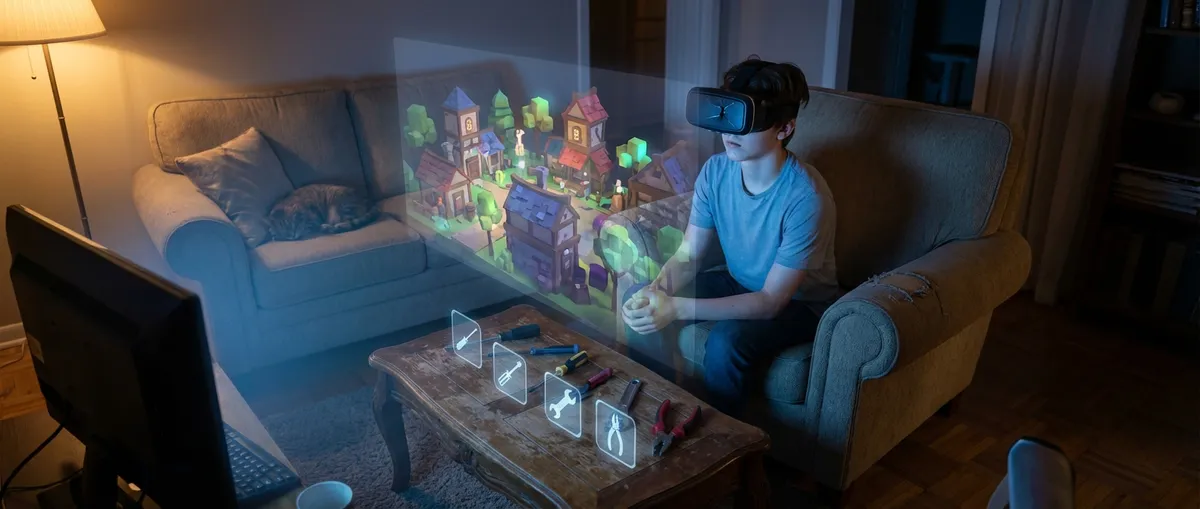
4. Virtual Spaces Are Training Grounds for Future Tech
Your favorite game world might be closer to a test lab than you think.
Big online games and virtual worlds have quietly been:
- Stress-testing large-scale servers and network code
- Experimenting with virtual economies and digital ownership
- Exploring identity through avatars, cosmetics, and social hubs
Sound familiar? It’s basically the foundation of what tech companies keep calling “the metaverse,” collaboration platforms, and virtual events.
Games have been:
- Handling millions of concurrent users before Zoom was mainstream
- Running in-game concerts and events before virtual events were a thing
- Selling digital skins and cosmetics long before NFTs tried to make it weird
When you’re navigating a crowded MMO city, attending a virtual concert in a battle royale, or hanging out in a game lobby with friends, you’re directly experiencing early versions of where a lot of social and workplace tech is heading.
Developers are watching what works—how people move, talk, spend money, and customize—and pulling those lessons into non-gaming apps and platforms.
5. Games Are Becoming Legit Mental Health Tools
No, games aren’t a magic fix for mental health. But they’re no longer being dismissed as the villain either.
Used thoughtfully, games can:
- Offer low-stakes spaces to decompress and “turn your brain down”
- Provide a sense of progress and control when real life feels chaotic
- Help people maintain social ties when in-person hangouts aren’t possible
- Support rehab and therapy in more structured, clinical settings
There’s even an FDA-cleared video game treatment for kids with ADHD, designed specifically to help with attention and cognitive control by turning therapy into play.
Beyond official “therapeutic games,” a lot of people lean on familiar titles as part of their personal coping toolkit—jumping into a comfort game after a long day, or scheduling regular co-op nights with friends as a social anchor.
The key is balance and intention. Games can help with stress and mood, especially when they’re adding structure and connection, not replacing sleep, movement, or real-world responsibilities.
Conclusion
Gaming isn’t quietly “growing up”—it’s already there. Virtual worlds are teaching strategy, communication, experimentation, and resilience, often more effectively than a dry slideshow or mandatory training ever could.
The twist is that none of this requires turning games into homework. The best examples work because they’re fun first, and the real-world skill-building just rides along for free.
So next time someone says gaming is a waste of time, you don’t need a lecture loaded with acronyms. Just ask them:
“When was the last time a PowerPoint taught you teamwork, strategy, and stress management… and you actually wanted to come back for more?”
Sources
- [American Psychological Association – Video games play may provide learning, health, social benefits](https://www.apa.org/news/press/releases/2013/11/video-games) – Overview of research on cognitive, motivational, emotional, and social effects of gaming
- [Nature – Action video game play facilitates the development of better perceptual templates](https://www.nature.com/articles/nn.2296) – Study linking action games to improved attention and visual processing
- [U.S. Food & Drug Administration – FDA permits marketing of first game-based digital therapeutic to improve attention function in children with ADHD](https://www.fda.gov/news-events/press-announcements/fda-permits-marketing-first-game-based-digital-therapeutic-improve-attention-function-children-adhd) – Details on an FDA-cleared therapeutic video game
- [MIT Technology Review – The metaverse is a new word for an old idea](https://www.technologyreview.com/2022/07/06/1055583/the-metaverse-is-a-new-word-for-an-old-idea/) – Context on how virtual worlds and games relate to emerging “metaverse” concepts
- [Pew Research Center – Gaming and gamers](https://www.pewresearch.org/internet/2015/12/15/gaming-and-gamers/) – Data on who plays games and how gaming fits into social and everyday life
Key Takeaway
The most important thing to remember from this article is that this information can change how you think about Gaming.