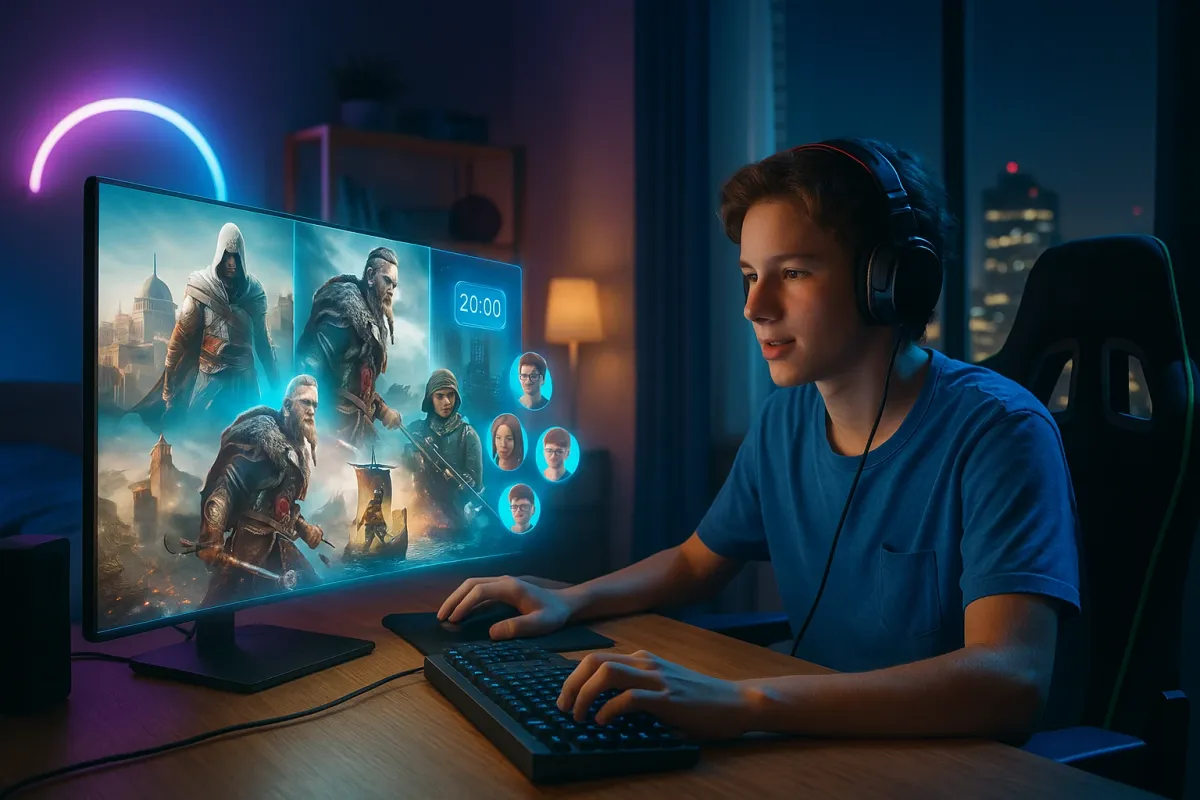
If your Steam or Ubisoft Connect feed has looked extra thirsty this week, you’re not imagining it. Ubisoft has been on a tear with time-limited free weekends and deep discounts for games like The Division 2, Rainbow Six Siege, and For Honor, tied to new seasonal updates and events. It’s not just a random sale spree—this is Ubisoft doubling down on what might be the new meta for big-budget games: try before you commit your entire life (and wallet) to it.
As live-service titles fight over your time almost as much as your money, Ubisoft is basically saying, “Here, just move in for the weekend and see if you like the neighborhood.” And honestly? It might be one of the smartest plays in gaming right now.
Let’s break down what this new wave of “play for free, but just for a bit” actually means for gamers and the industry.
Free Weekends Are Becoming the New Demo—But Way More Addictive
The classic demo is dead, but Ubisoft’s free weekends are the upgraded reincarnation. Instead of a small slice or a custom level, you’re getting the full game for a couple of days—progress and all—especially on titles like The Division 2 or XDefiant when events roll out.
That does two things:
- It lowers the barrier to entry for people who are “Ubisoft-curious” but not ready to drop $60.
- It taps into FOMO hard. You know the access ends on Monday, so you naturally binge it over the weekend, get attached to your build, your squad, your progress… and suddenly walking away feels worse than just buying it on sale.
It’s not a coincidence that these free periods usually line up with a new season or big update. Ubisoft wants you to walk away on Monday thinking, “Well, I was having fun, and they just dropped a new mode… fine, I’ll buy it.”
Live-Service Games Need Fresh Blood, and This Is the IV Drip
Games like Rainbow Six Siege and The Division 2 are years old at this point, but they’re still getting updates, new operators, events, and cosmetic drops. That live-service model only works if there’s a steady stream of new or returning players.
Free weekends are basically population shock therapy: everyone jumps in at once, queues feel alive, low-rank lobbies don’t feel like AI practice rooms, and you’re more likely to match with people at your skill level instead of sweaty veterans farming newbies. That first experience is everything. If you log in and just get stomped repeatedly, you’ll uninstall. If you hop in and feel like you’re progressing and learning, you hang around.
From a tech perspective, it’s also a great stress test. Ubisoft can see how their servers and matchmaking behave when the player count suddenly spikes, which matters when they’re tuning netcode, anti-cheat, or crossplay systems behind the scenes.
Your Backlog Is Massive, But Free Events Decide What You Actually Play
Every gamer has the same problem: a digital pile of shame across Steam, PSN, Xbox, and maybe a dusty Ubisoft Connect account with games you claimed in giveaways and never touched. So why do you suddenly actually play The Division 2 this weekend instead of the 25 games you already own?
Because a free weekend gives you structure:
- There’s a clear “start now or miss it” deadline.
- Your friends are more likely to be online at the same time.
- Social feeds and Discords are all talking about the same thing at once.
That’s viral design. Ubisoft knows your attention is the real high-value currency, not the initial purchase. Once they get a chunk of your weekend, they can pitch you on battle passes, expansions, and cosmetics later. The base game going on sale for like $4.99 becomes the easiest upsell in the world after you’ve sunk 15 hours into it at no cost.
Game Engines + Old Titles = The New “Platform, Not Product” Mindset
A big reason Ubisoft can keep resurrecting older titles with free weekends and seasonal updates is the tech stack behind them. You’re seeing long-lived games built on engines that are now treated like platforms: Anvil, Snowdrop, and Ubisoft’s online services quietly powering updates, cross-progression, and events years after launch.
For tech-minded players, this is where it gets interesting:
- Older games get modern features (better matchmaking, quality-of-life updates, sometimes visual upgrades) without needing a full sequel.
- Ubisoft can experiment with event structures, drop rates, in-game economies, and new modes on an existing base instead of starting from scratch every time.
- They can tie promotional beats (like free weekends) to server-side switches and content toggles, not giant client patches.
So when you see a free weekend paired with a surprise new mode or seasonal event, that’s not just marketing—it’s a flex of how mature their backend systems have become. The game you’re “trying for free” might be running on a much more upgraded infrastructure than it had at launch.
Ubisoft Is Testing Future Monetization Without Saying It Out Loud
Here’s the part that quietly matters long term: these free access periods let Ubisoft experiment with different ways of making money without committing to a full pivot or public “this game is now free-to-play” moment.
By watching how players behave during a free weekend, they get hard data on:
- How many people convert to buyers if the base game is cheap vs. almost free.
- Whether players spend more on cosmetics and passes if the buy-in is zero or close to it.
- Which modes/activities keep new players hooked vs. what veterans grind.
That’s the kind of data you bake into decisions like “Do we launch the next big shooter as full-price, free-to-play, or something weird in between?” Ubisoft is already playing with that spectrum via XDefiant (free-to-play), older premium titles with heavy discounts, and in-game monetization that looks more like a service than a boxed product.
So when you hop into a free weekend, you’re not just trying a game. The game is also quietly testing you.
Conclusion
Ubisoft’s current free weekend and discount blitz isn’t just generosity—it’s a live experiment in what the next era of gaming business models looks like. Older titles like The Division 2 and Rainbow Six Siege are being treated less like “last gen” products and more like ongoing platforms that can be revived, rebalanced, and re-monetized whenever the timing is right.
For players, that’s actually a decent deal: you get real access, not watered-down demos; you can squad up with friends without arguing about who owns what; and you get to see if a live-service grind is worth your time before it eats your social life.
If you’re even mildly curious about one of these games, this is the moment where Ubisoft’s strategy lines up with your backlog guilt. Jump in, mess around, see if it clicks—and if it doesn’t, at least your wallet stays undefeated for one more week.
Key Takeaway
The most important thing to remember from this article is that this information can change how you think about Gaming.