Most people think “apps” and immediately jump to the usual suspects: Instagram, Spotify, TikTok, Gmail. Solid choices, sure—but that’s like saying you’ve “seen movies” because you watch Marvel. There’s a whole underground layer of niche apps quietly turning regular people into power users in really specific, oddly satisfying ways.
Let’s dig into the weirdly fascinating side of apps: the ones that don’t just entertain you, but subtly level up your brain, habits, and daily workflow—without feeling like homework.
1. The Rise of “Single‑Purpose” Apps That Do One Thing Scarily Well
Not every app wants to be “an ecosystem” or “a platform.” Some just want to absolutely destroy one tiny problem—and those are often the most addicting to use.
Think of:
- A distraction‑free writing app that’s basically just a blank page and a blinking cursor
- A habit tracker that only tracks one habit so you actually stick with it
- A simple timer that forces you to work for 25 minutes, then chill for 5
What’s interesting here isn’t just design minimalism—it’s how these apps mess with your brain in a good way. By stripping away features, they remove excuses. No extra menus, no social feeds, no “while you’re here, check this” tabs. Just: open app, do thing, close app.
That kind of constraint can make you weirdly productive. Research on decision fatigue suggests that fewer choices can actually lead to better follow‑through on tasks. A hyper‑focused app is almost like outsourcing self‑discipline to your phone—which is ironic, given phones are usually what wreck your focus in the first place.
2. Automation Apps That Glue Your Digital Life Together
Automation sounds intimidating, like you need a hoodie, three monitors, and a GitHub profile. But a growing set of apps are quietly turning “normal person with too many tabs open” into “I have robots doing my grunt work.”
These tools connect your favorite apps together, so stuff like:
- “When I star an email, add it to my task list automatically.”
- “When I upload a photo to this folder, back it up to the cloud and send it to this group.”
- “When it’s going to rain tomorrow, send me a reminder to bring an umbrella.”
You basically build tiny digital domino chains: if this happens → then do that. Once you set them up, they just run.
What makes this fascinating isn’t just the nerdy satisfaction—it’s that we’re slowly shifting from “apps that we tap” to “apps that quietly act on our behalf.” Your phone stops being just a screen you stare at and starts being a little operations hub for your life. Tech enthusiasts love this stuff because it scratches the same itch as building a custom PC: it’s your setup, your rules, your automations.
3. Micro‑Learning Apps That Turn Boredom Into Skill XP
Some of the most interesting apps don’t steal your attention; they redirect it.
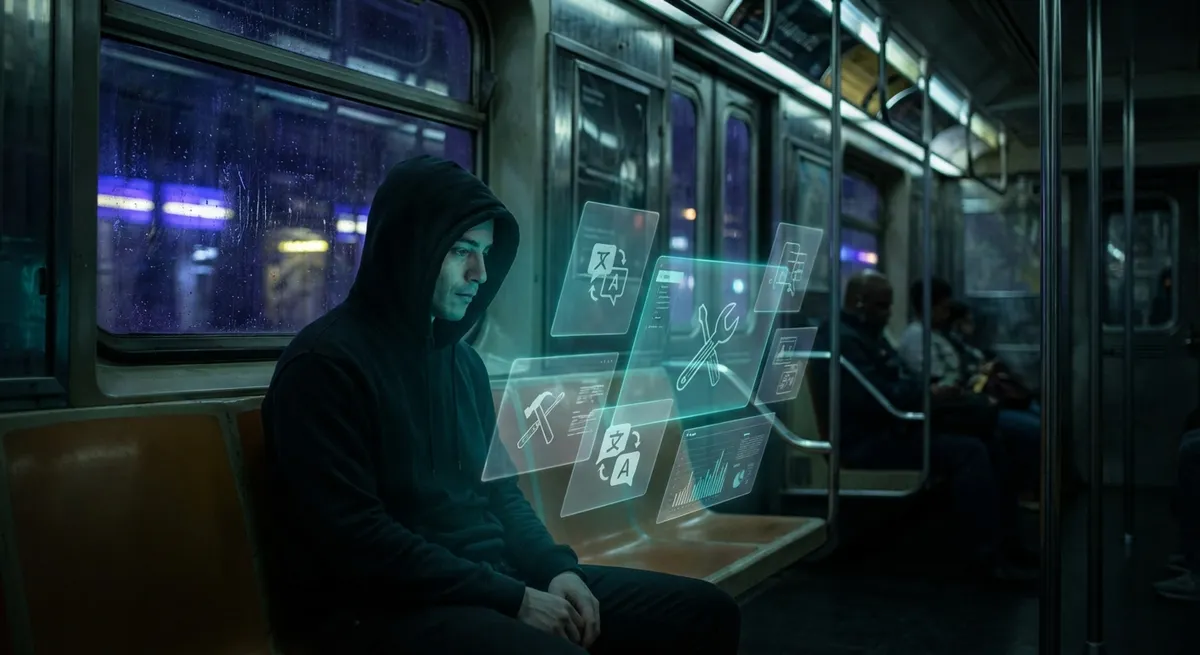
Micro‑learning apps take all those tiny dead moments in your day—waiting in line, sitting on the train, pretending not to check your phone in a meeting—and turn them into 3–5 minute learning bursts. Think:
- A language app that nudges you to do one quick lesson instead of doomscrolling
- A coding app that gives you a bite‑sized challenge instead of a full course load
- A trivia or science app that explains one concept clearly and then lets you bounce
The tech twist here is personalization. These apps track what you get right and wrong, how fast you respond, when you usually give up, and then quietly customize what they show you next. That means your “whatever, I’m bored” time slowly becomes a tailored learning path.
It’s like XP grinding in an RPG—but for your actual brain. Over time, tiny daily sessions stack up, and suddenly you can read a menu in another language, explain a basic machine learning concept, or understand why everyone online is arguing about quantum stuff again.
4. Privacy‑First Apps That Don’t Treat You Like the Product
There’s a quietly growing category of apps built around a simple promise: “We actually don’t want your data.”
These apps usually pitch things like:
- End‑to‑end encryption so even the app maker can’t read your messages or files
- Local‑only processing, where your photos or notes never leave your device
- No ads, no trackers, no selling your profile to the highest bidder
What makes them fascinating isn’t just the features—it’s the design trade‑offs. Privacy‑first apps often look simpler on the surface because they can’t rely on the usual “collect data → recommend stuff → show targeted content” loop. Instead, they lean on good defaults, cleaner interfaces, and more control for you.
For tech fans, these apps are like the digital equivalent of going from a locked‑down prebuilt machine to a clean, minimal, custom setup. You might lose a few flashy “personalized” bells and whistles, but you gain something way more interesting: a tool that’s clearly on your side.
5. Offline‑First Apps That Still Work When the Internet Doesn’t
We’ve quietly gotten used to the idea that “no signal” = “phone becomes a rectangle of sadness.” But offline‑first apps are pushing back on that—and they’re more sophisticated than just “download this file.”
These apps are built around:
- Syncing data in the background when you do have a connection
- Letting you read, edit, annotate, or create content fully offline
- Clever conflict handling when two versions of something get edited at different times
The cool part is how invisible the tech feels when it’s done right. You open a note on a plane, edit it, close the app, land, open your laptop, and—boom—it’s already there. No drama, no manual upload, no “you are offline” error screen.
For enthusiasts, offline‑first design is fun to watch because it’s a glimpse of a more resilient digital world. It treats connectivity as a bonus, not a requirement. Your stuff lives with you first, then optionally in the cloud, not the other way around.
Conclusion
Apps used to be about “what new thing can I do on my phone?” Now the more interesting question is: “How quietly can this app improve the way I already live?”
Single‑purpose tools that crush one job, automation that connects all your favorite services, micro‑learning that sneaks skills into your boredom, privacy‑first designs that respect you, and offline‑first apps that don’t panic without Wi‑Fi—all of these point to the same trend.
The most powerful apps aren’t always the loudest or the most popular. They’re the ones that quietly bend your daily life in a better direction, one tiny interaction at a time.
Sources
- [Apple – Shortcuts User Guide](https://support.apple.com/guide/shortcuts/welcome/ios) – Official overview of automation on iOS and how apps can be chained together
- [IFTTT – How Applets Work](https://ifttt.com/explore/how-ifttt-works) – Explains the “if this, then that” model behind consumer‑friendly automation
- [Duolingo – Research](https://www.duolingo.com/research) – Summaries of studies on micro‑learning, spaced repetition, and personalized lessons in language apps
- [Signal – Privacy Policy](https://signal.org/legal/) – Example of a privacy‑first app explaining its approach to encryption and data collection
- [Mozilla – Offline‑First Web Apps](https://developer.mozilla.org/en-US/docs/Web/Progressive_web_apps/Offline_Service_workers) – Technical but accessible explanation of offline‑first design and why it matters
Key Takeaway
The most important thing to remember from this article is that this information can change how you think about Apps.