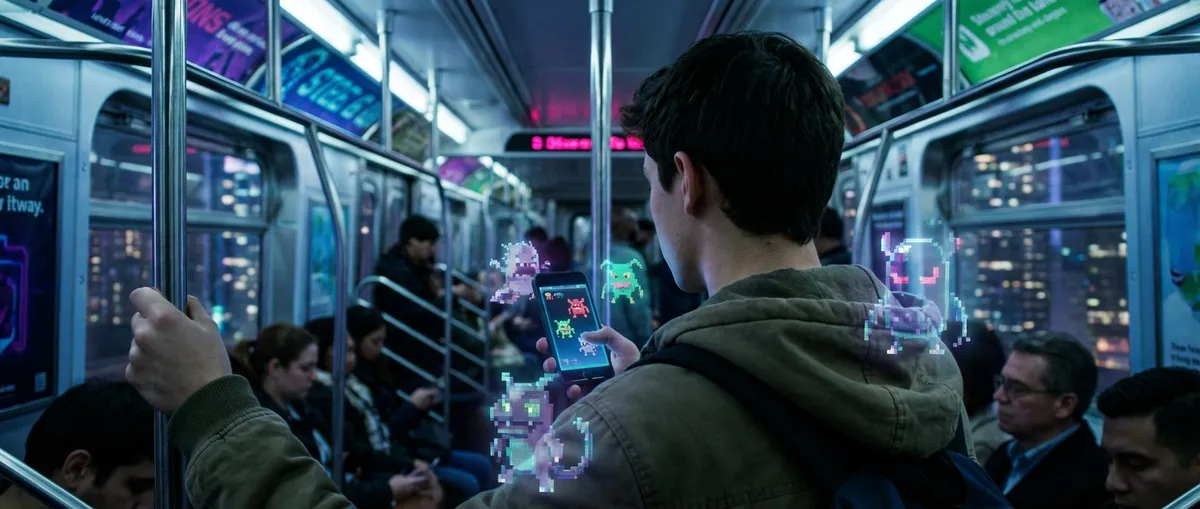
There’s this quiet shift happening in gaming that isn’t about better graphics, bigger worlds, or more realistic explosions. It’s about time. Not “I sunk 200 hours into this RPG” time—more like “I’ve got 7 minutes before my next meeting, what can I play?” time.
Those tiny slices of the day—on the couch, in a line, between calls—are turning into what you could call gaming micro-moments. And the tech around us is evolving fast to make sure those moments never go to waste.
Below are five angles on this that tech-minded gamers will appreciate.
1. The New “Session” Is 90 Seconds, Not 90 Minutes
Traditional gaming used to be: sit down, boot up, play for hours. Now, a “session” might be one round in a battle royale, a daily puzzle, or a quick run in a roguelike that takes less time than reheating leftovers.
This isn’t just accidental design—it’s intentional. Many modern games are structured so the core loop fits inside a coffee break. Short matches, instant matchmaking, and fast load times are now major features, not just technical flexes.
Tech-wise, this means:
- Engines and back-end systems are being tuned for snappy start times.
- Menus and UIs are getting stripped down so you hit “Play” faster.
- More games autosave aggressively so you can drop out at any moment.
The side effect: gaming is less of an “event” and more like checking your messages—a quick hit you can plug into almost any gap in your day.
2. Cloud Gaming Turns Any Screen Into a “Sneak In a Session” Machine
Cloud gaming quietly supercharges these micro-moments. Instead of thinking, “My console is in the living room; I don’t have time to set all that up,” you can just open an app or browser and jump right back into a full-scale game.
When a powerful server somewhere else does the heavy lifting, your phone, tablet, or low-end laptop becomes a door to the same game you were playing on your TV. No big patches. No “your hardware is too old” message. Just: tap → play.
For micro-moment gaming, that matters because:
- You don’t need to be near your “main” device.
- You can treat high-end games like quick-fix entertainment, not just weekend projects.
- Resuming where you left off becomes normal, not a special feature.
The catch, of course, is that this relies heavily on fast, stable internet and smart compression—but as networks improve, those short bursts of gaming start to feel almost frictionless.
3. Achievement Systems Are Designed for Short Bursts of Progress
Achievements, daily quests, and “one more try” timers aren’t just there for bragging rights—they’re scaffolding for micro-moment play.
Many games now slice progress into tiny, bite-sized goals:
- “Win 1 match today”
- “Log in and claim this reward”
- “Complete this 3-minute challenge”
This design is incredibly friendly to people who game in small windows of time. You don’t have to think, “I need an hour to make progress.” Instead, you get rewarded for tiny check-ins.
For tech enthusiasts, it’s interesting because you can see how data and behavior analytics shape these systems:
- Developers track when people log in and how long they stay.
- They tweak challenges to keep short play sessions satisfying.
- They experiment with rewards that feel meaningful even if you only played for five minutes.
It’s habit-building, but optimized with live data and constant iteration.
4. Cross-Progression Means Your Day Is One Continuous Game Session
The old setup: you played one version of a game on your PC, a slightly different one on your console, and maybe a stripped-down spin on mobile—with separate saves and separate unlocks.
The new setup: one account, one progression, everywhere.
Cross-progression is a perfect match for micro-moments:
- You clear a quick mission on your phone at lunch.
- You jump on your console at night and all that progress is already there.
- Cosmetics, stats, unlocks, and even in-game currency move with you.
On the technical side, this relies on cloud saves, unified accounts, and server-side tracking of pretty much everything you’ve ever done in the game. But from the player’s point of view, it makes your day feel like one long, continuous play session—even if it’s actually split into ten tiny pieces.
It’s a subtle but huge shift: “Where can I play this?” becomes “Which screen do I feel like using right now?”
5. Background Tech Is Doing More Work So You Can Do Less Waiting
Micro-moment gaming totally falls apart if you spend half the time updating, loading, or syncing. That’s why so much of the modern gaming experience is about making the waiting invisible.
A lot of the tech behind that is unglamorous but powerful:
- Background downloads that patch your game while your device is idle.
- Quick resume / suspend states that let you freeze a game mid-battle and pop back in almost instantly.
- Pre-caching assets so levels load while you’re still in a menu.
- Smarter matchmaking that spins up servers and finds opponents faster.
All of this supports one core idea: if you’ve got five minutes, the game should be ready now, not “after this 3 GB update.”
From the outside, it just feels like everything’s smoother. Under the hood, it’s a lot of clever engineering aimed at shrinking your “time to fun” down to almost nothing.
Conclusion
We’re still going to have those long, late-night gaming marathons where time disappears and suddenly it’s 3 a.m. But increasingly, gaming is weaving itself into all the in-between spaces of the day—those little pockets of time that used to vanish into scrolling or staring at nothing.
Micro-moments are changing how games are built, how they’re delivered, and how progress is tracked across devices.
The tech world is busy chasing bigger worlds and faster hardware, but the quiet revolution might actually be this: gaming that always fits, no matter how chaotic your schedule is.
Sources
- [Play Games in the Cloud With Xbox](https://www.xbox.com/en-US/play) - Microsoft’s official overview of Xbox Cloud Gaming and how it lets you play across devices
- [NVIDIA GeForce NOW](https://www.nvidia.com/en-us/geforce-now/) - Details on NVIDIA’s cloud gaming service and device flexibility
- [Sony: PS5 Game Help and Activities](https://www.playstation.com/en-us/support/games/ps5-game-help-and-activities/) - Explains PS5 features designed to shorten time to gameplay and support quick sessions
- [Apple: Background App Refresh on iPhone](https://support.apple.com/en-us/HT202070) - Technical explanation of how apps can update and sync in the background
- [Google Developers: Achievements for Games](https://developers.google.com/games/services/common/concepts/achievements) - Documentation on how achievement systems are structured and used to guide player behavior
Key Takeaway
The most important thing to remember from this article is that this information can change how you think about Gaming.