Remember when gaming meant sitting alone in front of a screen, mashing buttons and yelling at the TV? Yeah, that version of gaming is basically ancient history now. Modern games aren’t just about winning matches or beating bosses—they’ve quietly turned into full-on social platforms, massive tech experiments, and even digital economies.
For anyone who loves tech (or just likes to see where the future is headed), gaming is where some of the wildest ideas are being tested in real time. Let’s dig into a few reasons why today’s games are way more than just “something to play.”
Games Are Quietly Becoming Social Life 2.0
If you think social media is where people hang out, you’re only seeing half the picture.
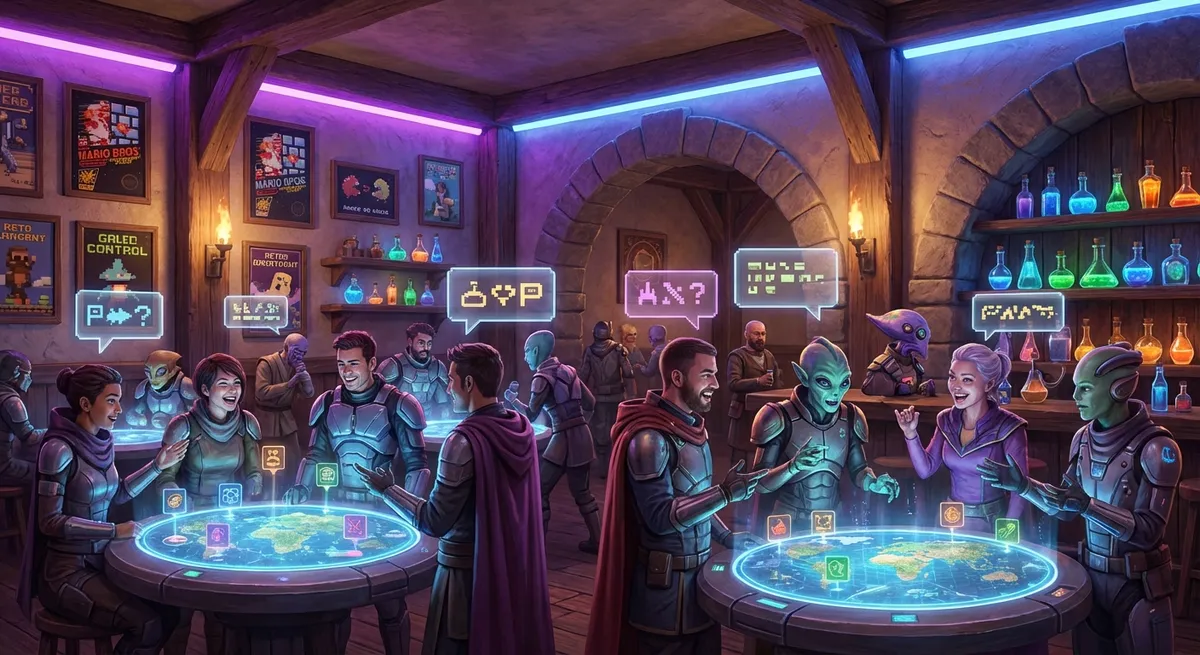
Modern multiplayer games—think Fortnite, Roblox, Minecraft, GTA Online—have become virtual “third places,” like the digital equivalent of coffee shops or malls. Players don’t just log in to finish quests; they log in to be somewhere with other people.
You’ve got concerts happening inside games (remember Travis Scott’s Fortnite concert with tens of millions of viewers?), in-game birthday parties, graduations, even meetups that feel more personal than a Zoom call. Voice chat, proximity chat, emotes, and player-created spaces make it easy to just… exist together online without the awkward “what do I post?” pressure of social networks.
For tech fans, this is fascinating because these games are essentially testing the early versions of the metaverse that companies keep hyping. Persistent avatars, live events, digital economies, and social identity—all being trialed at scale, inside what we still casually call “just games.”
Your Favorite Game Is Running on Ridiculous Cloud Tech
When you click “Play” and casually jump into a 100-player match, the amount of infrastructure required to make that feel smooth is kind of insane.
Behind the scenes, you’ve got:
- Global server networks deciding where to put you so your ping doesn’t suck
- Matchmaking systems crunching skill levels, locations, and party sizes in milliseconds
- Real-time synchronization so everyone sees the same explosion at the same moment
- Anti-cheat systems watching for shady behavior using pattern detection and machine learning
It’s basically a live, high-speed distributed systems problem that never stops.
Cloud gaming takes this even further. Platforms like NVIDIA GeForce NOW and Xbox Cloud Gaming stream full PC and console titles to phones, tablets, and cheap laptops. All the heavy lifting happens in giant data centers with high-end GPUs; your device just receives video and sends back inputs.
For hardware nerds, that flips the whole “you need a $2,000 rig to play the latest game” idea on its head. If cloud gaming scales the way companies hope, a basic screen plus a good internet connection could be enough to run stuff that would make your old graphics card cry.
Game Economies Are Basically Mini Tech-Driven Countries
In-game currencies used to be simple: collect coins, buy a sword, move on. Now? Many games have economies that look suspiciously like stripped-down versions of real-world financial systems.
Take large online titles and live-service games:
- They often have multiple currencies (soft currency, premium currency, crafting materials).
- They use dynamic pricing and rotating shops to drive engagement.
- Some games tweak drop rates and rewards to subtly shape player behavior.
Then there’s the esports and streaming layer: competitive games spawn entire ecosystems—teams, sponsorships, merchandise, betting markets. A game isn’t just a product; it’s a platform that supports jobs, careers, and businesses.
Tech enthusiasts will recognize some of the same systems used in ad platforms, marketplaces, and fintech: analytics-heavy decision-making, behavioral data, and fine-tuned reward loops. The difference is, in games, it all has to feel fun instead of like a bank statement.
And when real money intersects with in-game value—via skins, marketplace trading, or tournament winnings—the line between “play” and “economy” gets very thin, very fast.
Game Engines Are Quietly Powering Stuff That Isn’t Games
The tech used to build your favorite game is now being reused for things that are not even remotely “gamer” territory.
Modern game engines like Unreal Engine and Unity are used for:
- Virtual production in movies and TV (The Mandalorian’s sets? Built in Unreal.)
- Architectural visualization and virtual real estate tours
- Car design and simulations
- Training simulations for medicine, aviation, and the military
Why? Because real-time 3D rendering is insanely powerful. Instead of waiting hours for a scene to render, you can move a camera around, change lighting, and watch it all update instantly—just like in a game.
If you’re into tech stacks, this is the cool part: gaming tools have basically become the default toolkit for building immersive, interactive experiences in almost every industry. The skills a developer uses to design a dungeon level are now also used to lay out a hospital floor plan or block out a film scene.
So when you see “made with Unreal Engine” or “built in Unity,” think beyond games. That tech is slowly becoming the visual layer of the digital world.
AI in Games Is Less About Smarter Enemies, More About Smarter Experiences
We talk a lot about AI in general, but in games, the most interesting AI isn’t just making enemies less dumb—it’s making the experience more personalized and fluid.
Some ways AI is being used under the hood:
- Difficulty that adjusts on the fly if you’re getting stomped or bored
- Bots that can fill in empty slots and still feel like real players
- NPC behavior that reacts dynamically to your choices
- Procedural generation building worlds, levels, or side quests at scale
And then there’s accessibility. AI-powered tools are helping generate auto-captions, convert text to speech, add screen narration, or even tweak controls based on how a person plays. That’s a big deal for players with disabilities—and it’s pushed by the same tech that powers recommendation engines and voice assistants.
The most underrated part: games are a huge testing ground for how humans interact with AI in real time. Chat-driven NPCs, AI-generated content, and adaptive storylines are all being tested in environments where people will absolutely notice if something feels off.
If you want to see “AI + user experience” in its raw form, gaming is one of the most honest live labs out there.
Conclusion
Gaming has escaped its little “niche hobby” box and turned into something much bigger: a mash-up of social networks, cloud infrastructure, digital economies, creative tools, and AI experiments—all wrapped in something that’s supposed to be fun enough to keep millions of people coming back every day.
For tech lovers, that’s what makes games so worth watching. They’re not just entertainment; they’re where a lot of future-facing ideas quietly get tested, refined, and normalized long before they show up in work apps, productivity tools, or your next smart device.
So next time you boot up a game, it’s not just “time to play.” You’re stepping into one of the most advanced, constantly evolving tech ecosystems on the planet—even if you’re just there to mess around with friends.
Sources
- [Epic Games – “Fortnite Presents: Travis Scott’s Astronomical”](https://www.epicgames.com/news/fortnite-presents-travis-scott-s-astronomical) – Official recap of the in-game concert event and its scale
- [Microsoft Azure – Multiplayer game development with PlayFab](https://azure.microsoft.com/en-us/solutions/gaming/multiplayer/) – Overview of the backend tech and services powering large-scale multiplayer games
- [NVIDIA GeForce NOW – How It Works](https://www.nvidia.com/en-us/geforce-now/how-it-works/) – Explains the cloud streaming model that runs high-end games on low-powered devices
- [Unreal Engine – Virtual Production Case Studies](https://www.unrealengine.com/en-US/virtual-production) – Real-world examples of game engines being used in film, TV, and other industries
- [World Health Organization – “Gaming and Gamers: A Public Health Perspective”](https://www.who.int/news-room/questions-and-answers/item/gaming-and-gamers-a-public-health-perspective) – Context on gaming’s impact, scale, and role in modern life
Key Takeaway
The most important thing to remember from this article is that this information can change how you think about Gaming.