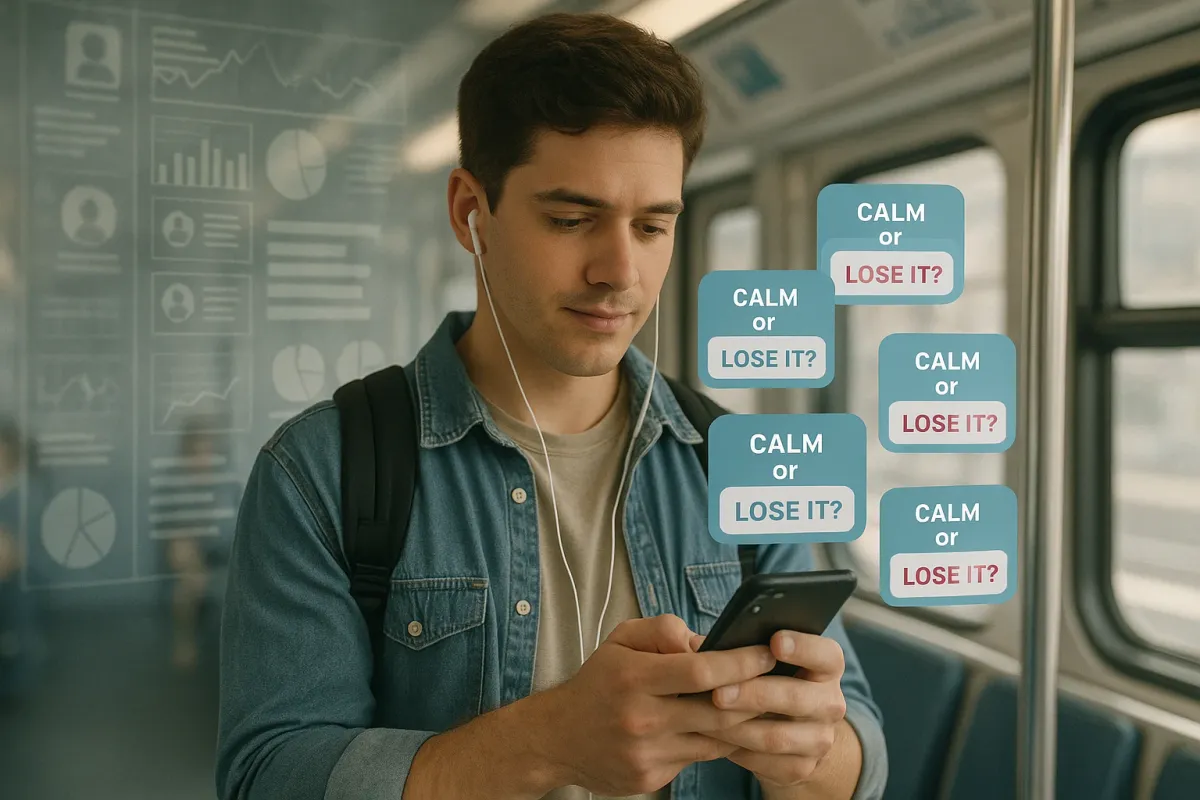
If your feed has recently turned into a personality quiz jungle, you’re not alone. One of today’s trending headlines is about a viral poll article: “Would You Stay Calm Or Lose It?”: Vote On 26 Scenarios And See Where You Stand. It’s blowing up because people love discovering whether they’re “chill” or “unhinged” compared to everyone else.
But here’s the thing: that same “vote on 26 scenarios” energy is exactly what modern apps are built to capture, amplify, and monetize. Your “would you lose it?” reaction isn’t just content—it’s data. And apps are getting scarily good at turning moments like that into engagement engines, recommendations… and sometimes, subtle manipulation.
Let’s break down what’s really going on under the hood of those “pick one” and “how would you react?” apps and polls you keep tapping on.
1. Poll-Style Apps Are the New BuzzFeed Quiz (But Way Stickier)
Remember the golden age of BuzzFeed quizzes? “Which Potato Side Dish Are You?” was basically a personality test wrapped in carbs. Today’s equivalent lives inside your apps: “Who’s right here?”, “Would you forgive them?”, “Calm or psycho?”
The “Would You Stay Calm Or Lose It?” viral poll is part of a bigger trend: engagement is shifting from reading drama to voting on it. Apps like Instagram, TikTok, and YouTube have quietly rolled out more built-in poll and slider tools because:
- Polls are quick dopamine hits—one tap, instant result.
- They make you feel involved instead of just lurking.
- They turn comments sections into mini focus groups.
Standalone apps and sites are copying this too. Some apps are literally just “social polls”: you see a scenario, vote, see stats, and swipe to the next one. It’s like Tinder for hot takes. The goal is simple: keep you in that “just one more” loop.
2. Your “Hot Take” Is Training the Algorithm in Real Time
When you vote “I’d totally lose it” on a scenario, it feels anonymous and harmless. From an app’s perspective, though, that’s a labeled data point about your personality.
Here’s what apps can quietly infer from repeated poll-style answers:
- How conflict-avoidant or confrontational you seem
- What kind of relationship drama you care about
- Whether you lean “justice-obsessed,” “chaos-enjoyer,” or “peacemaker”
- What emotional tone (calm, ragey, petty, forgiving) keeps you engaged
Even if no one writes “this user is dramatic AF” in a database, the algorithm starts noticing: “When we show this person messy workplace stories, they stay longer and tap more.” That’s enough to start tilting your feed toward more of whatever you reacted to.
So yeah, that “fun little poll” is low-key teaching the app exactly which flavor of chaos you’ll stick around for.
3. Apps Are Turning Moral Drama Into a Content Format
The headline poll—“Would You Stay Calm Or Lose It?”—isn’t just drama for drama’s sake. It hits a sweet spot apps love:
- It’s relatable (friends, partners, coworkers, parents, roommates)
- It’s binary (calm vs. lose it) which makes it easy to vote on
- It invites judgment (“I can’t believe people are okay with this”)
That last part is crucial. Apps have discovered that moral friction—those “Wait, am I crazy or is this insane?” moments—is insanely clickable. So entire content formats have grown around it:
- Am I The Ahole-style story apps and accounts
- Anonymous confession apps with voting and comments
- TikTok and Reels that end with: “So… who’s wrong here?” + poll
The polls give structure to what used to be just messy comment wars. Now it’s gamified: you’re not just reading; you’re deciding. And that turns moral judgment into an addictive, shareable app feature.
4. “Calm vs. Lose It” Is Basically DIY Social Profiling
The wild part? These polls are doing what traditional personality tests try to do—just messier and more fun.
Instead of asking, “Do you see yourself as a calm person?” (which you can lie about), apps show you a situation:
“Your friend is late for the fifth time and laughs it off.
Would you:
A) Stay calm and let it go
B) Lose it and call them out?”
Your behavioral answer (what you’d actually do) is more honest than a self-description. Multiply that by 26 scenarios and you’ve built a rough model of someone’s:
- Boundaries
- Tolerance for disrespect
- Trust issues
- Conflict style
Now imagine apps combining that with all your other signals—what you like, save, rewatch, mute, or block. Suddenly your “vibe” online is clearer than you think, and apps can:
- Predict which stories you’ll click first
- Decide how intense to make your feed
- Choose whether to feed you soothing content… or relentless chaos
No official “personality test” required. You trained it yourself.
5. Where This Goes Next: Poll-Driven Worlds, Not Just Posts
This isn’t going to stop at polls slapped under text posts. The “vote on scenarios” trend is already evolving into full-on app experiences:
- Interactive drama apps* where you play* through scenarios and see how your choices compare to others
- Story-based games that look like chat threads, DMs, or group texts with moral choices (“Do you expose them or stay quiet?”)
- Short-form video “episodes” that pause and ask: “What would YOU say next?” then branch based on majority votes
The more this spreads, the more your apps stop being passive content feeds and start feeling like living, reactive social experiments. Every choice is both entertainment and data.
There’s also a darker potential: once apps know what gets you riled up, they can keep you in that emotional neighborhood. That’s not just “personalized content”—it’s mood management.
So the next wave of apps might need to bake in the opposite too:
- “Chill mode” feeds
- Content that identifies rising anxiety and backs off
- Polls that ask: “Do you want less of this kind of drama?” and actually mean it
Whether we get that depends on whether users start asking for it… loudly.
Conclusion
That viral “Would You Stay Calm Or Lose It?” poll headline is more than just a fun way to judge strangers’ situations. It’s a snapshot of where app design is right now: turning your reactions into a product.
Every “calm,” “lose it,” “block them,” and “forgive them” tap is teaching your apps:
- What to show you
- How intense to make it
- Which emotional buttons keep you there “just one more minute”
If you like this kind of interactive content, enjoy it—but maybe once in a while, flip the script and treat yourself like the algorithm:
What am I actually voting for here? More peace, or more chaos on my screen?
Because apps are definitely taking notes.
Key Takeaway
The most important thing to remember from this article is that this information can change how you think about Apps.