Most apps don’t feel “world-changing” when you tap them—they just help you order food, send memes, or survive group chats. But under the surface, apps are quietly rewriting how cities move, how money flows, and even how you think about privacy and identity.
This isn’t another “best apps you need right now” list. Instead, let’s zoom out and look at how apps are reshaping real life in ways that tech enthusiasts will recognize—but maybe haven’t fully connected yet.
1. Your City Is Now Optimized Around Apps (Not People)
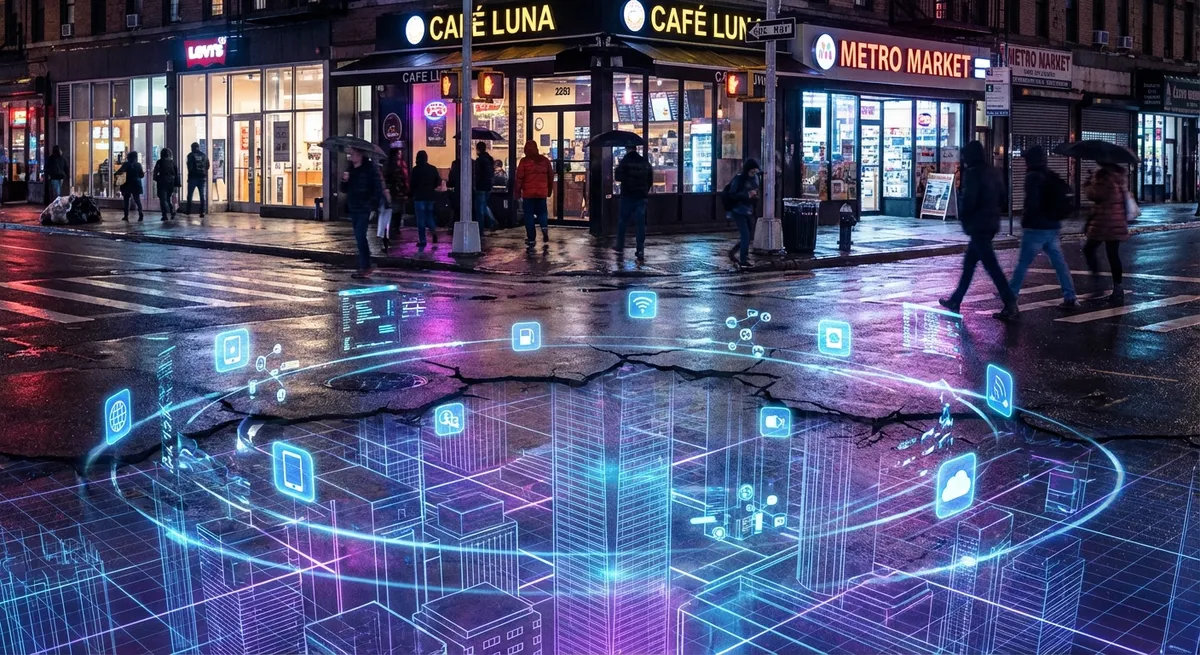
If you live in or near a city, you’re basically walking through a live dashboard of app data—whether you use those apps or not.
Delivery apps influence which restaurants survive, where ghost kitchens open, and even what kinds of food get popular in your neighborhood. Ride-hailing apps quietly reshape traffic patterns, rush hour hotspots, and how public transit is funded and used. Navigation apps change which streets become the “new shortcuts,” sometimes overwhelming small neighborhoods with traffic that wasn’t designed for it.
Cities are starting to adapt back. Some are building special pickup/drop-off zones for ride-hailing. Others are regulating e-scooter and bike-sharing apps, or tracking open data from mapping platforms to understand congestion and plan infrastructure.
So while it looks like a normal street, a lot of what you see—empty storefronts, buzzing corners, endless delivery bikes—is actually the side effect of millions of app interactions stacked over time.
2. Apps Turn Everyday Habits Into Giant Data Experiments
Every tap, swipe, or scroll is a data point in someone’s A/B test.
Push notification times, button colors, recommended content, even the wording of “Allow” vs “Not Now”—all of that gets tested on massive user bases to see what keeps people engaged, subscribed, or spending more.
On the fun side, this lets apps feel “smart” and tailored to you. Your music app learns your late-night playlists. Your language app knows when to guilt-trip you into a streak. Your fitness app guesses the right level of “you got this” without sounding robotic (most of the time).
On the creepier side, this can mean apps know far more about your habits than you might realize: when you’re usually tired, bored, awake, commuting, or open to impulse purchases.
For tech enthusiasts, the wild part is this: You are constantly inside unannounced experiments—algorithms tweaking themselves based on how you react, shaping what you see and when you see it.
3. Your Phone Is Becoming Your Wallet, ID, and Keys
Apps are slowly eating physical objects: credit cards, tickets, ID cards, keys, paper receipts, loyalty cards, even access badges for offices.
Payment apps and digital wallets already handle tap-to-pay, online checkout, and peer-to-peer transfers. Transit apps and QR codes have replaced metro cards in many cities. Some governments now offer digital driver’s licenses or ID in app form. Smart locks and car apps let you unlock doors or start engines with your phone.
This is extremely convenient—until your battery dies, your phone gets stolen, or an app goes down for a few hours. Then you realize how much physical infrastructure your phone replaced without you having a backup.
The bigger trend: apps are becoming your gateway to “being verified” in both digital and physical spaces. Identity is moving from the plastic card in your wallet to the software on your phone—and whoever controls that software suddenly has a lot of power.
4. App Stores Quietly Decide What Tech Ideas Survive
Every app on your phone passed through at least one gatekeeper: an app store.
Those stores don’t just handle downloads—they shape entire business models. Subscription pricing, in-app purchases, one-time paid apps, “freemium” with ads—these models evolved partly around store policies, fees, and ranking algorithms.
If you’re into indie apps or niche tools, you’ve probably seen great projects vanish because they couldn’t make money under current store rules, or got buried under clones and spam. On the flip side, some small developers become successful because a store featured them or a new API (like widgets or health integrations) opened up.
App stores also decide what’s allowed: what counts as “too risky,” “too adult,” “too competitive,” or “breaking the rules.” That shapes which categories of apps even exist in the mainstream.
In other words: app stores aren’t just distribution platforms—they’re invisible editors of the entire mobile ecosystem.
5. Apps Are Turning Everyone Into a “Power User” (Whether They Notice It or Not)
Once upon a time, “power users” were the people who dug into crazy keyboard shortcuts, custom scripts, and arcane settings buried five menus deep.
Now, regular people casually do things that would’ve seemed hyper-advanced a decade ago:
- Automating payments and savings with banking apps
- Using Shortcuts/automations to trigger smart home routines
- Running cloud-synced note systems across devices
- Sharing live locations with friends in real time
- Using AI inside apps to summarize, generate, or translate on demand
Even if they don’t think of it as “automation” or “workflows,” most people are quietly building little systems around apps: recipe apps plus grocery delivery, calendar plus video calls, note apps plus cloud storage. Tech enthusiasts notice this first, but the pattern spreads fast.
The line between “normal user” and “power user” is blurring, because apps keep hiding complex stuff behind simple buttons—and then scaling that to millions of people overnight.
Conclusion
Apps used to feel like small tools living inside your phone. Now they behave more like gravity—quietly pulling on cities, money, identity, and daily habits.
For tech enthusiasts, this is the fun part: you’re not just hunting for the next cool app—you’re watching entire systems shift around them. The next time you install something new, it might not just change your home screen. It might nudge your routines, your neighborhood, or the way you define “normal” in the digital world.
Sources
- [Pew Research Center – Mobile Fact Sheet](https://www.pewresearch.org/internet/fact-sheet/mobile/) – Data on smartphone and app adoption and how usage has evolved
- [MIT Technology Review – How Uber and Lyft Have Changed Urban Transportation](https://www.technologyreview.com/2019/10/17/238201/uber-lyft-cities-traffic-congestion/) – Explores how ride-hailing apps impact traffic, cities, and public transit
- [World Economic Forum – How Food Delivery Apps Are Transforming Cities](https://www.weforum.org/agenda/2021/10/how-food-delivery-apps-are-transforming-cities/) – Looks at the urban and economic effects of delivery platforms
- [Federal Trade Commission – Mobile Privacy Disclosures Report](https://www.ftc.gov/reports/mobile-privacy-disclosures-building-trust-through-transparency-federal-trade-commission-staff-report) – Discusses how apps collect and use data, and why transparency matters
- [Apple – App Store Review Guidelines](https://developer.apple.com/app-store/review/guidelines/) – Official rules that shape what apps can do and how they’re allowed to operate in the ecosystem
Key Takeaway
The most important thing to remember from this article is that this information can change how you think about Apps.