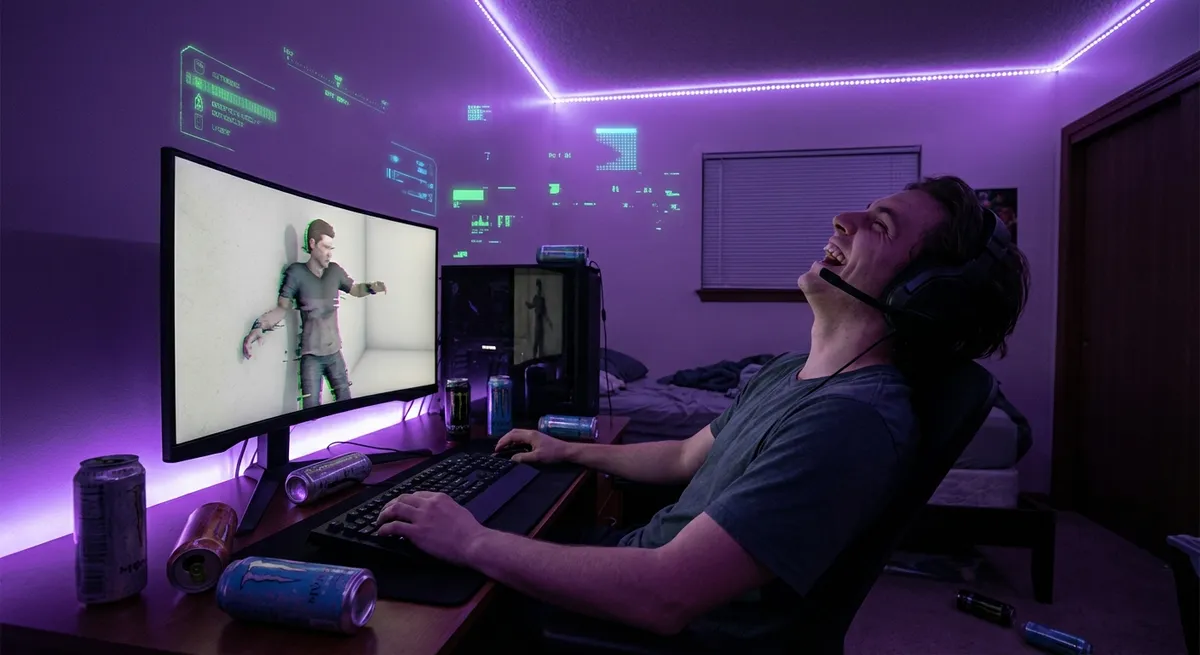
Every gamer has that one story: the time a “broken” mechanic, weird bug, or accidental shortcut turned a match around. What used to be called glitches or exploits are now sometimes carefully studied, patched, copied, banned, or even turned into official features. The line between “game-breaking bug” and “high-level strategy” is way blurrier than most people think—and that’s where things get interesting.
Let’s dig into how weird behavior in games quietly shapes the way we play, watch, and even design games, and why tech enthusiasts should absolutely be paying attention.
When Mistakes Become Mechanics
Some of the most iconic “advanced techniques” in gaming started as straight-up accidents.
Developers ship a game, players hammer on it from every angle, and suddenly someone discovers a move, combo, or trick that was never in the design docs. Instead of vanishing in a patch, sometimes that quirk becomes part of the game’s identity.
A classic example is wave dashing in Super Smash Bros. Melee—a movement tech that emerged from how the game handled air-dodging into the ground. It wasn’t a tutorial feature, but it became central to high-level play and is now part of Smash history. Similarly, rocket jumping in games like Quake and Team Fortress 2 grew from the simple physics of explosions pushing the player’s character; now it’s an expected movement technique in many shooters.
These “happy accidents” show how physics engines, animation timing, and collision systems can produce surprising emergent behavior. Tech-wise, they’re side effects of math and timing. Culturally, they’re proof that players are co-authors of how a game is really played.
Speedrunners: The QA Team Nobody Hired
Speedrunning is basically the Olympics of breaking games on purpose.
Speedrunners obsess over frame-perfect jumps, clipping through walls, skipping cutscenes, corrupting memory, and abusing save systems—all to finish a game as fast as possible. They map out a game’s logic like reverse engineers, but with style points.
From a tech standpoint, this is a live demo of game architecture under pressure. Runners figure out:
- Where collision detection fails
- How loading zones are triggered
- How memory addresses store positions, items, or flags
- Which animations or menus can cancel others
Events like Games Done Quick don’t just entertain; they accidentally become showcases of how systems behave under “impossible” conditions. Developers and engineers can watch a run of their own game and think, “Oh, that’s how players are breaking our assumptions.”
Sometimes the results even feed back into future game design—devs add “developer-intended” shortcuts, speedrun modes, or extra timing windows because they know people will absolutely try to bust the game open.
Esports Rulebooks vs. The Glitch Meta
In competitive gaming, one glitch can be the difference between a legendary play and a disqualification.
Esports organizers constantly have to decide: is this thing a bug, an exploit, or a skill? Some tricks become accepted “tech,” while others get banned as unfair advantages or game-breaking.
For example, certain movement exploits in shooters are allowed because they’re reproducible and skill-based, even if unintended. But anything that causes invisible players, invincibility, or crashes? That’s usually straight to the ban list. Tournament patches, rulesets, and even match formats are often shaped by how players stress-test the game.
This battle between “what’s allowed” and “what exists” turns esports into a living lab for game balance and system reliability. It’s a feedback loop: pros find tech → community debates it → devs patch or embrace it → new meta emerges → repeat.
For anyone into systems design or reliability engineering, esports is like watching production software get exploited in real time—with prize money on the line.
Glitches as Game Design Inspiration
Here’s the wild twist: many modern features are basically polished versions of old exploits.
Developers watch what players do “wrong” and sometimes go, “Wait, that’s actually fun.” Over time, we’ve seen:
- Intentional “exploit-style” movement: Wall-running, dashes, grappling hooks, and parkour-like movement owe a lot to older games where players found unintended movement skips.
- Sandbox systems: Physics-heavy and systemic games (think Breath of the Wild or immersive sims) lean into the idea that players will abuse mechanics in creative ways and design for that flexibility from the start.
- Trick-friendly engines: Some devs quietly make their engines more forgiving toward certain “broken” behaviors—letting skilled players feel like they’re cheating the rules even when they’re not.
Instead of fighting against emergent behavior, some studios now design for it. The result: games that feel deeper, more expressive, and more “yours,” because you can bend the rules without totally breaking them.
The Tech Under the Chaos: Why Glitches Happen at All
Under all the funny clips and esports drama, glitches are windows into how game tech actually works.
Most bugs and exploits come from edge cases:
- Floating-point math: Computers can’t represent every decimal perfectly, so tiny rounding errors can cause weird physics or collision behavior.
- State machines and timing: If the game doesn’t fully expect two actions to happen at the exact same frame, you can get animation cancels, item dupes, or broken transitions.
- Networking desyncs: In online games, the client and server have to “agree” on what happened. When they don’t, you get teleporting players, hit-reg anomalies, or the infamous “I was behind the wall on my screen.”
- Memory and data structures: Older games especially could be tricked into reading or writing data where they shouldn’t, producing glitches that feel like magic from the outside.
To a player, it’s a funny clip. To a developer, it’s a bug report. To a tech enthusiast, it’s a case study in how complex systems crack at the edges—and how people quickly turn those cracks into secret doors.
Conclusion
Glitches and exploits aren’t just cheap tricks; they’re the stress tests, plot twists, and remix tools of modern gaming. They reveal how engines behave under pressure, push developers to rethink design, and fuel entire communities—from speedrunners to esports pros.
The next time you see a wild clip of someone phasing through a wall or flying across the map with a “totally not intended” combo, you’re not just watching a bug. You’re watching the invisible rules of a system get exposed, bent, and—if it’s fun enough—eventually rewritten.
Gaming isn’t just about playing by the rules. It’s about discovering how flexible those rules really are.
Sources
- [Games Done Quick – Official Site](https://gamesdonequick.com) - Major speedrunning event series showcasing glitches, exploits, and high-level routing in a wide variety of games
- [Gamasutra / Game Developer – Postmortem: Super Smash Bros. Melee](https://www.gamedeveloper.com/design/postmortem-nintendo-s-i-super-smash-bros-melee-i-) - Developer reflections on Melee’s design and unintended high-level techniques like advanced movement
- [Valve Developer Community – Source Multiplayer Networking](https://developer.valvesoftware.com/wiki/Source_Multiplayer_Networking) - Technical breakdown of how networking, prediction, and desync work in Source engine games
- [GDC Vault – Rocket Jump: Quake and the Golden Age of First-Person Shooters](https://www.gdcvault.com/play/1023470/Rocket-Jump-Quake-and-the) - Talk discussing Quake’s design, emergent mechanics like rocket jumping, and how they influenced later FPS titles
- [“Floating-Point Arithmetic” – Stanford University CS Resources](https://cs.stanford.edu/people/eroberts/courses/soco/projects/2001-02/floating-point/IEEE754.html) - Explains how floating-point math works and why it can lead to subtle errors in games and simulations
Key Takeaway
The most important thing to remember from this article is that this information can change how you think about Gaming.