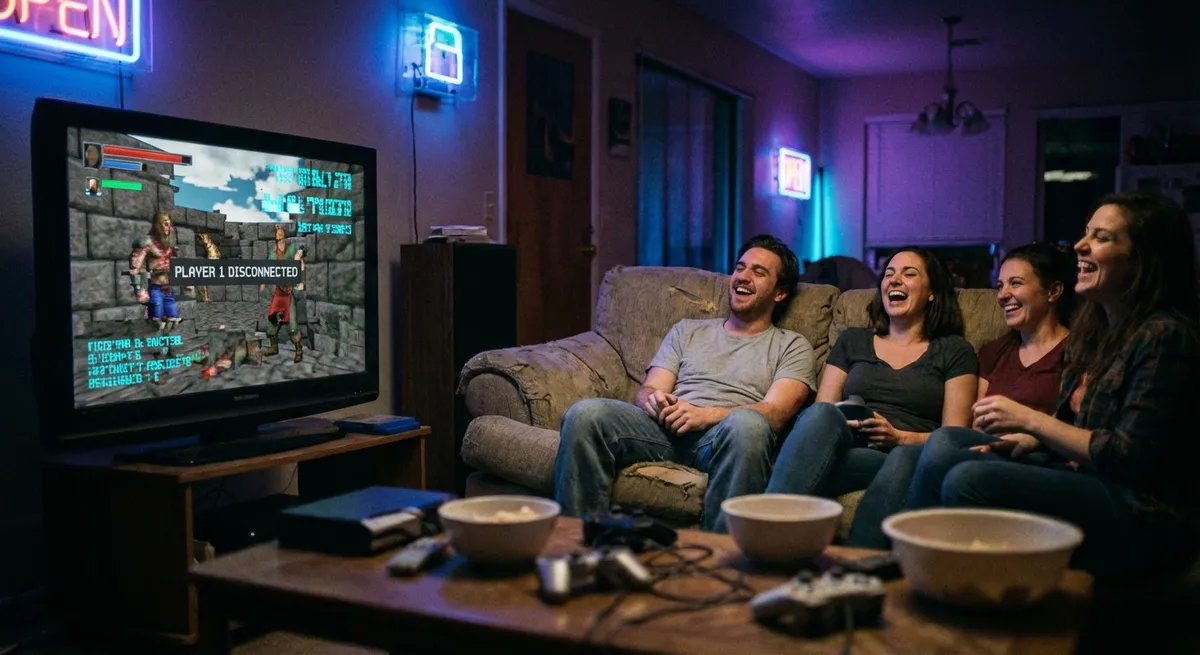
If you’ve ever clipped through a wall, launched your character into space, or watched an NPC spin in a doorway like a confused Roomba, you know: game bugs can be ridiculous—and sometimes legendary. But not all glitches are just broken code. Some get embraced by players, kept by developers, and quietly baked into how we play. Let’s dig into the weird little moments where games “break”… and somehow become better.
When “Broken” Becomes the Meta
Every multiplayer game eventually spawns That One Trick everyone talks about on forums and Discord: a busted combo, a weird movement tech, a jump that skips half the level. A lot of those start life as bugs.
Developers have two choices: patch it out or lean in. Fighting games are the classic example—things like wavedashing in Super Smash Bros. Melee or option-selects in traditional fighters began as quirks of the engine, but turned into core parts of high-level play. Instead of “fixing” them, devs sometimes let them stay because they create a unique skill ceiling and identity for the game.
The wild part? Entire esports scenes, balance patches, and community metas can grow around something that was never meant to exist. A tiny physics miscalculation can turn into the thing that defines how a game is played for years.
Speedrunners: Professional Glitch Appreciators
Speedrunning is basically competitive “what if we break this game politely but as hard as possible.” Speedrunners live in the cracks of code—testing corners, pausing at perfect frames, and stacking interactions until the game falls apart in exactly the right way.
To a regular player, a glitch is chaos. To a speedrunner, it’s a tool. They’ll use “wrong warps” to teleport to the final boss, abuse item dupes to overflow memory, or use precise movement to clip through collision that’s supposed to be solid. It looks like magic, but it’s really extreme curiosity plus a stopwatch.
Developers have started quietly acknowledging this. Some include speedrun-friendly features like fast resets, loadless timers, or stable physics, and then deliberately don’t patch out fan-favorite glitches because they know there’s an entire subculture built around them. In a way, bugs become an unofficial difficulty mode for people who’ve already “finished” the game.
Glitches as Accidental Horror
Not every glitch is funny. Some are straight-up nightmare fuel—and players love that too. Facial animations snapping into a contorted grin, models stretching across the screen, or audio looping into a disturbing drone can feel scarier than anything scripted.
Games like Skyrim, Cyberpunk 2077, or older FIFA titles have all gone viral thanks to “cursed” animations and physics freak-outs. You were just trying to talk to an NPC, suddenly their neck extends like a horror movie monster, and your brain does a double-take: “This wasn’t supposed to happen… right?”
That uncanny feeling hits different from normal jumpscares because it exploits a deeper vibe: reality itself feels wrong. Even in non-horror games, accidental visual glitches can create a kind of “found footage” creepiness that players share, meme, and remember years later.
When Bugs Become Canon
Every once in a while, a bug gets promoted—from “oops” to official lore. A glitch that players latch onto can become an Easter egg, a returning mechanic, or even a story beat in a sequel.
Developers might name an item, quest, or achievement after a famous exploit. An enemy that used to behave weirdly might reappear in a later game with that same weirdness explained as a deliberate trait. Think of it as retroactive storytelling: fans create myths around a bug, and then devs turn that myth into part of the universe.
It’s a neat feedback loop. Players poke at the edges, discover something unintended, and then the studio essentially says, “You know what? That is cool. It’s canon now.” The line between accident and design gets blurrier—and more fun.
Viral Glitches Are Free Marketing
From a studio’s perspective, a broken release is obviously bad news. But isolated, hilarious glitches? Those are pure social media fuel. A single 10-second clip of a horse climbing a vertical cliff or a goalie casually walking away from the ball can rack up millions of views.
Most people sharing that content aren’t deep into patch notes; they’re just entertained. The glitch becomes their first impression of the game—something weird, memorable, and worth talking about. That doesn’t excuse genuinely game-breaking bugs, but it explains why some studios don’t rush to erase every odd behavior.
There’s a balancing act here. Game-breaking crashes or save-corrupting issues absolutely have to go. But the kind of goofy physics, odd ragdolls, and one-in-a-million animation bugs that spawn memes? Sometimes it’s smarter to let the internet enjoy the chaos for a bit before smoothing things over.
Conclusion
Games are meant to feel polished and intentional—but the messy parts are often what we remember most. Bugs can accidentally create new skill ceilings, define competitive metas, fuel horror vibes, inspire lore, and generate viral moments without a marketing budget.
Underneath all of it is a simple idea: people like poking at systems until something unexpected happens. When that “something” is just the right amount of broken, it stops being a problem and becomes a story. And stories are what keep a game alive long after the credits roll.
Sources
- GDC: The Melee Back Room – The Untold Story of Super Smash Bros. Melee’s Competitive Scene - GDC talk touching on how unintended mechanics shaped Melee’s meta
- Speedrun.com - Central hub for speedrunning communities, showcasing categories that rely heavily on glitches and exploits
- “The Psychology of Horror Games” – University of York - Explores why unsettling experiences (including visual oddities) can be compelling
- CD PROJEKT RED – Cyberpunk 2077 Patch Notes Archive - Example of how major games evolve through bug fixes and feature tweaks post-launch
- IGDA (International Game Developers Association) Resources - Background on game development practices and how studios respond to player-discovered issues
Key Takeaway
The most important thing to remember from this article is that this information can change how you think about Gaming.