If you’ve ever hoarded 300 health potions “just in case,” bunny-hopped across an entire map, or refused to move on until every optional chest is looted, you’re not broken—you’re playing games exactly how your brain wants to. Under all the explosions, cutscenes, and loot drops, modern games are quietly poking at how we think, plan, and react.
Let’s unpack a few gaming habits that seem weird on the surface but are surprisingly logical once you look under the hood.
1. Why You Loot Everything (Even When You Don’t Need It)
You know that moment: your inventory is full, your gear is already busted powerful, and you’re still looting every drawer like a digital raccoon. That’s not just greed; it’s your brain loving “variable rewards.”
Games often use random loot drops and surprise rewards—sometimes you get junk, sometimes you get something incredible. That unpredictability keeps your brain curious and engaged. It’s the same basic mechanic behind slot machines, but in gaming you’re actually doing stuff: fighting, exploring, solving.
On top of that:
- Loss aversion kicks in: leaving loot behind feels like losing something.
- Completionism feels good: clearing an area and knowing nothing’s left can be satisfying on its own.
- Future-proofing: even if you don’t need the item now, your brain imagines a future boss fight where it might save you.
Game designers know this and build worlds full of just enough stuff that you could skip it—but you really don’t want to.
2. Why “One More Match” Turns Into Three Hours
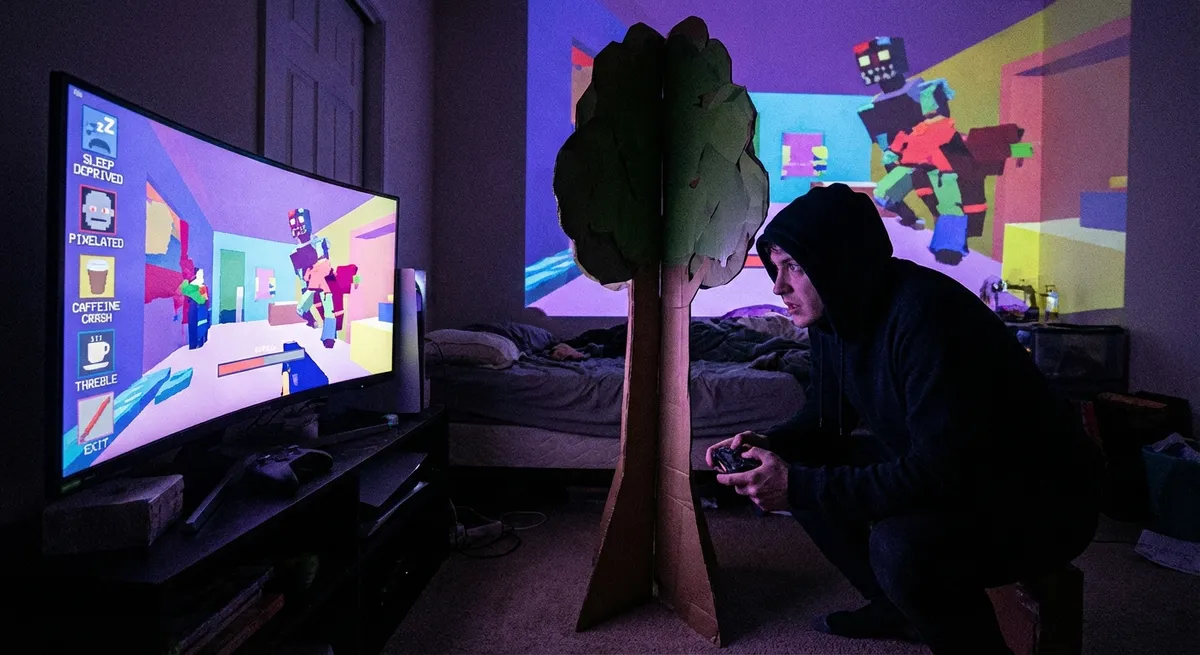
You log in for a “quick round,” and suddenly it’s two in the morning and you’re Googling office-appropriate concealer techniques. Competitive games are experts at creating tight, looped experiences that reset fast and always promise redemption.
Multiplayer and ranked games in particular are built around:
- Short rounds: low time commitment per match, so the next one never feels like a big decision.
- Clear feedback: you see what went wrong (or right) almost instantly.
- Near-miss motivation: losing by a tiny bit doesn’t feel like failure; it feels like you’re about to win next time.
Matchmaking systems toss you against people at roughly your skill level. That means you’re constantly living in that sweet spot: not bored, not hopeless, always “almost there.” It’s frustrating in the moment, but it’s also exactly the kind of tension that keeps you loading into just one more game.
3. Your Favorite Controls Probably Say a Lot About You
Ever watch someone pick up a controller and immediately change half the default settings before they even start? That’s not just being picky; it’s tailoring the game to your brain’s comfort zone.
Some fun control quirks:
- Inverted vs. standard look: Some people think of moving the camera like controlling a character’s head (pull back to look up), others think of it like moving a cursor. Neither is “right,” but both become deeply wired after enough hours.
- Button remapping: Sprint on the stick, jump on a bumper, reload on something not next to “throw grenade”—these preferences often come from other games you’ve played for years.
- Sensitivity tweaking: Cranking sensitivity up feels chaotic at first, but over time lets advanced players react faster and aim more precisely.
Modern games support all this customization because comfort = control, and control = better performance. That tiny tweak you make in the settings menu can legitimately change how good you are at a game.
4. Why You Love Watching Games You Don’t Even Play
If you’ve ever watched speedruns, esports, or lore deep-dives for games you’ve never installed, you’re not alone. Gaming isn’t just about playing anymore; it’s also a spectator and storytelling culture.
Why watching can be as fun as playing:
- Skill appreciation: Seeing someone absolutely break a game with precise inputs and weird tricks is like watching a magic act in slow motion.
- Shared language: Even if you don’t main that genre, you understand the tension of a close match or a clutch play.
- Low-effort immersion: You get the story, the vibes, and the big moments without grinding for hours.
Platforms like Twitch and YouTube didn’t just grow because of “gamers”; they helped turn games into shared events. Big launches, world-first raids, and tournaments feel more like live sports with patch notes.
5. Why Older Games Still Hit Hard (Even When They Look Rough)
You fire up a game from 10–20 years ago. The textures are crunchy, the faces are weird, the UI looks like a spreadsheet. And yet: you’re locked in.
Nostalgia is obviously part of it, but there’s more going on:
- Your brain fills in the gaps: Lower-fidelity graphics leave room for imagination, just like reading a book versus watching a movie.
- Simplicity ages well: Many older games had fewer systems but stronger cores—tight levels, focused combat, or clean puzzle design—so they still feel solid today.
- Stronger “authorship” feel: A lot of classic games were made by smaller teams with distinct styles, so they have a unique personality that stands out even now.
Modern remakes and remasters aren’t just cash grabs; they’re proof that good mechanics and memorable worlds can survive multiple hardware generations. The tech changes. The emotional beats don’t.
Conclusion
A lot of the “weird” stuff we do in games—hoarding items, changing controls, chasing one more match, re-playing old favorites—actually lines up pretty cleanly with how our brains like to learn, predict, and chase rewards.
Underneath every flashy trailer and hardware upgrade, gaming is still about a few core things: curiosity, mastery, and the joy of feeling just a little bit more capable than you were five minutes ago. The tech keeps evolving, but those instincts are the real engine behind why we keep hitting “Start” again.
Sources
- [American Psychological Association – Video Game Play May Provide Learning, Health, Social Benefits](https://www.apa.org/news/press/releases/2013/11/video-games) – Overview of psychological effects of gaming, including motivation and learning
- [Stanford University – The Psychology of Loot Boxes and Random Rewards](https://scopeblog.stanford.edu/2019/10/28/loot-boxes-in-video-games-are-a-form-of-gambling-psychologists-say/) – Explores variable rewards and why random loot is so compelling
- [Pew Research Center – Gaming and Gamers](https://www.pewresearch.org/internet/2015/12/15/gaming-and-gamers/) – Data on how people play and interact with games and gaming culture
- [MIT Press – Why We Play: The Psychology of Video Games and Their Impact on People](https://mitpress.mit.edu/9780262527163/) – Academic perspective on game design, motivation, and player behavior
- [Twitch – Year in Review / Insights](https://blog.twitch.tv/en/2023/02/15/twitch-2022-year-in-review/) – Statistics and insights into game streaming, viewership, and spectator culture
Key Takeaway
The most important thing to remember from this article is that this information can change how you think about Gaming.