AI isn’t just that mysterious thing powering ChatGPT or sci-fi movie robots anymore. It’s quietly slipping into stuff you use every day—from your browser tabs to your coffee maker—and doing things that feel less like math and more like…behavior.
If you’re a tech enthusiast, you already know the basics: models, training data, neural networks. Let’s skip the 101 talk and dig into five genuinely weird, fascinating ways AI is starting to feel less like a tool and more like a digital creature sharing your space.
AI That Rewrites Itself While You’re Not Looking
Most of us think of software as “update, install, done.” AI flips that idea on its head.
Modern AI systems don’t just run code—they effectively rewrite their own behavior as they consume more data. Your recommendation feed, your spam filter, your “For You” page… these are all systems that quietly shift their personality over time without you ever hitting “update.”
What’s especially wild is that this isn’t always a neat, planned upgrade. Recommendation engines like the ones powering YouTube or TikTok constantly adjust based on what millions of people watch, skip, like, or hate. That means their “personality” isn’t coded line by line—it emerges from everyone’s messy behavior.
This is why an app can feel totally different a year later even if the interface hasn’t changed. The engine underneath has learned a new worldview. You don’t install Version 2.0; you wake up one morning and realize it has slowly become someone else.
For devs used to static logic, this is both powerful and slightly unnerving: you deploy a system that keeps evolving long after shipping, based on patterns you might never explicitly see.
AI Is Quietly Becoming Your Second Brain (Whether You Want It or Not)
Note apps and search bars aren’t just dumb storage anymore—they’re starting to think alongside you.
Modern email clients predict your replies. Document editors predict your next sentence. Search engines don’t just match keywords; they infer what you meant, even if you typed it badly at 2 a.m. Some browsers and tools now summarize webpages, suggest next steps, or create to-do lists based on what you’re reading.
In practice, that means three big shifts:
- Memory outsourcing: Instead of remembering details, you remember where to ask. Your brain is delegating recall to AI systems.
- Thought shortcuts: Drafting, summarizing, rephrasing—AI is becoming the layer between your raw idea and the final form you share.
- Context stitching: Tools can now connect info across tabs, emails, and docs to form a bigger picture than you were consciously tracking.
For enthusiasts, this is like having a low-key cognitive co-processor. The interesting question isn’t “Can it do my work for me?” but “What kind of thinking do I want to keep doing myself?”
When AIs Start Collaborating (and You’re Just One of the Team)
We’re used to thinking “AI vs human” or “AI helping human.” But increasingly, it’s “human + a swarm of small AIs” all bouncing off each other.
Behind the scenes of a lot of modern tech, there isn’t just one big monolithic model. There are specialized mini-systems: one ranking content, another filtering spam, another analyzing images, another predicting churn, and so on. In some workflows, a language model calls a vision model, which calls a recommendation model, which calls a risk model… like a strange digital assembly line.
You can already see hints of this in:
- AI coding tools that generate code, then call other models to test, refactor, or explain it
- Customer support bots that hand off to other narrower bots before reaching a human
- Workflow platforms that chain together multiple AI “skills” to handle a complex task
This multi-agent style lets companies build AI like modular software—except the “modules” are probabilistic, slightly unpredictable systems. As an enthusiast, this is exciting territory: instead of building one smart thing, you orchestrate a tiny AI ecosystem.
The next step: tools that let everyday users chain AIs together without feeling like they’re doing systems architecture.
Your Data Doppelganger: Digital You Without the Sci-Fi
You’ve probably heard about “digital twins” used in industry—virtual models of factories, engines, cities. Now imagine a softer, weirder version: a “behavioral twin” of you.
Even without your name attached, services can build a surprisingly accurate model of “a user like you”: what you click, when you’re active, how long you stay, what you ignore, what makes you bounce. This isn’t just creepy tracking—it’s the fuel for systems that adapt to your patterns in near real time.
This kind of modeling powers things like:
- Dynamic difficulty or pacing in games and learning apps
- Personalized pricing and promo strategies in e-commerce
- “Smart” notifications that time themselves when you’re most likely to respond
What’s fascinating is that these behavioral twins don’t have to be perfectly accurate people-simulators to be powerful. They just need to be good at predicting your next move.
From a tech perspective, this is incredibly efficient: instead of understanding you philosophically, the system only cares about what you’re likely to do next. Philosophically, though, it raises a fun question: if something can predict your next click better than you can, how different is that from a low-res version of “you”?
AI as a Creative Co-Pilot, Not a Replacement
Creative AI has blown up—images, music, stories, code—but the most interesting part isn’t that it can generate stuff. It’s how people are learning to steer it.
We’re moving away from “type a prompt, get a thing” and toward interactive loops:
- Designers rapidly iterate on concepts, then manually mix, edit, or repaint
- Writers bounce ideas off models, then heavily rewrite or restructure
- Developers use AI for boilerplate and scaffolding, then focus on architecture and nuance
This loop turns AI into a kind of creative pressure cooker: it compresses the “bad first draft” stage so humans can spend more time on taste, structure, and ideas. The real value shifts from producing a raw asset to curating and directing the result.
For enthusiasts, this is a huge mindset shift. Knowing which AI to use, how to prompt it, when to stop accepting its suggestions, and where to layer in human judgment becomes an actual skillset—closer to directing a team than using a tool.
The future of creative work doesn’t look like “bots replace everyone.” It looks like people who know how to collaborate with models massively outpacing those who don’t, especially in early exploration and iteration.
Conclusion
AI right now feels less like a single breakthrough and more like a quiet invasion of a thousand small ones. It’s creeping into how apps behave, how you think, how tools talk to each other, and how you create.
If you strip away the hype, the interesting part isn’t “Will AI take over?” It’s much more personal:
- What do you still want to do by hand?
- What are you okay delegating to a system that constantly rewrites itself?
- And how comfortable are you sharing a digital space with systems that sometimes feel less like products and more like evolving, semi-predictable creatures?
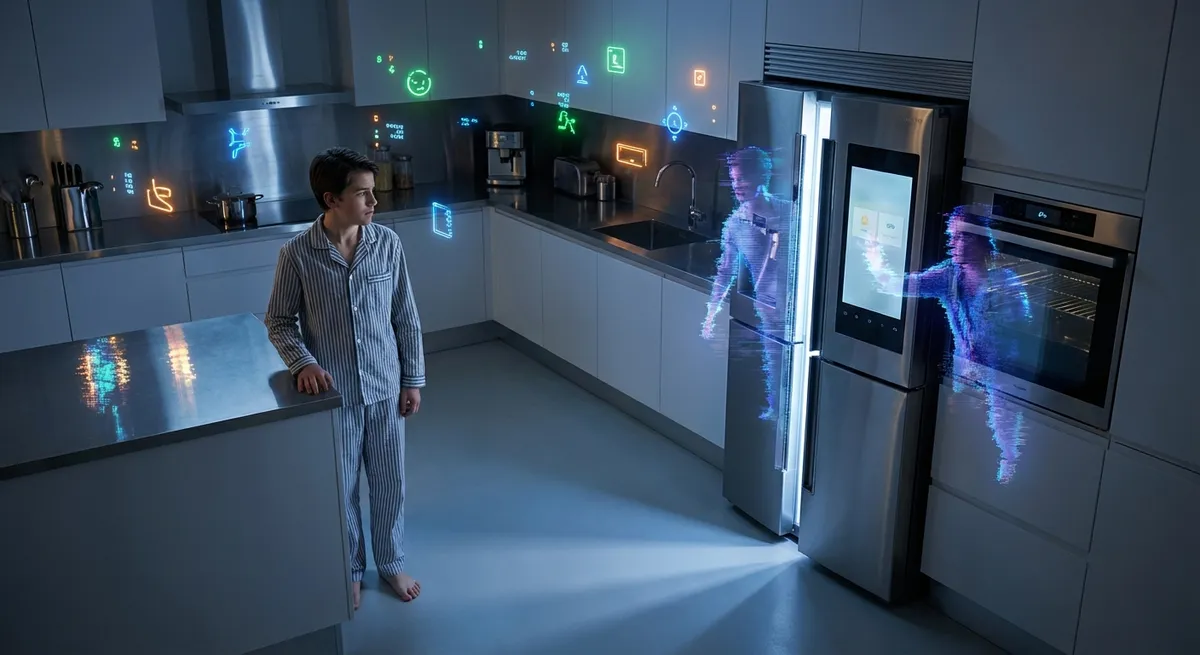
We’re past the stage where AI is just a feature bullet point. It’s becoming part of the environment. The more you understand how it behaves—not just how it works—the more fun (and less weird) it becomes to live and build in that world.
Sources
- Google AI Blog – Official updates and deep dives on Google’s AI research and real-world systems
- Microsoft Research – AI – Research papers and projects on multi-agent systems, human–AI collaboration, and more
- OpenAI Research – Technical and conceptual writeups on large language models, creative AI, and AI behavior
- MIT CSAIL – Artificial Intelligence – Academic research on learning systems, digital twins, and intelligent agents
- Stanford HAI (Human-Centered AI) – Focus on how AI interacts with people, work, and society, including human–AI collaboration studies
Key Takeaway
The most important thing to remember from this article is that this information can change how you think about AI.