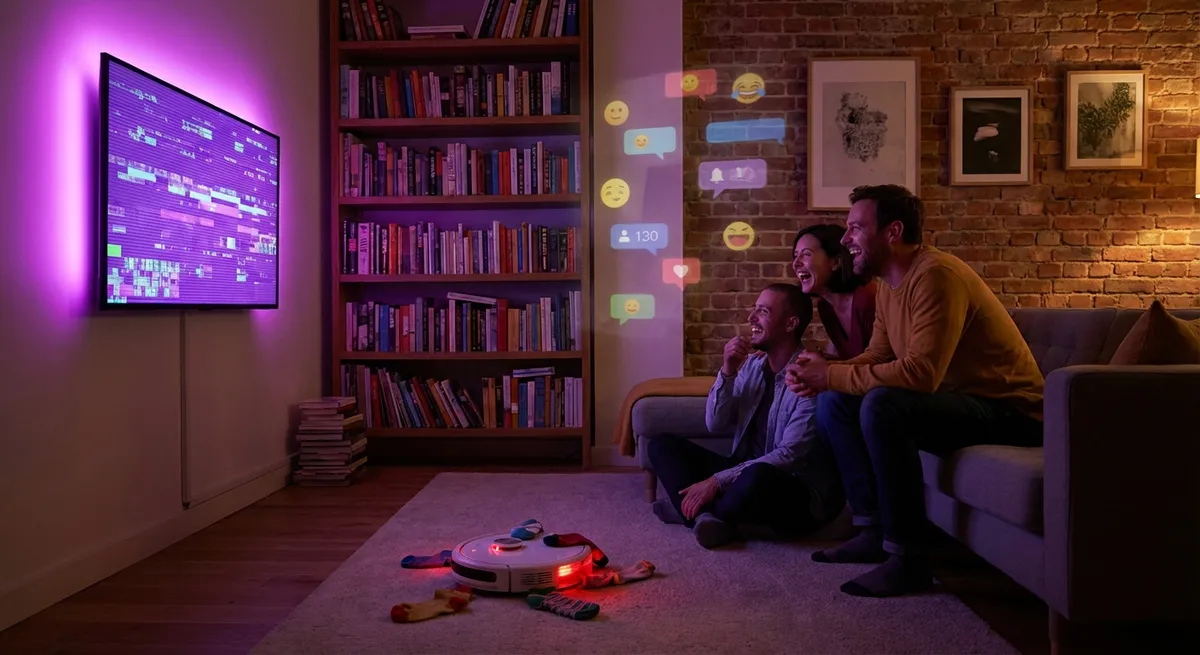
You know that moment when your smart speaker “mishears” you and does something totally random? Or when your phone camera accidentally takes a bizarre, glitched-out photo that looks like digital art? Not all tech fails are rage-quit material. Some of them are strangely delightful—and they say a lot about how our gadgets actually work.
Let’s talk about the weird, funny side of our devices: the glitches, quirks, and “is this thing haunted?” moments that make tech feel a little more… human.
When Autocorrect Accidentally Becomes a Co‑Writer
Autocorrect is supposed to save us from typos, but half the time it feels like it’s freelancing on our behalf. It’s trained on huge collections of text, so it’s basically guessing what you “meant” to say based on patterns it has seen before. That’s why it keeps changing your friend’s weird nickname to a normal word or insists on turning “omw” into a full sentence.
What’s interesting is how this shapes our language back. People often accept the autocorrected word, even if it wasn’t what they originally typed, especially in fast chats. Over time, that can normalize certain phrases or spellings. It also reveals that our phones are quietly learning from what we type—just enough to predict, but not enough to actually understand context like a human would.
The fun part? Accidental poetry. Screenshots of ridiculous autocorrect fails go viral because they hit that sweet spot between machine logic and human chaos. Your keyboard isn’t just a tool; it’s a slightly unhinged writing partner that sometimes steals the punchline.
That One Smart Speaker That Thinks It Heard Its Name
You’re sitting in a quiet room. No one said “Alexa,” “Siri,” or “Hey Google.” Suddenly your smart speaker lights up and offers to play a playlist you absolutely did not ask for. Creepy? A bit. Interesting? Definitely.
Smart speakers are always “listening” for a wake word using on-device processing—meaning they’re constantly analyzing audio but (according to the companies) not actually sending everything to the cloud until they think they heard the magic phrase. The funny misfires happen when normal conversation, TV dialogue, or even random environmental sounds accidentally match the acoustic pattern of the wake word.
These false alarms show how our gadgets use pattern matching rather than genuine comprehension. To them, your Netflix character shouting “excellent!” might sound close enough to “Alexa” to wake up. And when they reply to questions no one asked, it’s like having a well-meaning but overeager roommate who’s always ready to jump into the conversation—invited or not.
Glitched Photos: Accidental Digital Art Projects
Every once in a while, your phone camera spits out a weird image: stretched faces, ghostly duplicates of people, or a panorama where your dog appears three times. That’s not your phone being broken—that’s your phone trying too hard to be clever.
Modern cameras do a ton of processing: they combine multiple shots, sharpen edges, smooth faces, brighten shadows, and sometimes even remove things they think are “unwanted.” When motion, low light, or weird angles mess with those algorithms, you get unintended glitches. Think extra limbs, glitchy halos, or night photos where lights smear across the frame like a sci‑fi portal.
These “errors” are a peek behind the curtain. Your camera isn’t capturing a perfect moment; it’s constructing one out of data. When that construction fails, you basically get abstract digital art for free. Some photographers even chase these glitches on purpose, experimenting with motion, long exposures, and panoramas to force the software into creative mistakes.
When Your Fitness Tracker Thinks You’re an Olympic Athlete (in Your Sleep)
You roll out of bed, check your fitness band, and it proudly declares you “crushed your goal” yesterday… except yesterday you mostly crushed a bag of chips on the couch. What gives?
Fitness trackers use sensors like accelerometers and optical heart-rate monitors to guess what you’re doing. The word “guess” is doing a lot of work here. Fast arm movements while cooking? Could be steps. Driving over a bumpy road? Sometimes steps. Waving your arms during a heated argument? Definitely steps.
Sleep tracking struggles too—lying still with your phone in hand can look a lot like “light sleep” to some devices. These misreads highlight what trackers really are: estimates built on patterns, not medical-grade instruments. They’re still useful for trends over time, but any single day’s data can be hilariously off.
The accidental upside: these “generous” step counts and over-optimistic sleep scores can be oddly motivating. Your gadgets are like a slightly delusional coach who insists you’re doing better than you think. And sometimes, that’s not the worst thing.
The Strange Charm of “Smart” Recommendations That Miss the Mark
Streaming apps, shopping sites, music services—they all want to recommend things you’ll love. Sometimes they nail it. Other times they recommend a chainsaw because you once bought a screwdriver, or a kids’ cartoon because you watched one meme-worthy scene.
These systems rely on your history and on people “like you,” but they often don’t know why you clicked something. Maybe you watched a movie ironically, or you bought a random item as a one-time gift. The algorithm, however, assumes you’ve discovered a new lifelong obsession. Congratulations: you now live in a world where one search for “clown makeup” dooms your recommendations for a week.
Where it gets fascinating is how we adapt. People make “burner” accounts, separate profiles, or deliberately click weird things just to see how the algorithm reacts. In a way, your recommendation feed becomes a collaborative project between you and a machine that doesn’t totally get you—but keeps trying.
There’s a strange charm in that mismatch. It’s a reminder that under all the hype about “personalization,” a lot of what’s happening is still guesswork. Smart, data-heavy guesswork—but guesswork nonetheless.
Conclusion
Our gadgets are marketed as sleek, perfect, almost magical tools that “just work.” But the moments we remember—and share—are often when they don’t quite work. Autocorrect’s unhinged edits, smart speakers that answer ghost questions, glitchy camera shots, over-enthusiastic fitness trackers, and hilariously off-target recommendations all show the same thing: modern tech is powerful, but it’s still fumbling in the dark a bit.
That’s not a bad thing. Those little glitches and misfires make the tech around us feel less like cold machines and more like characters in our daily lives—quirky, occasionally embarrassing, but weirdly endearing.
Next time your phone does something completely wrong, maybe don’t just rage-tap the settings. Take a screenshot. You might have just caught your gadget at its most interesting.
Sources
- Apple – About Siri, privacy, and how Siri works - Explains how Siri listens for wake words and handles on-device processing
- Google – How Google Assistant works and protects your information - Details the basics of wake-word detection and privacy settings
- Harvard T.H. Chan School of Public Health – Wearable fitness trackers - Discusses how accurate fitness trackers are and their limitations
- NYU – AI Now Institute report on algorithmic systems - Explores how algorithmic recommendations work and where they fall short
- The Verge – Smartphone cameras are doing more work than you think - Breaks down how phones use computational photography and why glitches happen
Key Takeaway
The most important thing to remember from this article is that this information can change how you think about Gadgets.