Gaming used to be something you did alone in front of a screen. Now it’s movie night, group chat, hobby club, and live event all mashed together. Whether you’re in ranked sweats, cozy farming, or just spectating your favorite streamer while half-listening on a second monitor, gaming has quietly turned into one of the main ways we socialize, relax, and even learn.
Let’s dig into some of the most interesting ways gaming is evolving right now—especially the stuff tech‑savvy players will appreciate—but keep it light enough that you don’t need a PhD in graphics cards to follow along.
1. Games Are Becoming Hangout Spaces First, “Games” Second
For a growing number of people, firing up a game is less about winning and more about being somewhere with friends.
Modern online titles are packing in:
- Social hubs where players just stand around chatting with emotes and cosmetics
- In‑game concerts, movie nights, and events that feel more like festivals than matches
- Built-in voice and text tools that work like Discord-lite, so the game is essentially a chat room with goals
We’ve already seen massive live events inside virtual worlds—concerts in Fortnite, collab events in Roblox, and shared live ops events in MMOs. When millions of people show up not just to play, but to attend something together inside a game, that’s less “arcade” and more “digital city square.”
For tech enthusiasts, the wild part isn’t just the social design—it’s the infrastructure. These events require:
- Real-time synchronization across regions
- Aggressive scalability on cloud servers
- Instant content delivery to millions of players
You’re not just watching a concert; your device is helping render and network a tiny slice of a virtual stadium in real time. That’s social media, video streaming, and multiplayer networking all fused into one experience.
2. Cross-Play and Cross-Progression Are Quietly Killing the Old Console Wars
The “pick a side” era—PlayStation vs. Xbox vs. PC—is slowly giving way to something more practical: just let people play together.
More big titles are now:
- Cross-play: PC, console, and sometimes mobile all in the same match
- Cross-progression: your account, cosmetics, and progress follow you across devices
- Cloud-linked: one login, multiple platforms, synced saves
For players, it means your friend group doesn’t have to talk hardware politics just to run a raid. For tech fans, the real story is behind the scenes:
- Account systems have to abstract away the platform you’re on
- Anti-cheat needs to juggle wildly different environments (closed console vs. open PC)
- Matchmaking systems now consider input type (controller vs. mouse/keyboard), not just skill
It’s also changing how we think about “ownership” in games. You’re less tied to a box under your TV and more tied to:
- Your account
- Your digital library
- The platforms that let you take that identity everywhere
In other words, the “console generation” is slowly being replaced by the “account generation.”
3. Esports Aren’t Just Tournaments Anymore—They’re Full-On Media Ecosystems
What used to be a niche LAN event in a convention center has turned into a global content machine. Esports now look way more like traditional sports plus streaming culture:
- Pro leagues with franchised teams and full seasons
- Analytics teams breaking down gameplay like game film in the NFL
- Massive production setups: commentators, virtual sets, AR overlays
For tech geeks, there’s a lot going on under the hood:
- Low-latency streaming tech keeps live events from feeling laggy worldwide
- Observer tools in games allow camera operators to “direct” the match
- Data overlays (damage charts, heat maps, win-probability stats) use live game telemetry
What’s underrated: esports helped push standards for broadcast-quality streaming, which bleeds back into everyday tools like Twitch, YouTube, and even video calls. Your casual stream with friends benefits from the same kind of compression, encoding, and latency research that powers major tournaments.
And esports orgs aren’t just teams—they’re becoming:
- Merch brands
- Content studios
- Lifestyle labels
The “pro player” is now part athlete, part content creator, part influencer. That hybrid role is shaping what younger gamers think a gaming career can look like.
4. Game Worlds Are Doubling as Experimental Tech Sandboxes
Gaming is often where new tech gets its first real “stress test” with millions of users. Not because players care about the tech buzzwords, but because they care about fun—and fun is a brutal benchmark.
A few examples of what’s being trialed in games before going mainstream:
- Real-time physics and destruction that hint at future simulation tools
- Procedural generation that builds worlds on the fly, related to tools used in film and VFX
- Smarter NPC behavior that leans on AI techniques later used in robotics and automation
On top of that, games are often early adopters of:
- Ray tracing and advanced lighting that end up in design and visualization software
- Haptics and adaptive triggers that inform accessibility and assistive tech
- Cloud gaming architectures that preview how other heavy apps might run remotely
If you like thinking about where tech is headed, this is the fun part: games are effectively public R&D.
Players stress-test:
- Server load
- Interface ideas
- Motion systems (like VR comfort designs)
If it survives in the wild west of online gaming, there’s a good chance the core idea will show up later in more “serious” tools and platforms.
5. Your “Gaming Time” Is Quietly Teaching Real-World Skills
No, playing a shooter for three hours won’t magically make you a pilot. But there’s more overlap between gaming and real-world skills than people give credit for.
We’re seeing games:
- Used in education as interactive simulations instead of static slides
- Embedded in training programs for medicine, aviation, and engineering
- Adapted for rehabilitation and therapy, using motion controls or VR
On the lighter side, even everyday gaming can nudge certain skills:
- Fast decision-making under pressure (timed objectives, reaction checks)
- Strategic planning (managing resources, builds, cooldowns)
- Collaboration and leadership in team-based games and guilds
- Systems thinking by understanding how mechanics stack and interact
For tech-minded players, the interesting bit is the overlap with human-computer interaction and UX design. Games are constantly teaching you:
- Controls, without you reading a manual
- Complex combos and systems, using subtle onboarding
- How to navigate interfaces, inventories, menus, and maps intuitively
Those design patterns bleed into how we build productivity apps, dashboards, training tools, and even websites. Gaming is where we collectively figure out “what feels good” when interacting with digital systems.
Conclusion
Modern gaming is way more than frame rates and patch notes. It’s:
- A social space where people live online
- A hardware-agnostic playground powered by accounts, not boxes
- A full-blown media and content ecosystem
- A test lab for the tech that will show up in your everyday apps
- A surprisingly effective training ground for how we interact with digital tools
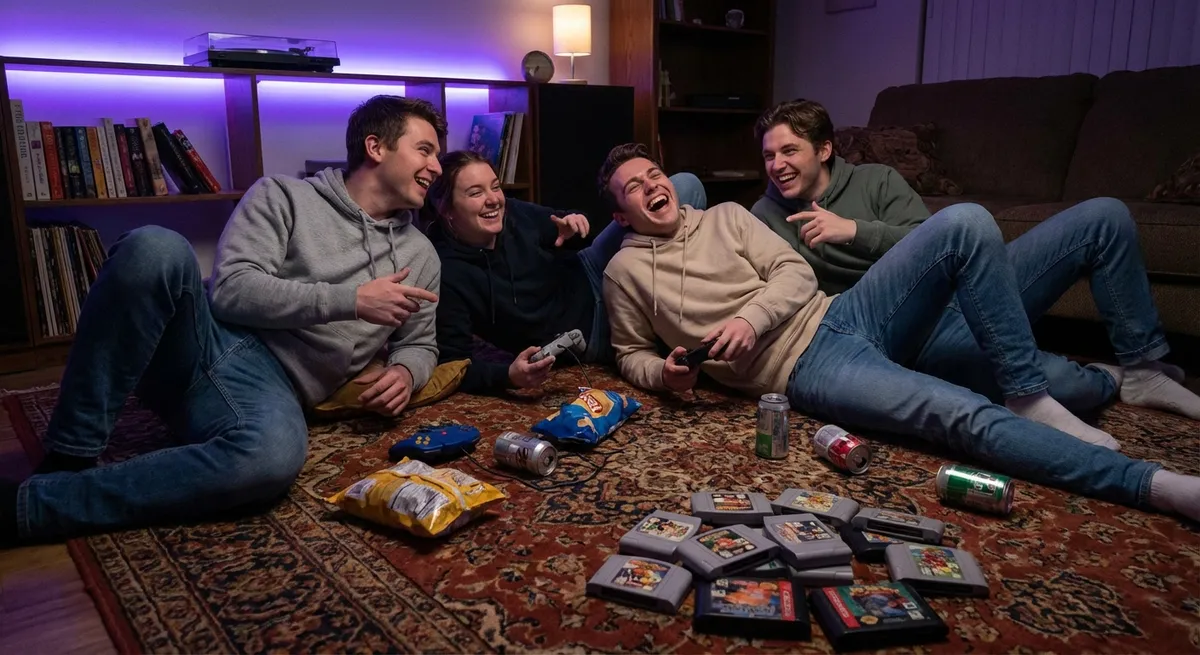
If you haven’t checked in on gaming since the “couch co-op and memory card” era, the biggest shift isn’t just graphics—it’s purpose. Games are no longer just something you do; they’re places you go and communities you join.
And for anyone into tech, that makes games one of the most interesting places to watch the future arrive early.
Sources
- [Fortnite Live Events – Epic Games](https://www.epicgames.com/fortnite/news/category/events) - Official overview of in-game events and concerts that turned a battle royale into a virtual venue
- [Microsoft: The Future of Cross-Platform Gaming](https://news.microsoft.com/features/xbox-game-pass-cloud-gaming-future/) - Insight into cross-device play, cloud gaming, and account-based ecosystems
- [NPR: The Global Rise of Esports](https://www.npr.org/2023/10/01/1202608285/esports-competitive-video-gaming-growth) - Context on how esports evolved into mainstream entertainment
- [Stanford Medicine: Video Games and Learning](https://scopeblog.stanford.edu/2019/09/27/stanford-neuroscientist-explores-how-video-games-can-aid-learning/) - Discussion of how games can support learning and cognitive skills
- [U.S. Department of Education: EdTech and Games](https://tech.ed.gov/games/) - Government perspective on using games and simulations in education and training
Key Takeaway
The most important thing to remember from this article is that this information can change how you think about Gaming.