Online games aren’t just about high scores and trash talk anymore. Behind the loot drops and battle passes, modern multiplayer games are quietly reshaping how we think, react, and even socialize.
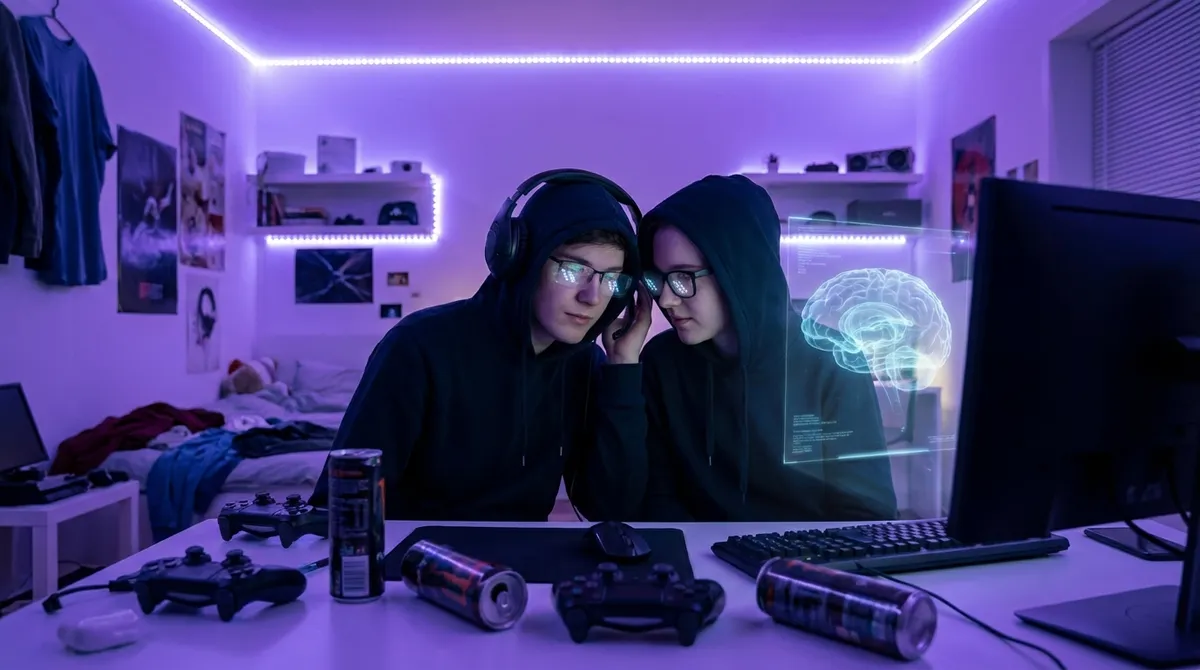
If you’re a tech-obsessed gamer (or just gamer-adjacent), there’s a lot going on under the hood that’s way more interesting than “graphics got better.” Let’s dig into some surprisingly cool ways gaming is evolving—and what’s actually happening to your brain when you hit “Ready.”
1. Your Brain Treats High-Stakes Matches Like Real-Life Pressure
That moment when it’s 1v4, your whole squad’s watching, and your heart is racing? Your brain isn’t kidding around—that stress response is very real.
When you play competitive games, your body can trigger the same fight-or-flight hormones you’d feel during a real-world high-pressure moment. Heart rate spikes, focus narrows, and your brain starts filtering out distractions so you can react faster. Over time, that repeated “pressure training” can actually improve skills like:
- Situational awareness (tracking enemies, timers, map zones at once)
- Split-second decision-making under stress
- Pattern recognition (reading opponents’ habits, setups, and rotations)
Researchers have found that action and fast-paced games can boost your attention span and visual processing—basically your ability to notice small details quickly and react to them. That doesn’t mean gaming is some magic IQ pill, but it does mean “one more match” might be giving your brain a legit workout.
2. Matchmaking Is Secretly a Social Experiment in Human Behavior
You know that feeling when matchmaking throws you into a lobby where everyone somehow plays exactly like you—equally cracked or equally clueless? That’s not luck; that’s math and psychology teaming up.
Modern matchmaking systems don't just look at your win–loss record. Many games quietly track:
- How often you rage quit or stay to the end
- Whether you solo queue or run with a full squad
- How consistently you play (and at what times)
- Sometimes even how “toxic” your behavior is reported to be
The goal isn’t just “fair” matches—it’s retention. Devs want you to feel like you’re constantly on the edge of improvement: not so easy that you’re bored, not so hard that you uninstall. That tension point is incredibly sticky for the human brain.
Some systems even adjust your matchmaking after bad streaks to slide you into easier games, making you feel like you’re “back on your game.” Is that generous design or emotional manipulation? Depends how you feel after a three-win streak.
3. Voice Chat Is Turning Random Lobbies Into Micro Communities
Once upon a time, online chat was basically text boxes and clan forums. Now, with built-in voice chat and Discord servers, multiplayer games are closer to live social networks with enemies.
That shift matters because:
- You’re hearing real voices, accents, and emotions, not just text
- Strangers can quickly turn into regular teammates or even real-life friends
- Cooperative play often forces you to negotiate, coordinate, and lead
It’s not just “gamers being social.” Studies show cooperative online play can help people feel less isolated and build a sense of belonging, especially for folks who struggle with in-person social environments. The flip side: harassment and toxicity are absolutely still a problem, and many devs now treat moderation tools as core features, not afterthoughts.
Push-to-talk isn’t just about comms—it’s about how we build trust with people we’ve never met and may never see.
4. Games Are Quietly Teaching Real-World Skills (Whether They Mean To or Not)
You’ve probably heard the joke: “Gamer skills: useless in real life.” But modern games keep accidentally turning into training simulators for surprisingly practical abilities.
Depending on what you play, you might be building:
- Systems thinking – Strategy games teach you to juggle economies, resources, and long-term consequences.
- Team leadership – If you’ve ever IGL’d in a shooter or led a raid, you’ve done real-time coordination and conflict resolution.
- Time management – Daily quests, scheduled events, limited-time modes… your calendar knows.
- Digital literacy – Settings, networking tweaks, hardware optimization—most gamers become at least “family tech support” level by default.
Some surgeons and researchers have even looked at how games can improve hand–eye coordination and precision. Meanwhile, esports pros treat their bodies like athletes: sleep schedules, reaction time training, even nutrition.
You don’t need to become a pro to benefit, though. Even casual gaming can nudge your brain toward better multitasking and faster information processing—skills that blend into school, work, and everyday life.
5. Your Avatar Is a Test Lab for Identity, Confidence, and Creativity
Custom skins and wild cosmetics might look like pure flex, but character creation screens are doing more than draining your in-game wallet.
For a lot of players, avatars are:
- A low-risk way to experiment with how they present themselves
- A way to represent parts of their identity that might not be visible offline
- A creativity outlet through fashion, color palettes, and visual themes
Role-playing and character creation let people express gender, personality, and style in ways they may not feel comfortable exploring in real life—at least not yet. That can be empowering, especially in communities where self-expression is restricted or judged.
There’s also a subtle psychological effect: players often report feeling more confident or bold when “playing as” a certain avatar. That digital alter ego can change how you speak, how you lead, and how you respond to conflict in-game. Over time, some of that confidence can bleed back into offline life.
Your main character isn’t just pixels; it’s part mirror, part mask, and part sandbox for who you might want to be.
Conclusion
Online games today are doing way more than entertaining us for a few hours. They’re training our brains under pressure, shaping how we connect with strangers, nudging us into micro-communities, and giving us safe spaces to experiment with identity and leadership.
The tech behind all this—matchmaking algorithms, real-time voice, cross-platform systems—keeps getting smarter. But the most interesting changes are happening in the players: how we think, how we relate to each other, and how we carry those skills and habits back into the real world.
Next time you queue up for “just one game,” it might be worth asking: is this just a match, or a miniature version of how I handle life?
Sources
- [American Psychological Association – "The Benefits of Playing Video Games"](https://www.apa.org/news/press/releases/2013/11/video-games) - Overview of research on cognitive, social, and emotional impacts of gaming
- [National Institutes of Health – "Cognitive Benefits of Video Games"](https://www.ncbi.nlm.nih.gov/pmc/articles/PMC7023047/) - Research article on how video games influence attention, perception, and cognition
- [Pew Research Center – "Teens, Video Games and Civics"](https://www.pewresearch.org/internet/2008/09/16/teens-video-games-and-civics/) - Data on how multiplayer gaming affects social interaction and civic engagement
- [BBC – "Do video games make you smarter?"](https://www.bbc.com/future/article/20140703-can-video-games-make-you-smarter) - Explainer on scientific findings around gaming and intelligence
- [World Health Organization – "Gaming behaviour"](https://www.who.int/news-room/questions-and-answers/item/gaming-behaviour) - Context on gaming behavior, health implications, and balanced use
Key Takeaway
The most important thing to remember from this article is that this information can change how you think about Gaming.