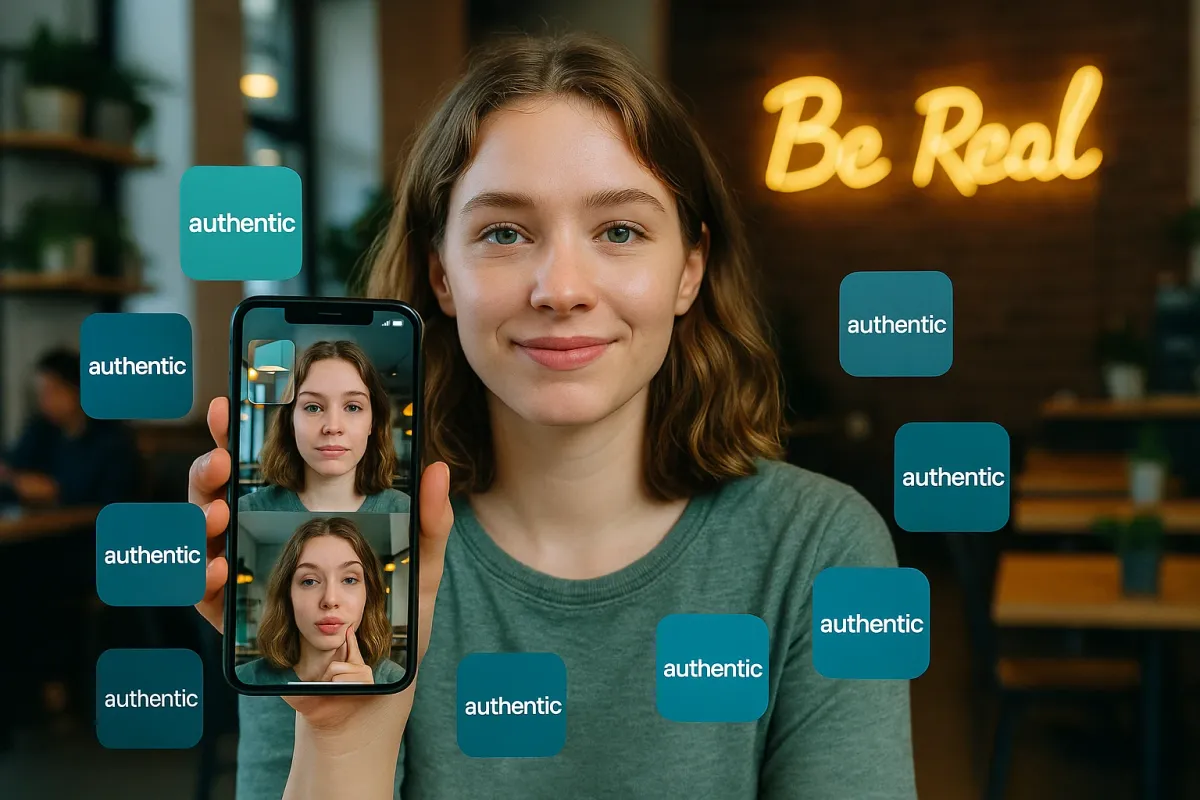
If you blinked this week, you might’ve missed one of the most interesting app plot twists of 2025: BeReal, the “no filters, no fakes” social app that blew up during the pandemic, is getting a new owner and a new direction. The company is being acquired by Voodoo, a French mobile games giant best known for viral hyper-casual games, not deep-and-meaningful social feeds.
Translation: the anti-Instagram app is now owned by a company that makes “Helix Jump.”
That might sound random, but this move says a lot about where social apps are heading right now—especially all those “authenticity” platforms that promised to save us from the endless scroll of polished content and recycled TikToks.
Let’s break down what’s going on, why it matters, and what it might mean for the next wave of apps you install and forget about in three weeks.
BeReal’s “Spontaneous” Era Is Basically Over
For anyone who managed to avoid the trend completely: BeReal’s whole thing was simple. Once a day, at a random time, everyone got a notification and had two minutes to post a photo using both the front and back camera. No filters. No drafts. No endless retakes. Just you, your messy kitchen, and your laptop at 3:42 p.m.
The vibe was: “Here’s my actual life, not my highlight reel.”
The app peaked around 2022–2023, was crowned Apple’s iPhone App of the Year, and at one point claimed more than 20 million daily active users. Then the usual lifecycle kicked in: growth slowed, the daily prompts started to feel like homework, and everyone quietly drifted back to Instagram Reels, TikTok, and whatever chaos Twitter/X is on that day.
Now, with Voodoo stepping in, BeReal is openly talking about “scaling,” “monetization,” and turning its loyal user base into something more sustainable. That doesn’t automatically mean the app will become a trashy ad machine—but it does mean the pure, minimalist social experiment version of BeReal is probably history.
The “Authenticity Apps” Wave Just Hit Reality
BeReal isn’t alone here. Over the last few years we saw a whole wave of “we’re more real than Instagram” apps:
- Locket (share live photos to friends’ widgets)
- Gas (anonymous compliments for teens, which Discord scooped up)
- Dispo (wait-for-your-photos “film camera” experience)
- NGL / Sendit (anonymous Q&A overlays on Instagram/Snapchat)
Most of them promised a cure for curated feeds and social burnout. Very few broke out of the novelty zone.
BeReal was the one that actually did hit mainstream status. Now that it’s being folded into a gaming company’s portfolio, the message is pretty clear: “authenticity” is a great hook, but it’s not a bulletproof business model.
To stick around, apps either:
- Plug into an existing giant (Discord, Snap, Meta, etc.), or
- Start behaving like every other growth-hungry platform: more features, more engagement tricks, eventually… more ways to make money off your time.
If you’re a tech nerd watching the app ecosystem, this is the moment where “keep it small and real” ran headfirst into “please show investors a path to revenue.”
Social Feeds Are Quietly Turning Into Mini-Games
Voodoo buying BeReal isn’t as random as it looks at first glance. Social apps and games have been circling each other for a while, and 2025 is where they’re really starting to fuse.
Games already figured out how to keep people tapping: daily streaks, unlocks, progress bars, quick dopamine hits. Social apps… copied all of that. Think:
- Snap streaks
- TikTok “daily” prompts and live gifting
- Instagram badges, challenges, and achievement-style notifications
Now flip it: game companies want something social, sticky, and predictable—so they’re picking up social platforms and layering game logic on top.
With BeReal under Voodoo, you can totally imagine:
- Limited-time camera “challenges” sponsored by brands
- Seasonal themes and cosmetic tweaks for your daily posts
- Streak rewards for posting on time
- Mini-games around your friend circle’s activity
Nothing’s confirmed yet, but Voodoo has spent years optimizing how to turn small, simple actions into habit-forming loops. BeReal could become less “document this random moment” and more “complete today’s social quest.”
If that sounds a little dystopian, remember: we’re already halfway there. BeReal might just be more honest about blending game mechanics into your social life.
Every Big Platform Already Cloned BeReal – But That Didn’t Save Them Either
Meta rolled out Instagram Candid. TikTok added TikTok Now. Snapchat did a dual-camera mode. All of them chased the BeReal format with their own twist… and almost all of them quietly buried those features when they realized people weren’t obsessed enough to build new habits around them.
The lesson: a clever camera idea doesn’t stand a chance against your existing muscle memory.
You’ll open the one app you already live in, not the new one begging for its daily 2-minute moment.
That, weirdly, is where BeReal still has an edge. It did build that daily ritual for a core group of users. They might’ve stopped posting every day, but the brand still means something specific: a break from the performance pressure of traditional social media.
For Voodoo, that’s gold. It’s easier to evolve a behavior you already own than to convince people to start from zero. Expect BeReal 2.0 to lean into that “low-pressure social” identity while quietly layering in more ways to keep you checking in.
The Next “Real” App Won’t Look Like BeReal At All
The biggest takeaway in all this isn’t just “BeReal got acquired.” It’s that the idea of “be real online” is still weirdly unsolved.
BeReal tried: one photo, once a day, no filters. It worked… until it felt repetitive. Other apps tried anonymous questions, private widgets, or delayed photos. Those caught attention, but not levels-of-Instagram attention.
So what’s next?
A few trends to watch in the apps space, especially after this BeReal/Voodoo deal:
- Smaller, tighter circles
The public feed era is fading. Apps that focus on 3–10 real-life friends or family (instead of 300 “followers”) feel more sustainable.
- Ephemeral by default
Stories, notes, status bubbles, close-friend-only posts—the stuff that disappears is winning over permanent feeds.
- Context-aware posting
Instead of “post whenever,” apps that nudge you around specific moments (end of your workday, after a walk, during a shared event) are more compelling than random alerts.
- Blending hobbies + social
We’re seeing more apps where the main point isn’t “posting,” it’s doing something together: reading, learning, walking, gaming. Social as a side effect, not the main dish.
- Less algorithm, more “who you actually care about”
People are burnt out on the same recycled viral clips. There’s room for apps that just… show you your people, not a roulette wheel of engagement bait.
If BeReal 2.0 can tap into even a couple of these trends without losing its core “low-effort, low-pressure” feel, it might actually pull off the rarest trick in app land: surviving its own hype cycle.
Conclusion
BeReal’s sale to Voodoo is more than just “another startup exit.” It’s a status update on the whole “authentic social” experiment we’ve been running for the past few years.
The idea clearly resonates—millions of people wanted something less polished, less addictive, and more real than the usual feeds. But ideals alone don’t pay server bills, and even the most wholesome app eventually has to decide: grow, sell, or slowly fade into “oh yeah, remember that?”
Now the anti-Instagram app is in the hands of a gaming giant that’s very good at turning tiny taps into habits. The result could be awful… or it could be the blueprint for what comes after this era of performative posting.
Either way, if you care about where apps are headed, keep an eye on your daily BeReal notification—before it quietly evolves into your first daily “social quest.”
Because the next big social app probably won’t ask you to “be real.”
It’ll ask you to show up—and then make that feel like a game you actually want to play.
Key Takeaway
The most important thing to remember from this article is that this information can change how you think about Apps.