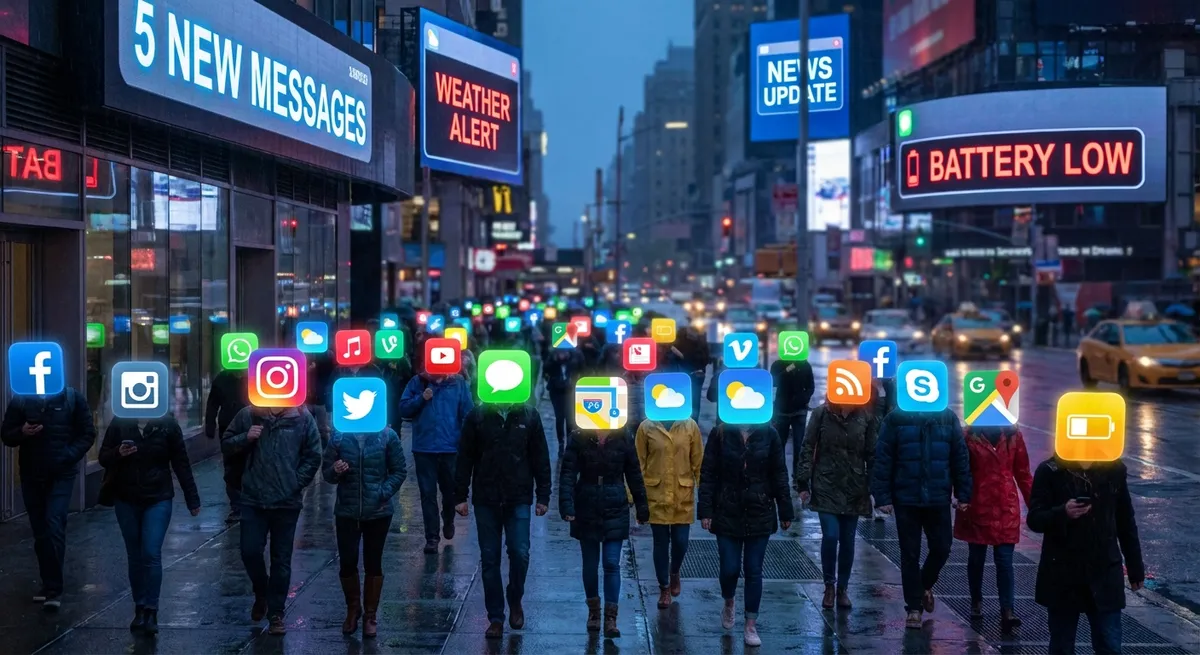
If you lost your phone for a day, would your life actually fall apart… or just feel like it? Between banking, dating, gaming, working, and doomscrolling, apps quietly run more of our lives than we’d like to admit. They’re the invisible layer between us and basically everything we do.
But under all the push notifications and dark mode aesthetics, apps are going through some weird (and honestly pretty fascinating) changes. The way they’re built, how they make money, and what they know about us is evolving fast—and it’s not always obvious from the outside.
Let’s peel back the glossy UI and look at what’s really happening behind your home screen.
Your Home Screen Is Turning Into A Mall
Open your phone and count how many apps are trying to sell you something—even the “free” ones. Shopping isn’t just happening in shopping apps anymore; it’s sneaking into social feeds, chat apps, short videos, and even your keyboard suggestions. What started as a couple of sponsored posts has turned into full-blown in-app storefronts where you can go from “that’s kinda cool” to “order confirmed” in two taps. Tech companies figured out that the less you leave the app, the more money they make, so they’re building entire checkout flows right into your feed. That’s why your social apps suddenly know your sizes, your style, and exactly when to hit you with the “Only 3 left” tag.
This mall-ification of apps is changing how we shop without ever “going shopping.” You’re not browsing; you’re ambushed. The upside? You really can discover niche, interesting stuff you’d never find in a regular store. The downside? Your self-control is fighting a recommendation engine trained on millions of people just like you. When your apps are this good at guessing what you’ll buy, impulse purchases stop feeling like a bug and start looking like a feature.
Your “Productivity” Apps Are Quietly Studying You
Those calendar, task, and note-taking apps that promise to make you “your most efficient self” are becoming something else: behavior trackers with nice fonts. Modern productivity apps don’t just help you log what you’re doing; they analyze when you work best, what you procrastinate on, and how often you abandon your big plans. They turn your habits into graphs, trends, and “insights,” then nudge you with notifications like a very polite drill sergeant. On the surface, it’s helpful: you see patterns you’d never notice on your own, like always missing deadlines on Fridays or only checking certain lists at night.
But there’s a tradeoff hiding in all that data. Every “smart suggestion” is built on a detailed picture of how your brain behaves under pressure, distraction, or boredom. Some apps keep this data strictly on your device; others sync it to the cloud to train their features or even sell anonymized behavior data. The line between “helpful assistant” and “performance surveillance” gets blurry fast—especially once your work tools start measuring your “engagement.” The tech itself isn’t evil, but it does raise a clear question: are you using the app, or is the app training you?
The App Store You See Isn’t The Same As Mine
We talk about “the App Store” or “the Play Store” like they’re shared spaces, but what you see and what your friend sees can be completely different worlds. Recommendation algorithms are constantly rewriting those rankings and “Featured” sections based on what you download, how long you use certain types of apps, and even what people in your area are into. That’s why your feed might be full of budgeting tools and meditation apps while someone else sees mobile games and trading platforms. It feels like you’re browsing a global marketplace, but you’re actually inside a custom-built bubble.
This personalization has a side effect: discovery gets harder for both users and developers. New apps don’t just have to be good; they have to be compatible with the algorithm’s idea of “people like you.” It’s the same problem as streaming services—there’s probably an app out there that’s perfect for you, but it’s effectively invisible unless it gets a boost from the system. For tech enthusiasts, this means the app world is bigger and stranger than it appears from your default recommendations. The next app you fall in love with might not be trending; it might be buried on page three of search results because it doesn’t fit your “profile” yet.
Your Apps Are Starting To Blur Together
Remember when every app felt distinct? Now a lot of them feel like they’re slowly turning into the same thing with different logos. Chat apps want to be payment platforms. Note apps want to be project managers. Photo apps want to be social networks. Everyone wants to be “the place where you do everything,” and that leads to some weird feature creep. Suddenly your weather app has a community tab, and your banking app wants you to watch “content.” It’s like watching websites from 2007 slowly mutate into super-apps.
This blending isn’t random; it’s a survival strategy. If an app can convince you to do three different things inside it instead of one, it’s harder for you to delete it and harder for competitors to steal you. The flip side is that the “do everything” approach can make the experience worse. Interfaces get cluttered, simple actions are buried behind menus, and once-focused apps start to feel bloated. Enthusiasts feel this shift first: that clean, perfect little app you loved quietly turns into a “platform” with pop-ups, feeds, and subscriptions. The good news? Every time apps go all-in on complexity, there’s usually a new wave of simple, focused tools waiting to replace them.
Offline Mode Is Low-Key Becoming A Power Feature
For years, offline mode was treated like a bonus feature—nice to have on a plane, mostly ignored the rest of the time. That’s changing fast. As people get more sensitive about privacy, data caps, and spotty connections, apps that work smoothly offline are starting to stand out. Note apps that sync when they can but never lock you out, music and podcast apps that let you download easily, map apps that don’t panic when you lose signal—those design choices suddenly feel like superpowers. It’s less about surviving a Wi‑Fi blackout and more about giving you control instead of tying your entire life to a server somewhere.
This shift is also quietly reshaping how apps are built. More logic is moving onto the device, not just the cloud. Some apps are designed so your data never leaves your phone unless you explicitly tell it to. For privacy-focused users, that’s a big deal—you get smart features without feeding yet another massive data pipeline. For everyone else, it just feels better when your tools keep working no matter where you are. In a strange way, offline-first design is making apps feel more like old-school software again: powerful, local, and not completely dependent on the internet behaving itself.
Conclusion
Apps started as tiny tools: a flashlight here, a game there, a to-do list you’d forget about in a week. Now they’re infrastructure. They shape what we buy, how we work, what we see, and how we move through the world—mostly from the background.
Paying attention to how apps are changing isn’t just “tech person” homework; it’s basic self-defense for your attention, your wallet, and your data. The more you understand what’s happening behind that clean little icon, the easier it is to choose tools that actually work for you instead of just working on you.
Key Takeaway
The most important thing to remember from this article is that this information can change how you think about Apps.