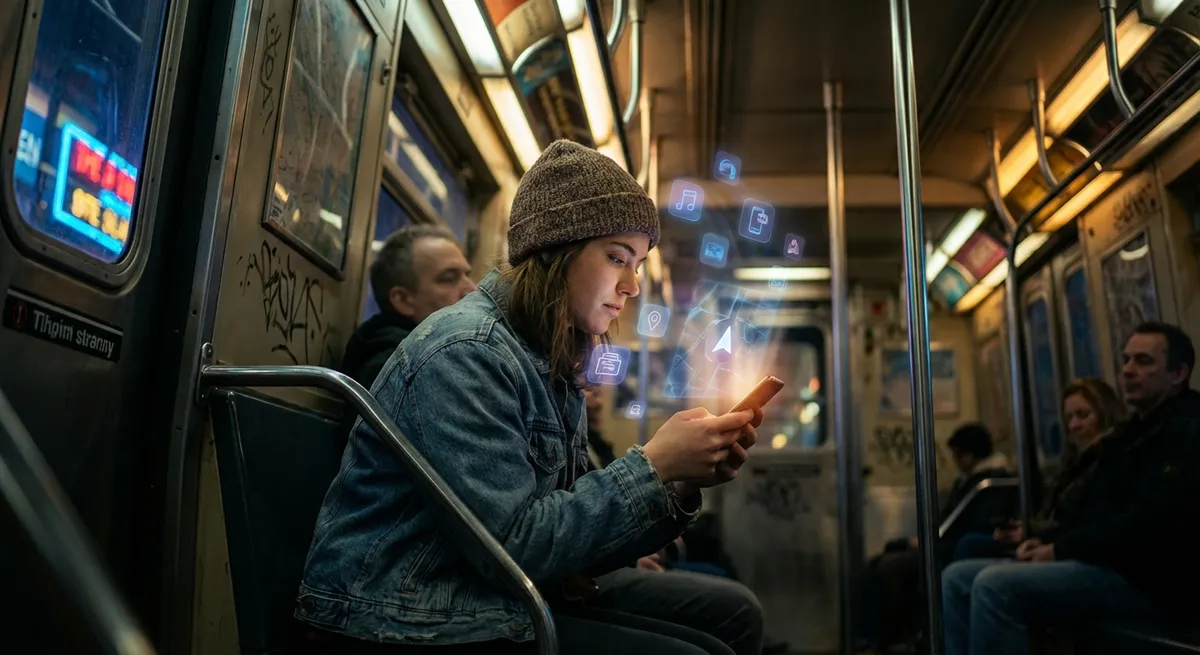
If it feels like your apps know you a little too well lately… you’re not wrong. From music players that serve the exact song you were about to queue, to note apps that guess what you’re trying to type, a weird shift has happened: apps aren’t just tools anymore, they’re starting to anticipate you.
This isn’t sci‑fi mind reading. It’s data, patterns, and some very clever design choices. Let’s dig into how modern apps are quietly predicting your next move—and what’s actually going on behind the screen.
1. Your “For You” Feed Is Basically a Personal Simulation
Every time you tap, scroll, pause on a video for half a second, or rewatch a clip, your apps are taking notes. Recommendation systems in apps like TikTok, YouTube, and Spotify build a rough sketch of “you” based on behavior, not what you say you like.
Under the hood, these apps compare you to millions of other users with similar patterns. If people who liked A, B, and C also loved D, and you’ve already hit A, B, and C, guess what? D is headed your way. It’s not that the app knows your taste in some deep philosophical sense—it just knows the odds.
This is why new accounts feel a little bland at first; the system barely knows you. But give it a few days of real usage and the feed tightens up. Suddenly the app seems scarily accurate, even though it’s really just pattern matching at scale.
For tech enthusiasts, the fun part is this: the recommendation engine doesn’t just respond; it’s constantly running experiments. Different thumbnails, content types, or layouts are tested on you to see what makes you engage, then folded back into the model so it “learns” what your future self will probably tap next.
2. Keyboard and Note Apps Are Quietly Learning Your Writing Style
If your keyboard has ever guessed an entire sentence you were about to type—yeah, that’s not a lucky guess. Modern keyboards and note apps (think Gboard, SwiftKey, Notion, Google Docs’ Smart Compose) are built around language models tuned to autocomplete what you’re most likely to say next.
They’re not just predicting the next word in isolation; they’re using the context of the last several words, your usual phrases, and even your typing habits. Over time, they adapt to your style: whether you write “lol” or “haha,” use the Oxford comma, or always sign off emails with “Best,” instead of “Regards.”
On a deeper level, these apps are borrowing ideas from the same type of models that power chatbots: predict the next token (word or piece of a word) based on what came before. The difference is that your keyboard runs a smaller, heavily optimized version, focused on speed and privacy.
The result is that your notes stop feeling like a blank page and start feeling like a collaboration between your brain and the machine. If that makes you a bit uneasy, you’re not alone—but it also explains why going back to a “dumb” keyboard suddenly feels painful.
3. Calendar and Email Apps Are Turning Your Routine Into a Forecast
Calendar and email apps used to be passive: you added stuff, they reminded you. Now they’re starting to pitch suggestions: “Do you want to add this event?” “Reply with this?” “Remind you about that?”
Apps like Google Calendar will scan your emails for flight confirmations, restaurant bookings, and meetings, then suggest creating events automatically. Email clients like Gmail offer reply suggestions that sound alarmingly close to what you were going to write anyway: “Sounds good, thanks!” or “Let’s do 3 PM.”
This is your daily life as data. The app notices repeated patterns—weekly standup at 9, gym after work, calls at the same time zones—and it starts predicting what you’ll need scheduled next, or which emails are “important” before you ever open them.
For power users, the interesting angle is that you can lean into this instead of fighting it. Once you know your tools are ranking and predicting, you can tweak how you label, star, archive, or schedule things to “train” them. Over time, your calendar and inbox stop being a pile and start being a prioritized queue that feels… suspiciously like your future, laid out.
4. Location-Aware Apps Know Your Habits Better Than Your Friends
Navigation, ride‑share, weather, and food delivery apps all quietly run on one powerful signal: where you are, and when. With just those two pieces of data, they can make eerie predictions that feel almost psychic.
Maps apps start suggesting your commute route before you even ask. Food apps surface the restaurant you always order from at exactly the time you’re usually too tired to cook. Fitness apps like Strava or Apple’s Fitness stack up your runs and walks, then nudge you when you’re “due” for another session based on your own patterns.
These apps don’t really know why you go where you go—they just know you do, regularly. So they build routines out of your randomness and serve you shortcuts right when those routines usually kick in.
For tech enthusiasts, the big question here is privacy versus convenience. The same data that predicts your favorite coffee stop could theoretically reveal your home, work, and habits to anyone who has access. It’s a trade-off: more prediction, more personalization—but also more metadata about your life stored somewhere you don’t control.
5. Health and Fitness Apps Are Guessing Your Future Self
Modern health and fitness apps aren’t just counting steps or logging meals; they’re making small bets about your future body and behavior.
Sleep tracking apps guess what time you’ll actually go to bed based on your history, then nudge you at “the right time” instead of a fixed hour. Wearables like Apple Watch or Fitbit estimate your recovery, stress, and readiness, then suggest whether today should be a heavy workout or a lighter one.
Over time, the app’s model of “you” gets more detailed: your usual sleep window, how long you tend to stay consistent, when you typically fall off the wagon, and what kind of notification gets you moving again. Some apps even use trends to warn you about potential health issues, like irregular heart rhythms, out‑of‑range oxygen levels, or sudden shifts in activity.
For people into tech, this is where prediction becomes genuinely impactful. We’re not just talking about “what video you’ll like,” but “what your health might look like if you stay on this path.” It’s early days, but we’re moving toward a world where your phone doesn’t just track what happened—it tries to tell you what’s likely to happen next so you can change it.
Conclusion
The common thread in all of this: modern apps are less about what you click right now and more about what you’re probably going to do next. They turn behavior into patterns, patterns into predictions, and predictions into interfaces that feel weirdly intuitive.
If you’re a tech enthusiast, this is both exciting and a little unsettling. On one hand, it’s personalized convenience at scale. On the other, it’s a reminder that “just using” an app is also “constantly training” it.
The interesting move isn’t to opt out completely—it’s to understand what your apps are trying to predict about you and decide where that’s helpful, where it’s creepy, and where you can tweak the system to actually work in your favor.
Sources
- [How TikTok Rewrote the World](https://www.nytimes.com/2019/03/10/style/what-is-tik-tok.html) - New York Times overview of TikTok’s recommendation engine and cultural impact
- [How Spotify’s Algorithm Knows Exactly What You Want to Listen To](https://www.bbc.com/news/technology-60050196) - BBC explainer on how Spotify uses data and machine learning for music recommendations
- [How Gmail Smart Compose Works](https://ai.googleblog.com/2018/05/smart-compose-using-neural-networks-to.html) - Google AI blog detailing the neural networks behind Gmail’s predictive typing
- [How Google Uses Your Location Information](https://policies.google.com/technologies/location-data) - Official Google documentation on location data, personalization, and privacy controls
- [Apple Watch and Heart Health](https://www.nih.gov/news-events/nih-research-matters/apple-watch-detects-irregular-heart-rhythms) - NIH summary of research on Apple Watch’s role in detecting irregular heart rhythms
Key Takeaway
The most important thing to remember from this article is that this information can change how you think about Apps.