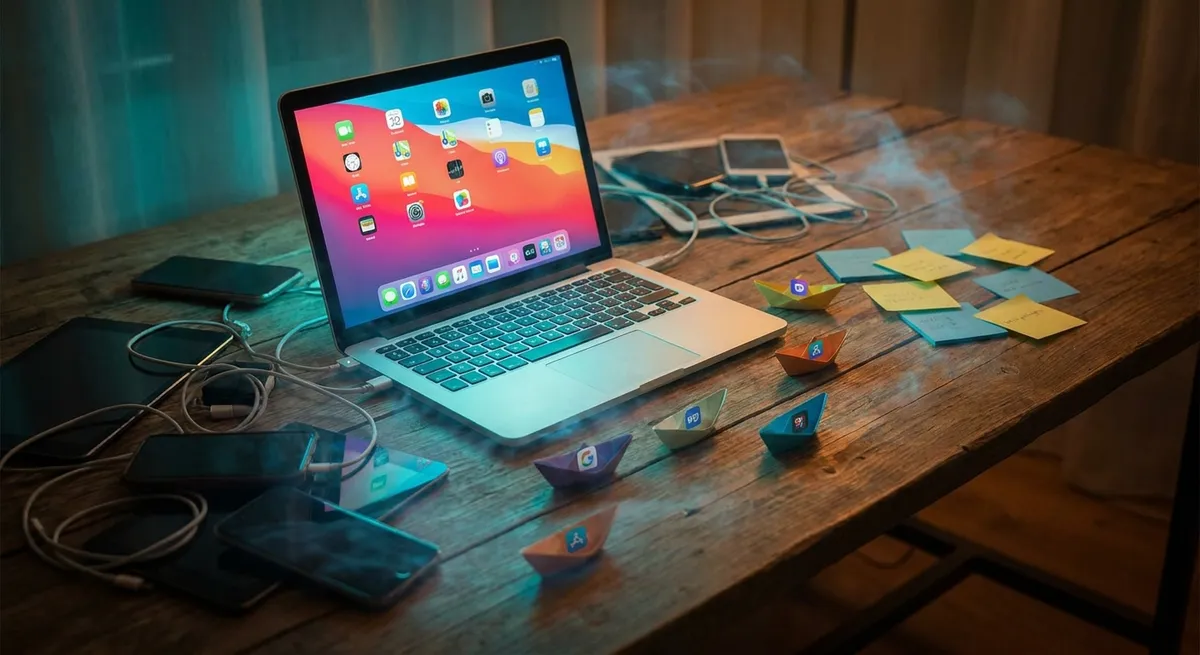
We used to live inside giant, do‑everything programs on bulky laptops. Now? A bunch of small, focused apps on your phone can quietly replace half your old software — and often do it better. From turning your notes into searchable memory palaces to running full coding environments in your browser, apps have evolved way past “I guess I’ll install another to‑do list.”
Let’s dig into some of the more surprising ways apps have levelled up, and why tech‑savvy folks are leaning into this “many small tools” world instead of going back to one giant app for everything.
1. Your Notes App Is Becoming an Actual Second Brain
Notes apps used to be digital sticky pads. Now they’re starting to feel more like a low‑key knowledge operating system.
Modern note tools:
- Link notes together like webpages so you can jump between ideas instead of scrolling through a giant document.
- Auto‑tag and search everything, so even half‑finished ideas from last year pop up when you need them.
- Use AI to summarize or rewrite your own notes, helping you turn messy brain dumps into something usable.
- Sync across laptop, phone, and browser so your “second brain” is just… always there.
For tech enthusiasts, this matters because notes apps are quietly replacing:
- Basic project management (“Let me just turn this note into a task list”)
- Document editors (“This running note is my spec doc now”)
- Bookmark collections (“Why save links when I can save ideas?”)
Instead of one giant “productivity suite,” your notes app plus a few integrations can now act as your home base for almost everything you think, plan, or learn.
2. “Browser‑Only” Apps Are Sneaking In as Your Real Work Tools
You no longer have to install heavy desktop software to get serious work done. A ton of apps now live entirely in your browser — and they’re powerful enough that many devs, designers, and creators barely touch native software.
Some wild examples:
- Full coding environments online: You can write, run, and share code in the cloud without installing anything locally.
- Design tools that feel like desktop apps, with real‑time collaboration baked in.
- Video editors in the browser that handle multi‑track timelines, transitions, and effects.
Why this is fascinating:
- The browser has quietly turned into a universal app platform, with no installs, no drivers, and instant updates.
- Teams can share links instead of files, which makes “work in progress” genuinely collaborative instead of “v3_final_FINAL_reallythisone.psd”.
- On decent hardware and internet, web apps can feel almost indistinguishable from native apps — which would’ve sounded ridiculous a decade ago.
For power users, this means your main “app” might actually just be the browser — everything else is one tab away.
3. Phone Cameras Plus Smart Apps Are Killing Old‑School Scanners
The camera in your pocket plus the right app has quietly replaced a small pile of office hardware.
Modern scanning and document apps can:
- Auto‑detect the edges of documents and correct the perspective.
- Remove shadows and enhance contrast so a crumpled receipt looks like a clean PDF.
- Turn printed text into searchable, selectable text using OCR (optical character recognition).
- Let you sign, annotate, and send forms in seconds.
This shifts a bunch of “real computer” tasks to your phone:
- Expense tracking becomes as simple as snapping receipts after you pay.
- Old paper notebooks can be digitized and searched.
- Random mail you’d normally lose can be captured, tagged, and archived on the spot.
The interesting bit: it’s not just “the camera got better.” It’s the software layer on top — the app — that turns a photo into something your digital life can actually use.
4. Health and Fitness Apps Are Turning Your Phone Into a Lab
Your phone and watch are quietly collecting a surprising amount of health data — and apps are getting better at turning that into feedback you’ll actually use.
Today’s health and fitness apps can:
- Track heart rate, sleep patterns, and movement automatically in the background.
- Use motion sensors to estimate running form, cycling cadence, or even fall detection.
- Give you trend lines over weeks and months so you see patterns instead of random numbers.
- Integrate across devices and services, combining smartwatch data, workout apps, and manual logs into one timeline.
For tech enthusiasts, this is fascinating because:
- We’re edging toward continuous, ambient health tracking without special medical gear.
- App ecosystems around health platforms (like Apple Health or Google Fit) let independent developers build surprisingly niche, powerful tools on top of your existing data.
- Over time, your phone may be better at spotting long‑term changes — like worsening sleep or lower activity — than you are.
It’s not medical‑grade diagnosis, but it is a huge step up from “guessing how I’ve been sleeping lately.”
5. Automation Apps Are Letting Normal People Build Tiny Workflows
What used to require scripting skills or IT support can now be done in a dedicated app with buttons, toggles, and plain‑language rules.
These automation‑style apps can:
- Watch for triggers (like “new email,” “new calendar event,” or “new file in a folder”).
- Run actions (like “save this to cloud storage,” “add a task,” “forward to this person,” or “send me a notification”).
- Connect apps that were never originally designed to talk to each other.
A few examples of what non‑coders can do now:
- Turn important emails into to‑do list items automatically.
- Save every photo you edit into a separate backup folder in the cloud.
- Log your workouts from one app into a central health or notes app with zero extra taps.
What’s cool here is less about raw power and more about who gets to use it. We’re slowly moving from “only devs can glue apps together” to “any motivated user can wire up their own little system.”
For a lot of people, this turns their phone and laptop from “apps I use” into “tools I configure.”
Conclusion
Apps aren’t just “smaller programs” anymore — they’ve become modular pieces of a personal tech ecosystem. Your notes app behaves like a knowledge base, your browser is a full‑blown work environment, your camera is a scanner, your watch is a sensor rig, and your automation tool is a lightweight control panel tying it all together.
If you’re a tech enthusiast, the fun part isn’t just picking the “best” single app. It’s experimenting with how these small, focused tools can snap together into something that feels custom‑built for how your brain (and your day) actually works.
Sources
- Harvard Business Review – How to Take Better Notes - Discusses modern note‑taking practices and tools as extensions of memory and thinking
- Mozilla – The Web as a Platform - Explains how web apps have evolved into full‑featured application platforms
- U.S. National Library of Medicine – Mobile Health Applications - Research overview of how health apps use sensors and data to support users
- Mayo Clinic – Fitness Trackers and Heart Health - Medical perspective on wearables and activity/health tracking
- IFTTT – How Applets Work - Official explanation of app‑to‑app automation concepts used in consumer workflows
Key Takeaway
The most important thing to remember from this article is that this information can change how you think about Apps.