AI used to feel like background tech—recommendations, autocorrect, maybe a chatbot that barely understood you. That era is over. Modern AI is getting weird, creative, and strangely personal in ways that are changing how we work, play, and think about what “smart” even means.
Let’s walk through five genuinely interesting shifts in AI that tech people should have on their radar—no hype, no doom spiral, just what’s actually getting cool (and a little unsettling).
1. AI Isn’t Just Copying Art Anymore—It’s Remixing Style Like a DJ
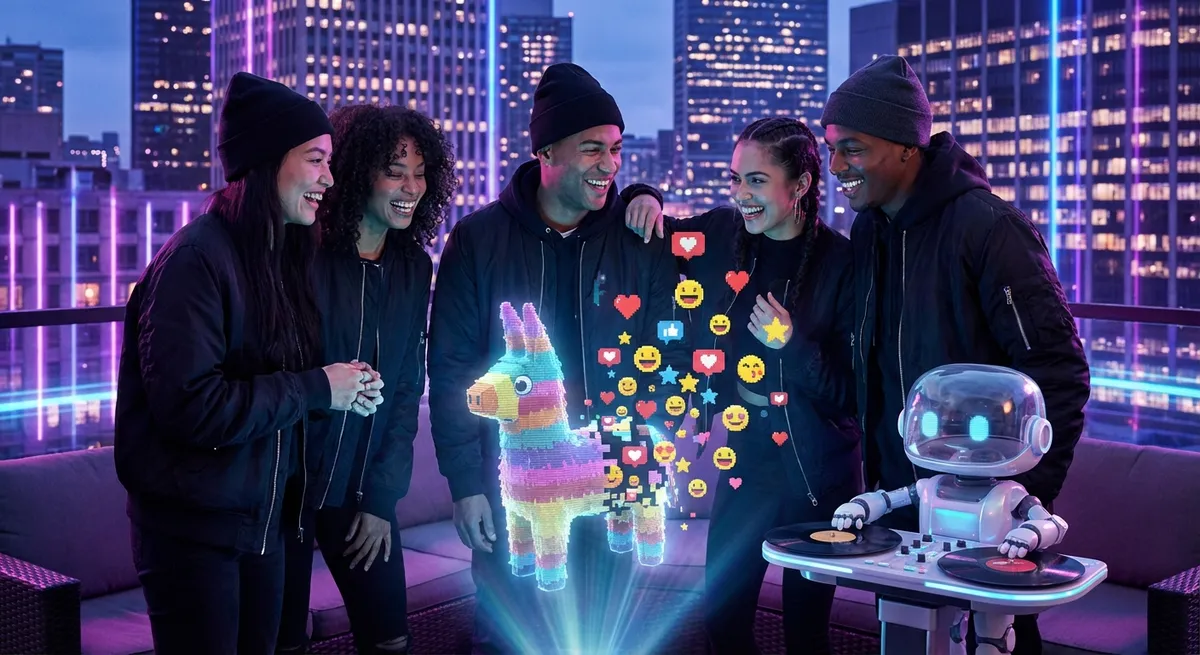
Early AI art tools mostly mashed up existing images. Now, newer models are getting better at understanding “style” in a deeper way—color choices, composition, even mood—then remixing it into something that feels unique, not just blended.
We’re seeing this jump in tools that can generate entire scenes from short prompts, imitate specific camera lenses, and even match your personal aesthetic over time. It’s like having a collaborator that remembers what “your vibe” looks like and leans into it on the next draft.
For creatives, this is less “AI replaces artists” and more “AI becomes the world’s fastest concept artist.” It can spit out a hundred variations in the time it’d take you to sketch one, so your job shifts from creating from scratch to curating, refining, and directing. The big question now isn’t “Can AI make art?” It’s “Who owns the style?”—and that debate is far from settled.
2. AI Is Getting Weirdly Good at Reading Human Signals
AI is getting better at understanding people—not just what we say, but how we say it. Modern language models can infer tone (sarcastic, stressed, confident), summarize intent, and even flag when someone might need urgent help.
Hospitals are testing AI systems that scan electronic health records and clinician notes to spot patients at higher risk or those who might be struggling mentally but haven’t said it directly. Customer support tools use AI to predict when a chat is about to go sideways and nudge human agents with suggestions.
Is it perfect? Definitely not. AI still misreads context all the time. But it’s getting good enough to serve as an early-warning system or a “second pair of eyes” on human behavior patterns. The trade-off: to get these benefits, we’re handing over massive amounts of sensitive data—texts, voice, behavior logs—for AI to analyze. That’s great for insights, risky for privacy.
3. The New AI Flex: Doing More With Way Less Data
Big AI models used to be all about bragging rights: “We trained on a gazillion tokens using enough power to light a small country.” That mindset is shifting. Now the hot trend is efficiency—smaller models, smarter training, and doing more with less.
Tech companies and researchers are pushing “small but mighty” models tailored for specific tasks or devices. Some of these can run locally on your phone or laptop without needing a constant internet connection. That means faster responses, lower costs, and a bit more privacy since your data doesn’t always leave your device.
This also opens the door to AI in places it never quite fit before: on edge devices, in cars, in cheap hardware, and in areas with spotty internet. The long-term impact: AI stops being a cloud-only superpower and becomes more like a built-in feature of everyday gadgets, from smartwatches to appliances.
4. AI Teammates Are Quietly Moving From “Assistant” to “Colleague”
We’re sliding from “AI as a tool” toward “AI as a teammate,” especially at work. Not in a sci-fi robot coworker way, but in the sense that AI now handles full workflows instead of just individual tasks.
In coding, AI can already take a feature idea, propose an implementation, write boilerplate code, suggest tests, and explain what it did in plain language. In writing, AI can brainstorm angles, draft, restructure, and even help you fact-check (if you’re careful). In design, it’s moving from “generate an image” to “help build an entire brand kit.”
The interesting twist: people are starting to specialize in managing AI output—turning prompts, feedback, and iteration into a skill set. Instead of just “how good are you at X,” it’s becoming “how good are you at using AI to supercharge X?” That doesn’t make humans less valuable; it just shifts the value to judgment, taste, and knowing when the AI is confidently wrong.
5. AI Is Forcing Us to Redefine What “Real” Looks and Sounds Like
Deepfakes used to be a niche horror. Now, AI-generated audio and video are becoming so convincing that we’re having to rethink what we trust online. You can clone a voice from a short sample, cook up synthetic news anchors, and generate people that don’t even exist but look totally real.
In response, there’s a fast-growing push for digital “receipts” of authenticity: watermarks, metadata that tracks how content was made, and standards for labeling AI-generated stuff. Governments, newsrooms, and platforms are scrambling to keep up, trying to set up guardrails without killing all the creative uses.
At the same time, AI is giving regular people tools that used to require a whole production studio—voiceovers, polished videos, custom visuals. The line between “professional” and “home-made” content is blurring. We’re heading into a world where seeing (or hearing) is no longer believing by default—you’ll need context, verification, and a bit of healthy skepticism.
Conclusion
AI isn’t just getting “smarter”—it’s getting more personal, more visual, more embedded, and more controversial. It’s remixing art styles, reading human signals, running on tiny devices, acting like a coworker, and rewriting the rules of what counts as “real.”
For tech enthusiasts, this is the fun part: the tools are powerful, the rules aren’t fully written, and how we choose to use (or limit) this tech over the next few years will shape everything from creativity to work to what we trust online.
Experiment with it. Question it. Push it. Just don’t ignore it—because AI is no longer background noise; it’s quickly becoming the main track.
Sources
- [OpenAI – GPT-4 Technical Report](https://cdn.openai.com/papers/gpt-4-system-card.pdf) - Detailed overview of capabilities and limitations of a large-scale language model, including reasoning about text, images, and efficiency trends
- [MIT CSAIL – Research on Small, Efficient AI Models](https://www.csail.mit.edu/research/machine-learning) - Covers work on model compression, edge AI, and making powerful models run on limited hardware
- [World Health Organization – Ethics and Governance of Artificial Intelligence for Health](https://www.who.int/publications/i/item/9789240029200) - Explores how AI is used in healthcare, especially around risk prediction and patient safety
- [Brookings Institution – Deepfakes and Synthetic Media](https://www.brookings.edu/articles/deepfakes-and-the-new-disinformation-war/) - Analysis of how AI-generated audio and video impact trust, politics, and online information
- [Partnership on AI – Responsible Practices for Synthetic Media](https://partnershiponai.org/workstream/synthetic-media-and-deepfakes/) - Guidance and research on labeling, watermarking, and ethical standards for AI-generated content
Key Takeaway
The most important thing to remember from this article is that this information can change how you think about AI.