AI isn’t just powering chatbots and weirdly accurate music recommendations. It’s already reshaping how we work, learn, create, and even argue online—often in ways that feel subtle until you zoom out and realize, “Oh… everything’s different now.”
Let’s walk through five surprisingly interesting (and very real) ways AI is creeping into everyday life—without turning this into a sci‑fi lecture.
1. Your “Gut Feelings” Online Are Getting Algorithmically Coached
You’re probably making more AI-influenced decisions than you think.
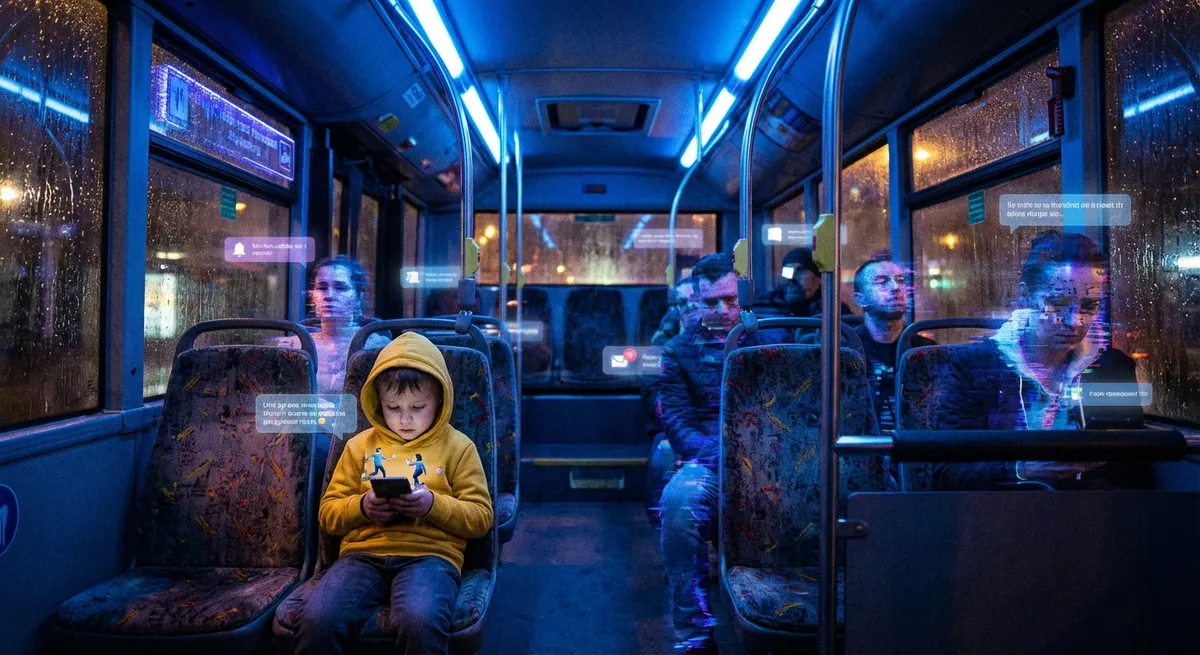
Every time you scroll a feed, get a “recommended for you” video, or see a product magically appear right after you start wanting it—there’s an algorithm quietly shaping what you notice and what you ignore.
AI is:
- Ranking which posts you see first
- Guessing what you’ll click on before you know it yourself
- Subtly training your sense of what’s “normal,” popular, or worth your time
Over time, this doesn’t just affect what you buy—it can shape your opinions, your mood, and even your sense of what everyone else thinks. It becomes harder to tell what you chose versus what the system nudged you toward.
For tech enthusiasts, this isn’t just about privacy; it’s about agency. If recommendation AIs are essentially “training” our taste and attention, the biggest question isn’t “What do I like?” but “Who (or what) has been teaching me what to like?”
2. AI Is Becoming Your Quietest (and Strictest) Editor
If you write emails, documents, posts, or code, you’re probably already co‑writing with AI—even if you don’t think of it that way.
Spell-check and grammar suggestions were the warm-up act. Now we’ve got:
- Autocomplete that finishes your sentences
- “Rewrite” buttons that polish your tone
- AI that suggests entire paragraphs, slides, and sections of code
On one hand, this is amazing for productivity. On the other, there’s a subtle shift: your natural voice can start drifting toward the “AI-approved” style—short, safe, and generic.
Over time, teams and companies that lean hard on these tools can end up sounding weirdly similar: same email tone, same presentation style, same corporate-speak. The upside is fewer typos and faster drafts. The downside? A slow erosion of quirks, edge, and personality.
The interesting question isn’t just “Can AI write?” It’s: “How much of my writing is still me once an algorithm suggests half my phrasing?”
3. Creative Work Is Turning Into a Conversation, Not a Solo Act
For years, creativity tools were mostly about execution: Photoshop to edit, DAWs to record, IDEs to code. AI flips that. Now your tools are starting to talk back.
You can:
- Sketch a vague idea and ask AI to generate variants
- Hum a melody and have AI suggest chords or instrumentation
- Describe a game mechanic and get sample code or prototypes
- Feed it your old work and ask, “What’s missing?” or “What’s the pattern here?”
The creator’s role is shifting from “I must do every step myself” to “I design the direction, then collaborate with a very fast, not-very-picky assistant.”
That doesn’t make humans less important—it actually puts more weight on taste: choosing the best idea from 50 generated ones, steering the vibe, setting constraints, and knowing when to say, “No, that’s not it.”
For tech-savvy people, the real power move isn’t just learning how to use AI tools, but learning how to art direct them.
4. AI Is Quietly Becoming the UX for Everything Complicated
We’re at the point where a lot of systems are technically powerful but practically unusable for most people—think: dense dashboards, enterprise tools, hundreds of hidden settings.
AI is stepping in as a kind of universal “front desk” for complexity.
Instead of:
- Clicking through 12 menus, you can type: “Show me last month’s top-performing campaigns that cost under $1,000.”
- Digging through help docs, you ask: “How do I roll back to the previous configuration?”
- Manually tuning dozens of sliders, you say: “Optimize this for battery life, not performance.”
Under the hood, it’s still the same complex system. But AI becomes the translator between human intention and machine options.
This has two big implications:
- *Power users become power askers: The skill shifts from knowing every menu to knowing what to request and how to refine it.
- Interfaces will flatten*: Instead of 20 separate apps, you may just have one AI layer navigating across everything for you.
We’re basically heading toward “command line for humans”—plain language instead of syntax, but just as powerful if you know what to ask.
5. AI Isn’t Just Learning From Data—It’s Learning From Our Mistakes
Most people think of AI training as “we fed it a giant dataset.” That’s true, but it’s only half the story. The other half is happening live, every day, in how we react to its output.
Examples:
- When you click “this was not helpful,” that’s training.
- When you ignore certain recommendations, that’s training.
- When you manually correct a suggested answer, that’s training.
The loop is constant: AI guesses → humans react → AI adjusts. It’s not learning in the way humans do, but it is adapting based on our feedback—our confusion, annoyance, or delight.
The wild part: most of us are “teaching” these systems without realizing it. Every thumbs-up, scroll, skip, or correction is a kind of micro-lesson.
For tech enthusiasts, this raises a fascinating (and slightly uncomfortable) thought: we’re not just users of AI systems; we’re co-authors of how they behave worldwide. The way you respond today might affect how millions of people experience that AI tomorrow.
Conclusion
AI isn’t waiting for some big, dramatic “arrival.” It’s already baked into the tiny decisions, shortcuts, and habits that make up daily life.
It’s shaping:
- What you see and what you miss
- How you sound when you write
- How you create and prototype ideas
- How you deal with complex tools
- And how future AIs behave, based on your reactions right now
You don’t need a PhD to care about AI—you just need to notice where it’s quietly sitting between you and the world: your work, your feed, your tools, your creativity.
The most interesting question going forward isn’t “Will AI replace us?” It’s: How much of our taste, voice, and choices are we willing to outsource—and what do we absolutely want to keep human?
Sources
- [Stanford Human-Centered Artificial Intelligence – AI Index Report](https://aiindex.stanford.edu/report/) – Annual overview of global AI trends, including usage, investment, and impacts.
- [MIT Technology Review – How recommender systems shape our world](https://www.technologyreview.com/2021/06/21/1026825/recommender-systems-youtube-facebook-tiktok/) – Explores how recommendation AIs influence behavior and attention online.
- [Microsoft – Work Trend Index: 2023 Report on AI at Work](https://www.microsoft.com/en-us/worklab/work-trend-index/2023) – Data on how AI tools are changing writing, collaboration, and productivity.
- [Harvard Business Review – How Generative AI Is Changing Creative Work](https://hbr.org/2023/11/how-generative-ai-is-changing-creative-work) – Looks at the new relationship between human creativity and AI tools.
- [World Economic Forum – Future of Jobs Report 2023](https://www.weforum.org/reports/the-future-of-jobs-report-2023/) – Discusses how AI is reshaping skills, roles, and the nature of work globally.
Key Takeaway
The most important thing to remember from this article is that this information can change how you think about AI.