Artificial intelligence isn’t just hiding in sci‑fi movies or billion‑dollar labs anymore—it’s out in the open, quietly running a lot of the tech you touch every day. But beyond “it recommends shows” and “it makes chatbots talk,” there’s a whole layer of AI that’s way more interesting once you zoom in.
Let’s walk through five seriously cool ways AI is reshaping the world that most people never think about—but tech‑savvy folks definitely should.
1. AI Is Learning to Read Feelings (Through Your Voice and Face)
We’re used to AI recognizing objects—cats, cars, traffic lights—but it’s getting better at reading vibes too.
Customer support centers already use tools that listen for stress or frustration in your voice to flag calls that might need a human fast‑track. Some mental health apps are experimenting with voice analysis to spot signs of anxiety or depression, like changes in speech rhythm or tone over time.
There’s similar work happening with facial expressions. Think: AI that can tell if a driver is drowsy or distracted and nudge them awake, or systems that track student engagement during online classes, noticing when everyone collectively zones out.
Is it cool? Definitely. Is it a little creepy? Also yes.
The interesting twist for tech enthusiasts: as these systems scale, we’ll need serious debates and better standards around consent, data storage, and what “emotional privacy” even means in a world where computers can read your mood.
2. AI Is Quietly Becoming Your Second Brain
AI doesn’t just automate tasks—it’s becoming a kind of “external brain” that remembers, organizes, and connects the dots for you.
Think about tools that:
- Summarize long articles or meetings into quick bullet points
- Turn messy notes into clean docs with structure and action items
- Search across all your emails, docs, chats, and PDFs like they’re one giant brain
We’re starting to see “personal knowledge assistants” that don’t just store information, but understand how your ideas relate. They can remind you, “Hey, you researched something like this three months ago,” and pull it up instantly.
For power users, this means:
- Less time hunting for “that one file from last year”
- More time experimenting, building projects, or learning
- A real shot at offloading mental clutter while still being in control
The big challenge: keeping that second brain yours—encrypted, portable, and not just locked into one company’s ecosystem.
3. AI Is Rebuilding How We Create Art, Code, and Music
AI isn’t just generating content; it’s changing the workflow for creative people.
Developers now pair‑program with AI tools that:
- Suggest entire code blocks
- Explain unfamiliar functions inline
- Autofix bugs or propose refactors before you even hit “run”
- Rapidly prototype visual styles or layouts
- Generate rough drafts that they refine manually
- Blend styles that would be painful to experiment with from scratch
- Create backing tracks to match a mood
- Suggest chord progressions
- Remix stems in ways that feel surprisingly human
Artists and designers are using AI to:
Musicians are playing with systems that:
The interesting bit here: AI rarely replaces the creator—it just moves the starting line. Instead of starting from zero, people start from “version 0.3” and then add their actual taste, judgment, and skill on top.
For tech enthusiasts, this raises fun questions about authorship, collaboration, and what “creativity” even means when machines can jam along.
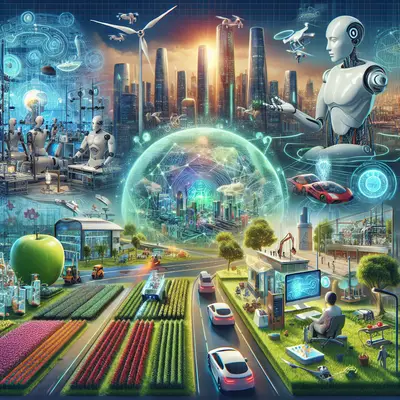
4. AI Is Becoming the Invisible Layer of Cities
Smart cities aren’t just about putting sensors everywhere—they’re about making sense of all that data, and that’s where AI quietly takes over.
Traffic systems use AI to:
- Adjust traffic lights on the fly based on real‑time congestion
- Spot patterns that cause frequent accidents
- Give priority to ambulances or public transport in crowded areas
- Predict which areas might need more healthcare resources
- Detect energy spikes to prevent blackouts
- Monitor air quality and identify pollution trends
Public services tap AI to:
On top of that, cameras and sensors analyze flows of people, not just cars. That means better planning for walkable areas, bike lanes, and public spaces—if it’s done right and with privacy protected.
For people who love infrastructure and city‑scale systems, this is where AI gets really fun: it turns data streams into living, adaptive systems that make cities feel more responsive and less rigid.
5. AI Is Learning to Explain Itself (Slowly, But It’s Happening)
Most people think of AI as a black box: data goes in, weird magic happens, result comes out. But a big push in the AI world right now is making systems that can justify their decisions in human terms.
In healthcare, for example, AI tools can help:
- Highlight which parts of a medical image led to a predicted diagnosis
- Show why a particular treatment plan might be recommended over another
- Provide clear reasons why someone was accepted or rejected
- Prove that their decisions don’t unfairly discriminate against certain groups
In finance, AI systems used for loan approvals increasingly have to:
This area—often called “explainable AI”—matters for anyone who cares about fairness, accountability, and trust in tech. It’s the difference between “the system said no” and “here’s the specific reasoning and what you could change.”
For enthusiasts, this is an interesting frontier: tools that don’t just perform well, but make their internal logic visible enough that humans can challenge or refine it.
Conclusion
AI isn’t just some monolithic, future tech coming “someday.” It’s already woven into feelings, creativity, infrastructure, decision‑making, and memory—often in ways that feel surprisingly human and occasionally uncomfortably intimate.
If you’re into tech, this is a good time to:
- Experiment with AI tools as collaborators, not replacements
- Pay attention to where AI is making decisions about you
- Keep an eye on how privacy, transparency, and control evolve alongside all this power
Because the most interesting part of AI right now isn’t that it’s smart—it’s that it’s starting to share more and more of your daily life, mostly in the background. The more you understand that layer, the less likely you are to get bored with what tech can actually do.
Sources
- [Stanford Human-Centered Artificial Intelligence (HAI)](https://hai.stanford.edu/news) - Articles and reports on how AI is affecting society, work, and everyday life
- [MIT Technology Review – AI Section](https://www.technologyreview.com/ai/) - Ongoing coverage of real-world AI applications, from cities to creativity
- [World Health Organization – Ethics and Governance of AI for Health](https://www.who.int/publications/i/item/9789240029200) - Guidance on how AI is being used in healthcare and why transparency matters
- [U.S. Department of Transportation – ITS and AI](https://www.transportation.gov/research-and-technology/intelligent-transportation-systems) - Information on intelligent transportation systems and AI in traffic management
- [Harvard Business Review – Explainable AI](https://hbr.org/2021/02/the-right-way-to-implement-explainable-ai) - Overview of why explainable AI is important in business and decision-making
Key Takeaway
The most important thing to remember from this article is that this information can change how you think about AI.