AI isn’t just something that lives in sci‑fi movies or boring enterprise demos anymore. It’s sneaking into art, gaming, climate science, and even how cities run—not as a single super‑intelligence, but as a messy swarm of tools doing weirdly specific jobs. For tech enthusiasts, this is the fun part: watching AI stop being “the future” and start being that slightly chaotic coworker who shows up everywhere.
Let’s walk through five angles where AI is getting genuinely interesting—and a little strange.
AI Is Becoming a Creative Collaborator, Not a Replacement
A lot of the AI talk is “robots are coming for your job,” but the more interesting story is how humans are treating AI like a creative sidekick.
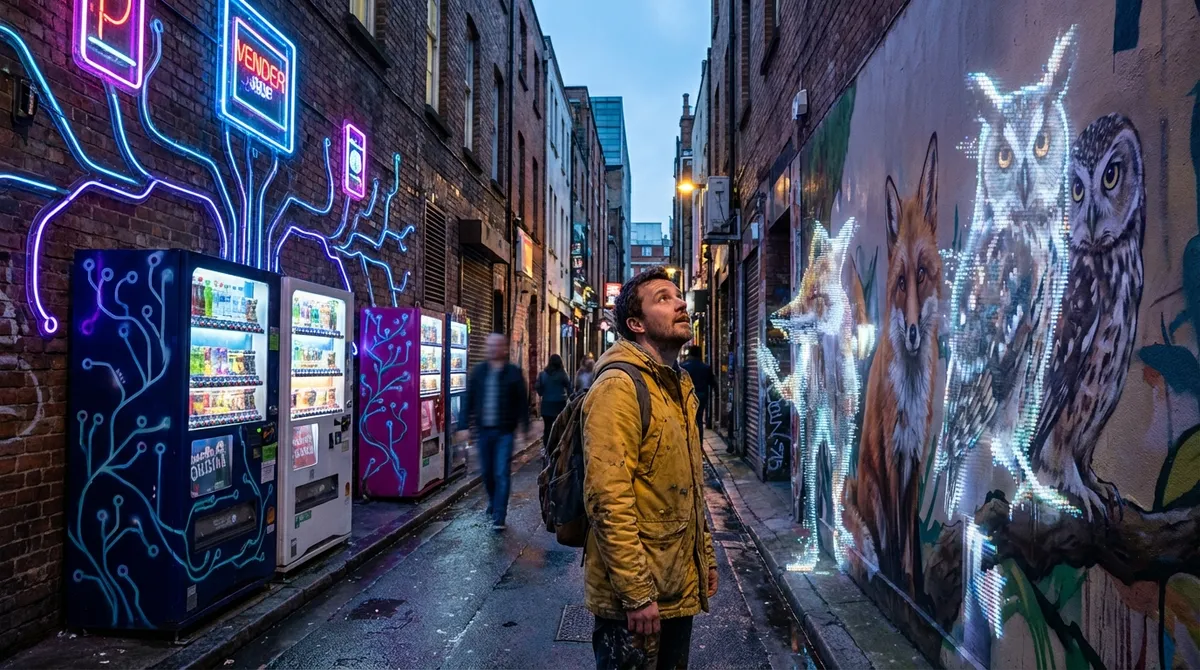
Music producers are using AI tools to sketch melodies or generate stems, then remixing and layering them with human performance. Visual artists use models like DALL·E and Midjourney not to churn out finished pieces, but to brainstorm styles, thumbnails, or wild compositions they’d never have drawn from scratch.
The pattern: people with taste and domain knowledge win. Knowing what to ask and what to keep from AI outputs is becoming a skill. It’s basically prompt‑engineering as creative direction.
What’s fascinating for tech nerds is how this blurs authorship. Is a track “AI‑generated” if the machine gave you a rough beat that you then rewrote and engineered for 20 hours? At some point, AI looks less like a threat and more like Photoshop: powerful, controversial, but just another tool in the creative stack.
AI Models Are Getting Smaller, Smarter, and Way More Local
Everyone talks about giant models with billions of parameters, but there’s a quiet counter‑trend: tiny AIs that run right on your devices.
We’re seeing models optimized to run on phones, laptops, and even microcontrollers. That means things like offline voice assistants, on‑device translation, and camera features (think smart zoom, auto‑captioning, scene detection) that don’t need to ping a remote server every time.
This matters for three reasons:
- Privacy – Your data can stay on your device.
- Latency – No internet? No problem. Responses stay snappy.
- Cost & access – You don’t need cloud scale to experiment anymore.
For developers and enthusiasts, this flips the script. Instead of “How do I send my app’s data to some huge model in the cloud?”, the question becomes “What can I pack into this phone, headset, or gadget and still keep the battery alive?”
We’re heading toward a world where “smart” doesn’t necessarily mean “always online”—it means “locally optimized intelligence wired into everything.”
AI Is Quietly Becoming Infrastructure for Science
One of the least flashy but most mind‑blowing uses of AI is in scientific research. It’s not just about “AI discovers X” headlines—it’s about accelerating the boring but essential parts of discovery.
In biology, models like DeepMind’s AlphaFold have predicted structures for hundreds of thousands of proteins, turning what used to be slow, expensive lab work into something you can query like a database. In climate science, AI helps simulate complex weather and ocean patterns faster than traditional physics‑only models, which means more frequent and localized forecasts.
Astronomers are using AI to sift through absurd amounts of telescope data to spot weird objects, gravitational lenses, or potential exoplanets. Materials researchers run AI‑driven searches to find new alloys, batteries, and superconductors.
For tech people, the interesting shift is this: AI is less “the star of the show” and more like a turbocharged microscope or telescope. It’s a tool that makes certain questions suddenly askable within a human lifetime.
AI Is Learning to Explain Itself (Sort Of)
One of the biggest knocks against AI, especially in serious areas like healthcare or finance, is the black‑box problem: “The model said no, but we don’t really know why.” That doesn’t fly when decisions impact real people.
So a major frontier is explainable AI—making models that can show their work, or at least give humans a reasonable summary of their reasoning. This can look like:
- Highlighting which parts of an image triggered a medical diagnosis
- Showing what features (income, age, credit history) most affected a loan decision
- Providing natural‑language explanations for why a recommendation was made
The twist: some newer models are actually trained to explain their own outputs in human‑readable ways. It’s not perfect honesty—you’re still dealing with a statistical system, not a conscious mind—but it’s better than “just trust the math.”
For enthusiasts, this opens up a new playground: tools to debug models, audit bias, and actually peek under the hood instead of treating AI like magic. It turns machine learning from dark arts into something a bit closer to engineering.
AI Is Starting to Shape the Physical World, Not Just Screens
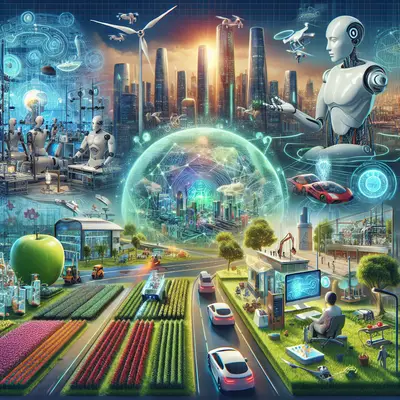
Until recently, AI was mostly about information: text, images, timelines, feeds. Now it’s escaping into the physical world through robots, vehicles, and smart infrastructure.
Think:
- Autonomous and semi‑autonomous vehicles that handle more of the driving stack on highways and in cities.
- Robots in warehouses and factories that coordinate with each other instead of following rigid, preprogrammed routes.
- Smart grids that dynamically adjust energy usage and storage, especially as renewables come online.
- Traffic systems that adapt to real‑time patterns rather than fixed timers.
This is where things get really interesting—and a bit nerve‑wracking—because failures are no longer just “the app crashed,” but “the robot hit a box” or “the car misread a lane line.”
For tech enthusiasts, this space combines classic software challenges (latency, reliability, optimization) with hardcore physical constraints: friction, weather, hardware failure, and weird human behavior. It’s full‑stack reality.
Conclusion
AI right now isn’t a single story; it’s a bunch of overlapping experiments leaking into everyday life. It’s co‑writing songs, compressing scientific timelines, sneaking onto your phone’s chipset, trying to justify its decisions, and increasingly steering real‑world objects.
For people who like to tinker, this is the sweet spot: the tools are powerful enough to be exciting, but early enough that individual hackers, indie devs, and small teams can still do surprisingly ambitious things.
The question isn’t “Will AI change everything?” anymore. It’s “Which corner of your world is AI going to quietly upgrade—or break—next?”
Sources
- [Google DeepMind – AlphaFold](https://www.deepmind.com/research/highlighted-research/alphafold) - Overview of how AlphaFold predicts protein structures and why it matters for biology
- [OpenAI – DALL·E 3](https://openai.com/index/dall-e-3/) - Official page describing AI image generation and creative use cases
- [U.S. Department of Energy – AI for Science](https://www.energy.gov/ai/ai-science) - How AI is being used across scientific disciplines, including climate and materials research
- [European Commission – Ethics Guidelines for Trustworthy AI](https://digital-strategy.ec.europa.eu/en/library/ethics-guidelines-trustworthy-ai) - Policy perspective on explainable, fair, and accountable AI systems
- [Stanford HAI – AI Index Report](https://aiindex.stanford.edu/report/) - Annual data‑driven overview of global AI trends, from model sizes to real‑world deployments
Key Takeaway
The most important thing to remember from this article is that this information can change how you think about AI.