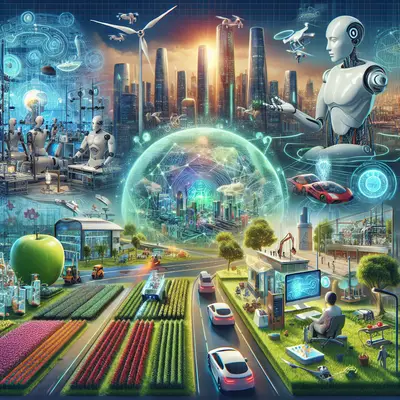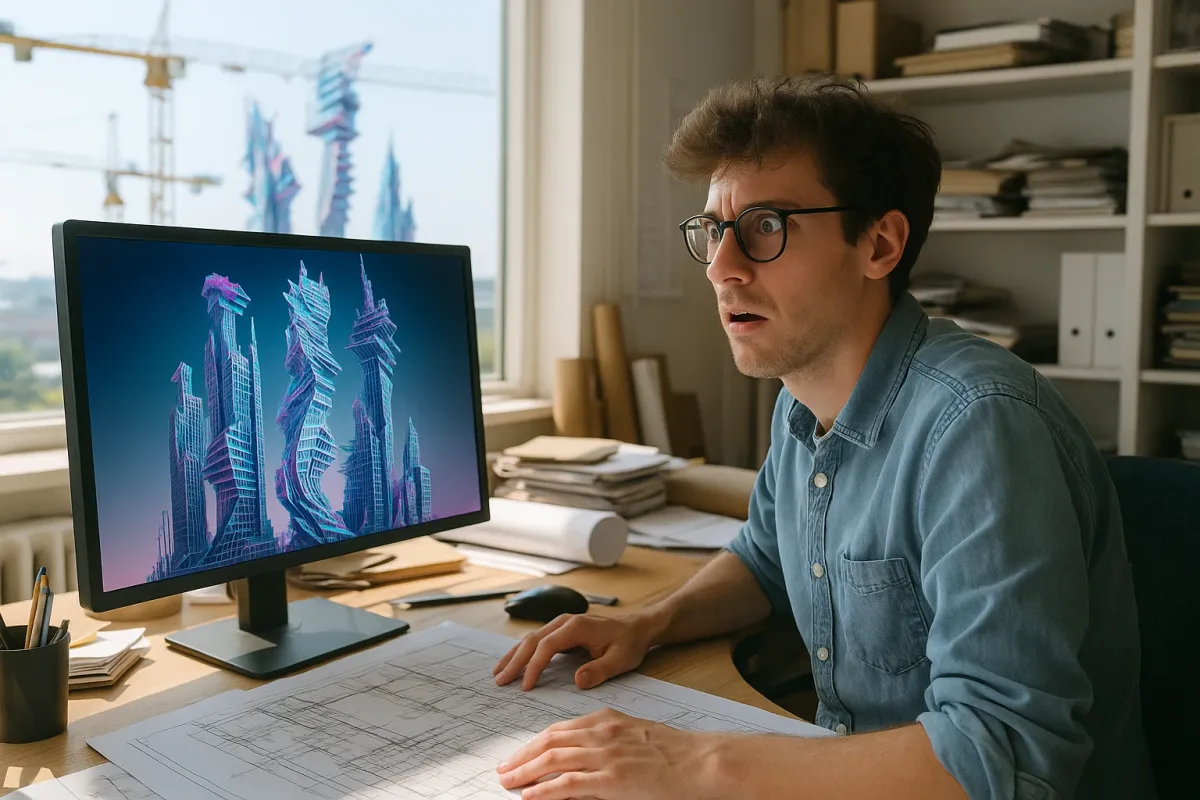
If you’ve scrolled TikTok or X lately and thought, “That building looks like an AI fever dream,” you’re not alone. A viral Bored Panda roundup just highlighted 52 “bread-shaped bread factories” and other surreal constructions that look like they were generated by Midjourney… but they’re painfully real.
The post hit a nerve because it lands right in the middle of a bigger 2025 mood: we’re no longer totally sure what’s AI-made, what’s human-made, and what’s just the internet being weird on purpose. And architecture — those hyper-smooth, pastel, too-perfect buildings — has become the latest battleground.
Let’s unpack why these “AI-looking” real buildings are everywhere, and what it says about where design, tech, and our brains are headed.
1. Our Cities Are Starting To Look Like Midjourney Prompts
One reason that “bread-shaped bread factory” post is going viral is simple: it feels like someone typed “whimsical Scandinavian carb worship center, cinematic lighting” into an image model and a construction crew just… obeyed.
Over the last two years, architects have been quietly using tools like Midjourney, Stable Diffusion, and DALL·E as idea machines. They feed in vague prompts (“floating glass library in a forest,” “office that looks like a stack of stones”), get dozens of concept images back, then cherry-pick shapes, colors, and layouts for real buildings. You’re not looking at pure AI output — you’re looking at AI-influenced taste. That’s why newer projects often have that same vibe: smoothed edges, big glass, exaggerated curves, symmetrical “Instagrammable” fronts. It’s the aesthetic of the prompt era, and it’s leaking the same way TikTok sound trends do.
The wild part: even when architects don’t use AI at all, they’re still competing with AI-generated concepts plastered across Pinterest and Behance. If clients are showing up saying “I want this,” and “this” was dreamed up by a model that never met gravity, of course the real world starts drifting closer to the simulation.
2. We’ve Trained Our Brains To Play “Is This AI?” 24/7
The Bored Panda post isn’t just about buildings — it’s about a game we all now play by default: “AI or not?” We started with profile pics and moonlit castles, then moved on to fake hands and cursed product photos. Now we’re at: “Is that mall real or did someone upscale a Blender render?”
Our brains are on constant pattern-recognition duty. AI images tend to share tells: weirdly clean lines, suspiciously perfect lighting, slightly uncanny proportions. So when a real building hits those same notes — like a super-smooth façade, glass that looks like plastic, or a skyscraper that appears to be made of stacked Lego bricks — our internal alarm goes off.
The twist: companies know this. Some brands now lean into “AI-ish” design on purpose because it gets people to stop scrolling, quote-tweet, and argue in the comments. Whether it’s real architecture or a product mockup, looking “maybe fake?” has become its own growth hack.
3. AI Is Quietly Becoming Your Architect’s Sidekick
Behind these viral “AI-looking” structures, there’s a legit tech shift happening in architecture and urban planning. Generative design tools — some powered by OpenAI-style models, others by more specialized engines — are already helping firms explore thousands of building variations in minutes.
Instead of hand-sketching every option, an architect can say, “Show me 50 layouts that maximize sunlight, keep costs under X, and stay under Y energy usage.” The AI spits out a gallery of options, and the human decides what’s actually buildable and not hideous. Big firms are also starting to train custom models on their own project histories, so the AI starts to “speak” their house style: a Foster + Partners-flavored tower, a Zaha Hadid-ish curve, that sort of thing.
It’s not doing the job alone — more like a creative intern who works at 4,000x speed and never complains about revisions. But the more these tools get used, the more our skylines inherit their quirks: repetition of certain shapes, parametric curves everywhere, and layouts that feel “optimized” in that Google-Docs-suggests-a-sentence kind of way.
4. AI Weirdness Is Now A Design Aesthetic, Not Just A Bug
Here’s where it gets fun: the stuff people used to mock AI for — too-slick surfaces, impossible geometry, random mashups — is now turning into an actual look. And that “AI aesthetic” is leaking out of screens into real materials.
You can already see it in:
- Buildings shaped like objects (giant baskets, animals, donuts, now loaves of bread)
- Facades that feel more like 3D renders than brick and mortar
- Public art and installations co-designed with generative tools, then 3D-printed or CNC-milled into existence
Because fabrication tech is catching up — industrial 3D printing, robotics, cheaper custom components — architects can now build designs that would’ve been only concept art 10 years ago. Some projects even start directly from AI images: the designer prompts a model, picks a favorite, then reverse-engineers it into something structurally sound.
The result is this bizarre loop: humans train AI on decades of human design, AI spits out exaggerated versions, and then humans try to make those exaggerations real. The internet roasts them for looking “AI-generated,” completing the circle.
5. The Bigger Question: Who’s Actually Designing The Future We Live In?
The viral “this building looks AI-generated” joke hides a more serious question: who’s really shaping our built environment when algorithms are in the mix?
On one level, it’s still human architects, city officials, clients, and construction companies signing off on everything. But the idea pipeline — the references we see, the options we consider, the “default” aesthetic clients think is modern — is increasingly pre-filtered by AI systems and algorithms. We’re building what the feed promotes.
That comes with real trade-offs. Generative tools can help find energy-efficient shapes, better daylight, smarter use of space — all very good things. But they can also flatten taste, pushing cities toward the same globalized, render-core style you’d find in any “futuristic city” concept art. It’s the Spotify problem, but for skylines: efficient, optimized, maybe a bit samey.
As AI gets baked deeper into design tools from Autodesk, Adobe, and all the usual suspects, the interesting challenge won’t be “Can AI design a building?” It’ll be: “Can we use this stuff without ending up with cities that all look like the same viral Pinterest board?”
Conclusion
That bread-shaped bread factory trending right now is more than just a meme — it’s a snapshot of a weird moment where AI aesthetics, real engineering, and internet culture are all colliding.
We’re walking around in spaces increasingly influenced by the same models that generate our wallpapers and fan art, and sometimes the line between “render” and “reality” is thin enough to argue about in the comments for hours.
If you care about tech, this is the next layer: not just AI in your apps or your job, but AI quietly nudging the shape of the world you physically move through. Next time you see a building that looks too smooth to be real, don’t just ask “Is this AI?” Ask: “How much of our future is being designed by autocomplete?”
Key Takeaway
The most important thing to remember from this article is that this information can change how you think about AI.